

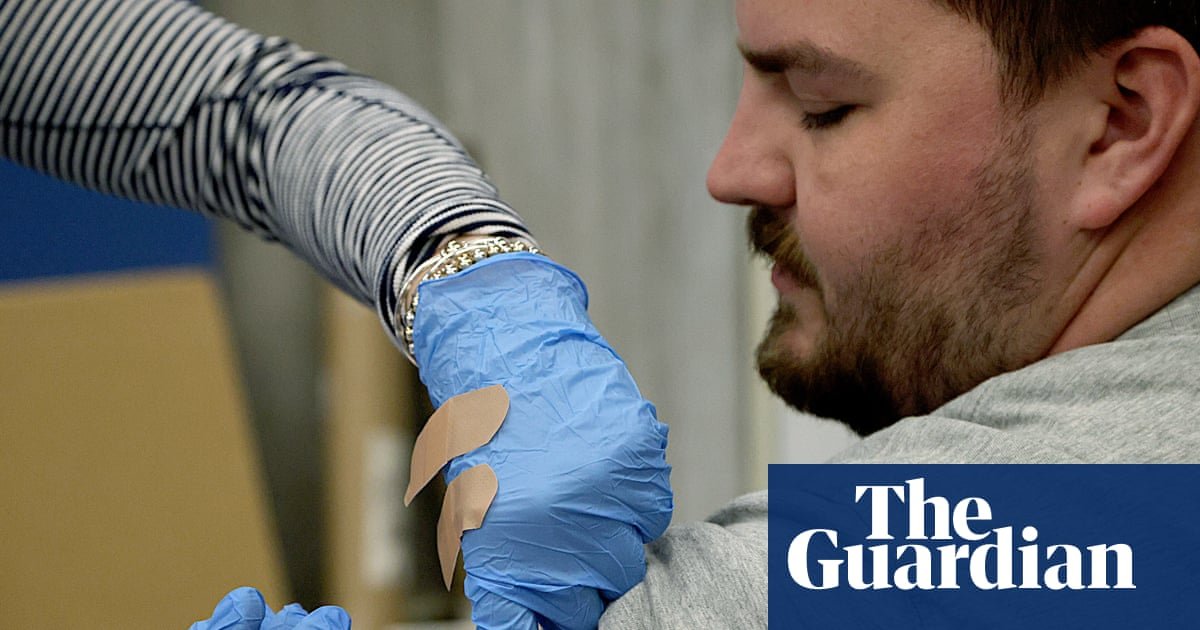
Three scientific papers that raised questions about vaccine safety and were used by the Trump administration to justify controversial changes to US vaccine policies have over the last two months been removed, retracted or placed under investigation by the journals that published them.
In some cases, the actions occurred years after scientists first raised alarms about the studies’ scientific merits.
Robert F Kennedy Jr, the US health secretary who has been a leader in the anti-vaccine movement for decades, relied on two of the studies that are now facing scrutiny for a 2023 book he co-wrote that argued unvaccinated children were healthier than children who had been vaccinated. The US Centers for Disease Control and Prevention (CDC) cited one of the papers when it changed its long-held position that vaccines do not cause autism, cutting against the scientific consensus. And all three papers were cited by an anti-vaccine lawyer who called for changes to the childhood immunization schedule before an influential federal vaccine advisory panel.
It was not clear why the journals have not acted until now. Scientists who previously criticized the papers said the actions were a positive step, as public health officials and physicians across the US are reporting a rise in vaccine-preventable diseases such as whooping cough and measles. They argue that the three studies have been used by the anti-vaccine movement to plant seeds of doubt with parents, eroding confidence in the safety of life-saving vaccines.
“People and organizations intent on spreading vaccine misinformation have been very savvy in their misuse of scientific terms, such as ‘gold-standard science’”, and publishing flawed studies to give their claims the appearance of credibility and confuse the public, said Dr Karina Top, a professor of pediatrics at the University of Alberta. “These papers are poor science, it appears the authors are making the data fit their hypothesis that vaccines are harmful.”
The three papers shared a common theme: the idea that vaccinated children had a greater risk of health problems than unvaccinated children. But all three have been roundly criticized for using poor methodologies and analyses.
One, by Neil Z Miller, was published in 2021 in Toxicology Reports and suggested a link between vaccines and sudden infant death syndrome, or Sids. Another, published in 2020 by Sage Open Medicine and co-authored by Miller and Brian S Hooker, suggested vaccinated children had higher rates of certain health problems like developmental delays and asthma than did unvaccinated children. The third, by Carolyn M Gallagher and Melody S Goodman, was published in 2010 in the Journal of Toxicology and Environmental Health, Part A, and found boys vaccinated for Hepatitis B in their first four weeks of life were more likely to be diagnosed with autism.
Some of the four researchers involved said they disagree with the journals’ decisions. The Department of Health and Human Services (HHS) did not return emails seeking comment.
Aaron Siri, who has previously acted as Kennedy’s lawyer, cited the three papers as evidence for a presentation he was invited to give to the federal vaccine advisory committee in December. In a statement to the Guardian, he compared the scrutiny the papers have come under by scientific journals to a “targeted assassination”. He also stood by his claim that there is no “available evidence” that vaccines are “safe and effective”, alleging his assessment relied on hundreds of other articles, reviews and trial documents.
Kennedy co-wrote the book Vax-Unvax: Let the Science Speak with Hooker, the first author on the Sage study that is now under investigation. That paper served as a crucial pillar in chapter 2 of the book, in which he and Kennedy attempted to show that vaccinated children have higher rates of health problems such as asthma, developmental delays and gastrointestinal disorders.
The book also revealed insights into how the paper got published, noting that five medical journals rejected the paper outright before Sage considered it. It also said Sage had trouble finding researchers willing to review it, and the peer review process took 11 months to complete with multiple rounds of revisions.
Kennedy and Hooker worked together for years when Kennedy was leading the anti-vaccine group Children’s Health Defense, where Hooker now holds the title “chief scientific officer”.
An HHS spokesperson did not respond to questions about whether Kennedy would update his book.
Sage Open Medicine, the journal that published the paper, attached an expression of concern to it on 18 May, several weeks after the Guardian first inquired about a detailed complaint emailed to the journal in January 2025. It says the paper is under investigation.
The complaint was submitted to Sage anonymously by a pediatrician and scientist who shared it with the Guardian on condition of anonymity because they said they had been harassed in the past by supporters of the anti-vaccine movement. The doctor said they made the complaint – and then alerted the Guardian to it more than a year later – because they had seen how such studies have scared parents out of vaccinating their children.
Hooker did not respond to emails seeking comments. Miller said in an email the investigation had to do with what he said were false allegations that the data came from another source and was not disclosed. He said the expression of concern was not about its methodology or findings.
“I am not concerned about this investigation because the aspersions are false,” Miller said.
Sage said it would not comment on specifics during the investigation.
“A decision on the paper will be made once all relevant information has been reviewed and the authors have had an opportunity to respond to the concerns raised,” a spokesperson said.
Members of the scientific community have been raising concerns about the paper since immediately after it was published. Top and other scientists wrote about some of its methodological issues within days of publication. In an email, Top said in the six years since then, the paper had been cited in other studies and used to justify changes to vaccine policy and undermine confidence in vaccines, “likely contributing to decreased vaccination rates and outbreaks of serious preventable infections, like measles and whooping cough”.
Top called for the publisher and editors to conduct a thorough review of the peer review process and their response to the previous complaints, and to commit to improving the timeliness of their response in future.
The CDC cited the hepatitis B paper in November when it changed its stance on a possible link between vaccines and autism at Kennedy’s direction. The reworked page now states at the top that “Studies supporting a link have been ignored by health authorities” and later cites the paper.
HHS did not respond to the Guardian’s questions about whether the CDC would update its page.
Morgan McSweeney, a scientist who posts on social media as Dr.Noc, was moved to make a six-minute video debunking the paper after seeing the CDC’s changes. The authors, relying on a small number of cases, said their findings suggested male newborns vaccinated with the hepatitis B vaccine had a higher risk of autism diagnosis.
“This was a low-quality, very small study that was not replicated. So yeah, the CDC page now says that some studies supporting a link have been ignored by health authorities,” McSweeney said in the video, which now has more than 5 million views between Instagram and TikTok. “And maybe that’s a little bit true, because the studies they’re showing here are worth less than a fart in the summer breeze.”
The paper was retracted on 21 May after an independent statistical reviewer concluded there were fundamental methodological flaws in it, according to a retraction notice. A spokesperson for the journal’s publisher, Taylor & Francis, said in an email that its investigation of the paper began after concerns were raised with the publisher and before the CDC cited the article.
The journal said that the authors, Gallagher and Goodman, disagreed with the retraction. Goodman, dean at New York University’s School of Global Public Health and a professor of biostatistics, said in an email that they stand behind the methodology in the study, which began as a student project. She noted they acknowledged the study’s limitations in the paper.
“The paper was never meant to stand alone as the final word on this issue, which is precisely why we called for larger, stronger studies to evaluate this topic – and which other researchers have subsequently done,” Goodman said.
The problems with the paper most likely stem from weak statistics or low-quality methodology rather than bad intentions, McSweeney said. But he said that how the paper was used by the CDC demonstrated something important about how people currently in charge of the nation’s vaccine policy are operating.
“They have a strong opinion about what is true. And then they go looking for whatever scrap of low-quality evidence they can find to support that opinion,” McSweeney said. “If that finding supports the story that they believe, they’re willing to overlook data points from hundreds of thousands or millions of children and go with the one that fits their story.”
Miller’s 2021 paper used reports made in the Vaccine Adverse Event Reporting System (VAERS) to find what he said were “unusual patterns and safety signals highly suggestive of a causal relationship” between vaccination and sudden infant death syndrome or Sids. VAERS is a vaccine safety monitoring program where anyone can submit a report about any suspected adverse health event that happens after a vaccination.
A few months after Miller’s VAERS study was published, Magdalen Wind-Mozley, a forensic scientist and vaccine advocate who works with the Oxford Vaccine Group posted several criticisms of the paper online. Among the flaws she pointed out was that Miller misunderstood the nature of the data in VAERS, which all have to do with vaccination. She said she emailed a complaint to the journal in January 2022 and while it confirmed receipt and she later followed up, she was not aware of any action that was taken at the time.
The journal publisher, Elsevier, said in an email that its records do not show any formal complaint until 2025. But after concerns were raised last year, Toxicology Reports launched an investigation. It said an investigation had identified “serious methodological flaws” in using VAERS data to infer a correlation between vaccination and Sids.
It apologized to readers and took the rare step of removing the paper, which is done in limited cases.
Elsevier said the decision followed “careful review and consultation with relevant experts” and that “the recommendations and conclusions presented in the paper may pose potential risks to public health and could potentially be applied in clinical practice resulting in harm to patients.”
Miller, who is not a scientist, said in an email that he was asked to respond to eight concerns that were “either insignificant or plainly incorrect”. He said the journal never specified the methodological flaws in his paper, and he defended his work.
“I strongly opposed the removal of my paper, believing the decision was unjustified,” Miller said.
While Wind-Mozley praised the journal for removing the paper, she said it had come far too late. She believes the paper influenced people’s beliefs and actions around vaccines.
In the intervening years since her initial complaints, she said, “It will have done so much harm.”
