
Close Menu

    Subscribe to Updates

    Get the latest creative news from FooBar about art, design and business.

    What's Hot

    What do hundreds of gravitational-wave events reveal about the universe?

    Number of meningitis cases investigated in Kent rises to 20 | Meningitis

    Butterflies crossing oceans, moths navigating by the stars: unravelling the mysteries of insect migrations | Insects

    Facebook X (Twitter) Instagram
    Facebook X (Twitter) YouTube LinkedIn
    Naija Global News |
    Wednesday, March 18
    • Business
    • Health
    • Politics
    • Science
    • Sports
    • Education
    • Social Issues
    • Technology
    • More
      • Crime & Justice
      • Environment
      • Entertainment
    Naija Global News |
    You are at:Home»Environment»Pulsing Magma in Earth’s Mantle Drives Tectonic Plates Tearing Africa Apart
    Environment

    Pulsing Magma in Earth’s Mantle Drives Tectonic Plates Tearing Africa Apart

    onlyplanz_80y6mtBy onlyplanz_80y6mtJuly 7, 2025003 Mins Read
    Share Facebook Twitter Pinterest LinkedIn Tumblr Email
    Pulsing Magma in Earth’s Mantle Drives Tectonic Plates Tearing Africa Apart

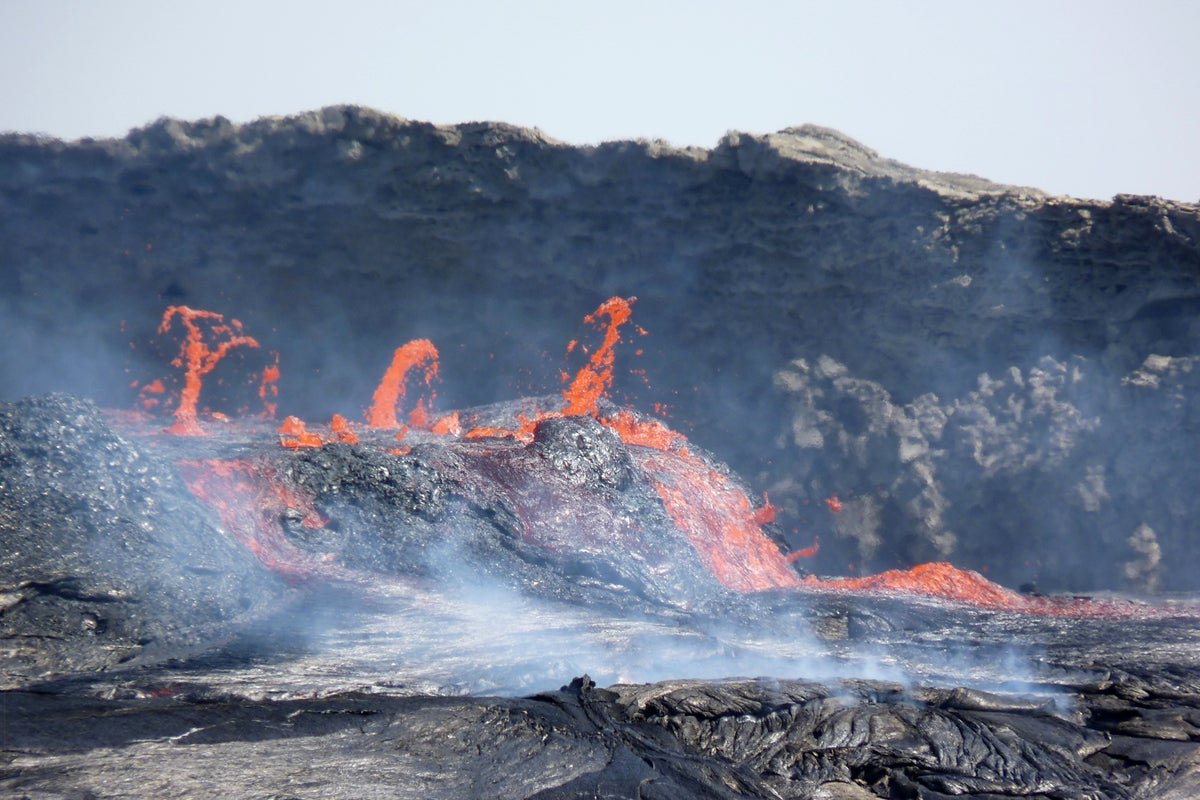
    Active lava flows spilling out of the Erta Ale volcano in Afar, Ethiopia.

    Dr. Derek Keir, University of Southampton/University of Florence

    Share
    Facebook Twitter LinkedIn Pinterest Email

    Magma Pulses Are Tearing Africa Apart

    Chemical fingerprints from volcanic rock offer hints of what’s happening in the mantle below the area where three rift zones meet in East Africa

    By Nora Bradford edited by Andrea Thompson

    Active lava flows spilling out of the Erta Ale volcano in Afar, Ethiopia.

    Dr. Derek Keir, University of Southampton/University of Florence

    A spot in eastern Africa called the Afar Triangle marks the meeting point of three rift zones—lines where Earth’s crust is being rent apart. Researchers haven’t been sure exactly what drives this rifting, but a new study in Nature Geoscience suggests it is caused by rhythmic pulses of molten rock from deep below the surface.

    Scientists first proposed in the 1970s that a hot upsurge of material from Earth’s mantle, known as a plume, was occurring below this spot. Since then researchers have debated whether a single plume, multiple smaller “plumelets” or something else entirely is pushing the plates apart. Emma Watts, a geochemist at Swansea University in Wales, wanted to settle the question, so she and a team of geophysicists, geochemists and computational scientists put their heads together and came up with a likely answer.

    “The more I look into it, the more I see that you’ve got to have all the pieces of the puzzle to see the big picture,” she says.

    On supporting science journalism

    If you’re enjoying this article, consider supporting our award-winning journalism by subscribing. By purchasing a subscription you are helping to ensure the future of impactful stories about the discoveries and ideas shaping our world today.

    The team analyzed 130 rock samples from volcanoes in the Afar region. Chemical signatures from each sample helped the scientists piece together the movement of the molten rock below Earth’s surface: The researchers calculated the ratios of concentrations of elements such as lead and cerium, which can indicate whether deep mantle material has surged upward, as well as the ratios of different isotopes that each originated from slightly varying reservoirs within the mantle.

    Microscope image of a thin sliver of one of the volcanic rocks from Afar, Ethiopia.

    Dr. Emma Watts, University of Southampton/Swansea University

    After comparing their data to computational models of various permutations of mantle plumes, the researchers have found that the best explanation for their observations is a single plume that moves upward in pulses. The pulses appear to exert varying pressure that pushes on each rift zone differently, depending on the way the rift moves and the thickness of the crust on either side. The Afar Triangle’s fast-spreading Red Sea Rift has pulses that move farther along the rift zone and that are more frequent than those of the slower-spreading Main Ethiopian Rift in the western part of the triangle.

    “The rifting rates are really controlling what we’re seeing in the plume,” Watts says. “What we think is that [the Red Sea Rift is] spreading out faster…, so it has more space to move, and it’s being stretched out easier.”

    The relationship between the mantle movement and the geochemical fingerprints is “exciting because it suggests geophysics and geochemistry can be married to infer large-scale geodynamic processes,” says Catherine Rychert, a geophysicist at the Woods Hole Oceanographic Institution, who was not involved in this research.

    This is one of the first known examples of a dynamic mantle plume that responds to the tectonic plates above, so more research is needed to confirm the finding, Rychert says. Watts hopes this technique could be used in other rift systems and that more data from this system could give researchers a more precise view of what is happening deep below Earth’s surface.

    Africa Drives Earths Magma Mantle Plates Pulsing Tearing Tectonic
    Share. Facebook Twitter Pinterest LinkedIn Tumblr Email
    Previous Article13 Best Wi-Fi Routers of 2025, Tested and Reviewed
    Next Article Nigel Farage says flaws in Reform UK’s candidate vetting process were not his fault – UK politics live | Politics
    onlyplanz_80y6mt
    • Website

    Related Posts

    What do hundreds of gravitational-wave events reveal about the universe?

    March 18, 2026

    Butterflies crossing oceans, moths navigating by the stars: unravelling the mysteries of insect migrations | Insects

    March 18, 2026

    Physicists discover a ‘charmed’ new particle

    March 18, 2026
    Add A Comment
    Leave A Reply Cancel Reply

    Top Posts

    Watch Lady Gaga’s Perform ‘Vanish Into You’ on ‘Colbert’

    September 9, 20251 Views

    Advertisers flock to Fox seeking an ‘audience of one’ — Donald Trump

    July 13, 20251 Views

    A Setback for Maine’s Free Community College Program

    June 19, 20251 Views
    Stay In Touch
    • Facebook
    • YouTube
    • TikTok
    • WhatsApp
    • Twitter
    • Instagram
    Latest Reviews

    At Chile’s Vera Rubin Observatory, Earth’s Largest Camera Surveys the Sky

    By onlyplanz_80y6mtJune 19, 2025

    SpaceX Starship Explodes Before Test Fire

    By onlyplanz_80y6mtJune 19, 2025

    How the L.A. Port got hit by Trump’s Tariffs

    By onlyplanz_80y6mtJune 19, 2025

    Subscribe to Updates

    Get the latest tech news from FooBar about tech, design and biz.

    Most Popular

    Watch Lady Gaga’s Perform ‘Vanish Into You’ on ‘Colbert’

    September 9, 20251 Views

    Advertisers flock to Fox seeking an ‘audience of one’ — Donald Trump

    July 13, 20251 Views

    A Setback for Maine’s Free Community College Program

    June 19, 20251 Views
    Our Picks

    What do hundreds of gravitational-wave events reveal about the universe?

    Number of meningitis cases investigated in Kent rises to 20 | Meningitis

    Butterflies crossing oceans, moths navigating by the stars: unravelling the mysteries of insect migrations | Insects

    Recent Posts
    • What do hundreds of gravitational-wave events reveal about the universe?
    • Number of meningitis cases investigated in Kent rises to 20 | Meningitis
    • Butterflies crossing oceans, moths navigating by the stars: unravelling the mysteries of insect migrations | Insects
    • Stratton Favored to Succeed Durbin After Senate Primary Win in Illinois
    • Criminology Professor Spills His “Love Is Blind” Story
    © 2026 naijaglobalnews. Designed by Pro.
    • About Us
    • Disclaimer
    • Get In Touch
    • Privacy Policy
    • Terms and Conditions

    Type above and press Enter to search. Press Esc to cancel.