

In his famous “I Have a Dream” speech, the Rev. Martin Luther King Jr. spoke about the debt the United States owed to its Black citizens after centuries of discrimination and oppression. He described this debt as a check that was being returned marked “insufficient funds” due to the nation’s failure to deliver on its promise of equality, freedom, and justice. Last month marked the five-year anniversary of the murder of George Floyd in Minneapolis, and we find ourselves once again with a check that seems to be marked insufficient funds. This occasion invites contemplation about what we learned from that moment and where we are now as a nation when it comes to racial justice.
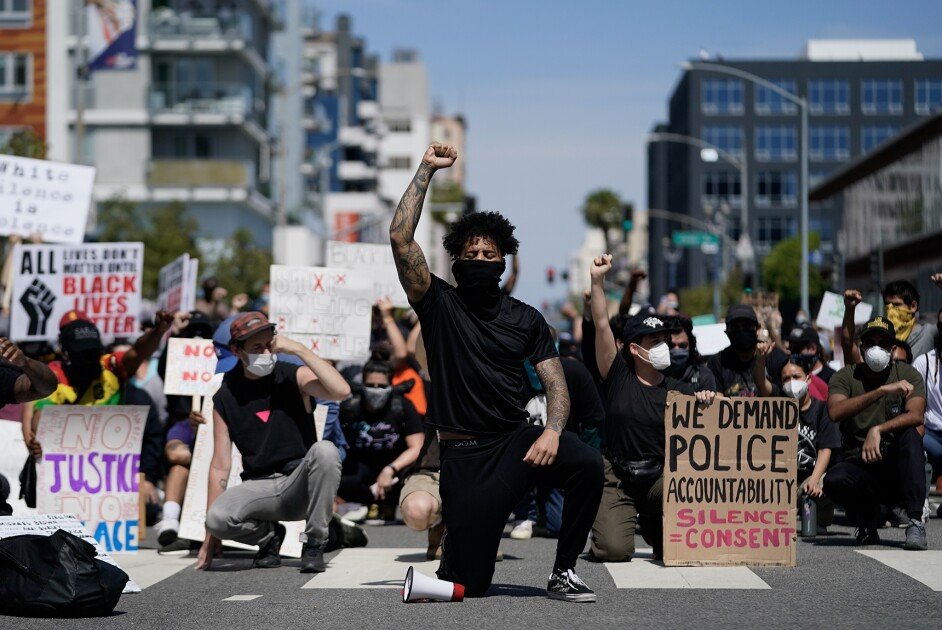
The immediate aftermath of the Floyd murder entailed what many call the largest protest in United States history. Millions of people across the country marched peacefully but protested vocally about putting an end to the senseless killings of innocent Black people and for racial justice. The outpouring of protests that some estimate involved anywhere between 15 million and 26 million people seemed to suggest a turning in our nation’s history. The racial reckoning, as it was referred to at the time, led to nationwide discussions about police brutality in communities of color, economic exclusion, and institutional racism. The multiracial, multigenerational, cross-cultural protests strongly pressured companies and other institutions to say and do something.
Schools responded by establishing DEI offices with directors, staff, and programs focused on how schools could be active players in disrupting structural and individual racism toward Black students. Corporations rushed to announce that Black lives mattered, to scrutinize the ethnic and racial diversity of corporate boards and executives, and to revisit or establish diversity policies around hiring and promotions. They pledged substantial financial support for racial justice and social change.
One analysis found that the 50 largest public companies and their foundations alone committed at least $49.5 billion. But much of that money went to “loans disguised as investments” in the words of University of Southern California business, education and public policy professor Shaun Harper. The loans to businesses and individuals could eventually be expected to turn a profit for the lending institution. Interest convergence—where significant advancements in social justice, particularly for marginalized groups, only occur when the interests of those groups align with the interests of those in positions of power—was certainly on display.
At the time of George Floyd’s death, there were discussions about whether the protests were a moment or a movement. It appeared to be more of the former. Five years later, we know that there would be a massive backlash to the Black Lives Matter protests. In his first term, President Donald Trump and his administration saw the Floyd aftermath as the birth of the “woke” movement and took persistent and aggressive steps to disrupt it. Then, in 2024, Trump was elected to a second term. The election was won at least in part because many (mostly white, male) voters rejected efforts to change the criminal-justice system and argued that rectifying discrimination against Blacks was essentially tantamount to discrimination against whites.
What did we learn? Have we regressed? One could argue that whatever progress we believed was made has evaporated. Federal headwinds came early in the form of Executive Order 13950, “Combating Race and Sex Stereotyping,” in the waning days of Trump’s first term. The order banned diversity and inclusion training that the administration deemed “divisive” for federal workers, the military, contractors, and grant recipients.
We have learned that George Floyd’s killing was not the pivotal moment that we thought it would become.
Since then, the attack on “wokeness” was not only in words but through executive and legislative steps that have had a profound impact on education. As of 2025, at least 135 bills have been introduced in state legislatures and 26 have been approved that would roll back diversity efforts at colleges and universities, like hiring statements, cultural centers, affinity-group graduations, and mandatory trainings, according to the Chronicle of Higher Education.
At the K-12 level, book bans are a sobering effort to eliminate truth telling and erase the histories of marginalized people. PEN America found in the 2023–24 school year more than 10,000 instances of books being removed because of content objections in the nation’s public school classrooms and libraries. The free-expression organization noted that 44% of the books commonly removed included characters of color or discussed race and racism and that 39% had LGBTQ+ characters or themes.
At the end of January, Trump issued two executive orders calling for the end of “discriminatory equity ideology” in the federal government and in K-12 schooling. The latter order directs K-12 schools to eliminate or restrict DEI initiatives and to promote “patriotic education” under threat of the loss of federal funds. In February, the government launched an “End DEI” portal to receive complaints about “illegal discriminatory practices at institutions of learning.” The administration has made it clear to colleges and universities that it is ready to use billions of dollars in federal grants and contracts to enforce its directives in these and other areas.
We have learned that Floyd’s killing was not the pivotal moment that we thought it would become. Our country has not reckoned with race to become a better nation. In fact, five years later, we know that our nation still has a long way to go when it comes to racial justice and that in many ways we have regressed significantly. We see that in the current moment with the Trump administration’s unrelenting demonizing of immigrants and its militaristic response to Los Angeles civilians protesting the tactics of the federal Immigration and Customs Enforcement agency.
We see, too, that many teachers are fearful of talking or teaching about diversity. Antisemitism and Islamophobia are both on the rise. White supremacy—where diversity is a bad thing, English is the only language that matters, and white people are superior to others—is still alive and well in our nation. Anti-black racism, homophobia, and transphobia persist.
There was no national legislation that came from the Floyd murder. The George Floyd Justice in Policing Act, which would have addressed police misconduct, excessive force, and racial bias, passed in the House of Representatives in 2021 after being introduced and reintroduced but never passed in the Senate. Just last month, Trump’s Department of Justice dropped investigations of unconstitutional policing in eight law enforcement agencies around the nation.
Many protested in 2020 so George Floyd’s death would not be in vain. Five years later, it appears that much of it was. But we have to be better to fight for a better tomorrow—a tomorrow of justice, inclusion, and equality.
