

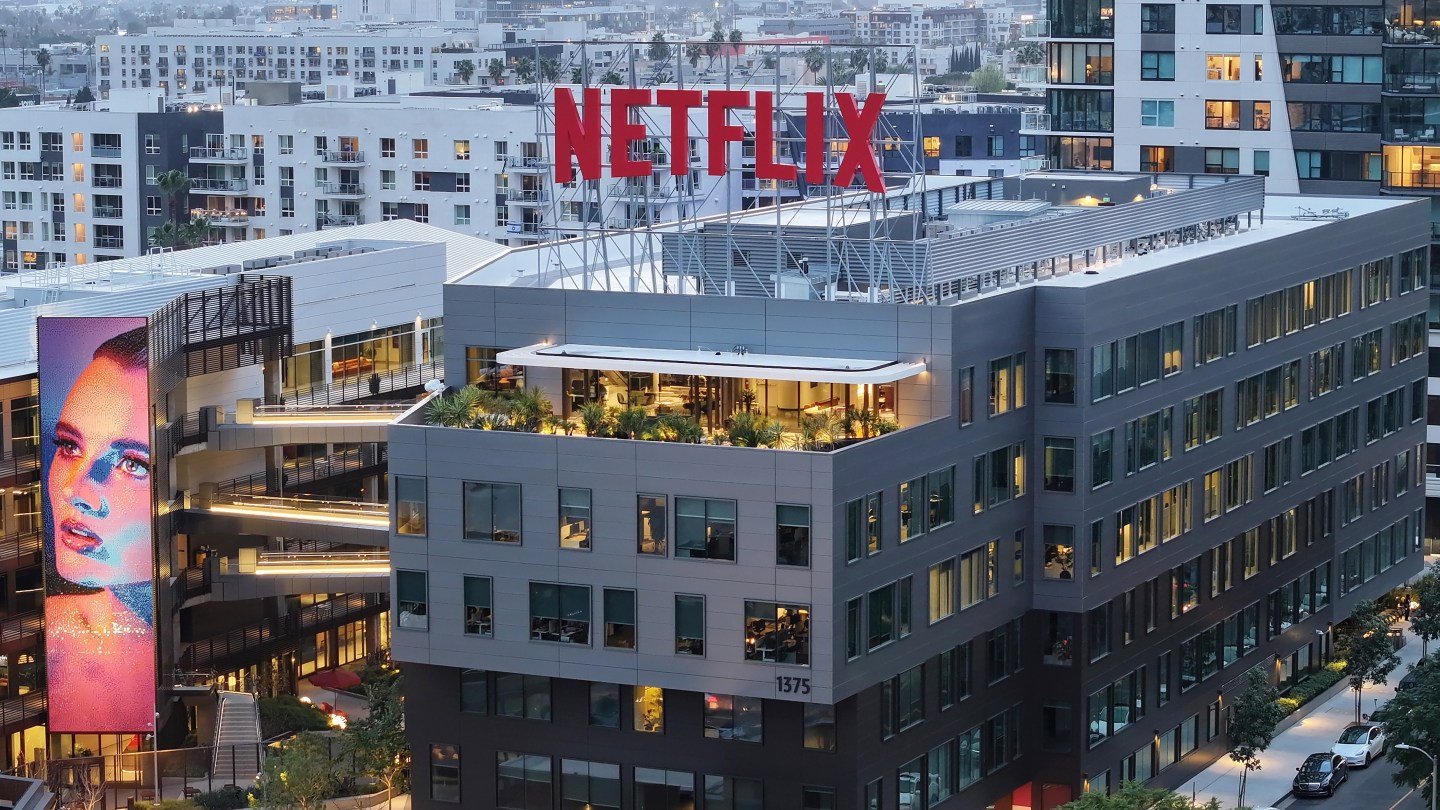
Netflix‘s surprise deal at Cannes Lions that it would carry the TF1 channels in France immediately reverberated around the globe.
When you are talking about the preeminent subscription streaming service getting into linear TV with a major broadcaster, one can understand why. “Holy shit,” texted one broadcast TV veteran Wednesday morning, sharing a link to The Hollywood Reporter’s story on the blockbuster deal.
It’s tempting to wonder if Netflix’s deal with TF1 will be a template for future maneuvers (based on the company’s history, it will be), but there are ample reasons to think that while similar deals may be struck in markets around the world, the U.S. won’t be one of them. At least not anytime soon.
The reasons have to do with both Netflix’s scale and reach, and the mature economics of broadcast and pay-TV, which have been optimized in the U.S. in a way that is unlike most other world markets.
While Netflix has stopped reporting subscribers on a quarterly basis, it is no secret that it is nearing a ceiling in the U.S. Most households have Netflix, and the password-sharing crackdown, combined with the lower cost ads tier, have helped keep growth going. But there is a natural limit to that growth. At some point, every household that wants Netflix will have it, and the cost-benefit ratio of securing what few holdouts are left no longer works. Netflix has already shifted its focus toward time spent, attempting to keep its existing consumers engaged for longer, which will ultimately benefit its advertising business.
Netflix does not break out subscriber numbers by country, but it is reasonable to assume that it has not reached its ceiling in many large markets. France may be one of them. There are surely others. Adding a broadcast network may be a way to pick up share as consumers naturally migrate toward streaming.
It can also ramp up the amount of local content on the platform, something that many countries (including France) are urging Netflix and other streaming services to do.
And for local broadcasters like TF1, partnering with Netflix could be a lifeline that helps them adapt to a media consumption landscape that is radically changing.
If the price is right, and the fees are reasonable, the result could make for a compelling pitch to Netflix, which is trying to become, quite simply, TV, with content for everyone.
The U.S., however, is a different story.
American media companies spent years optimizing their portfolios to maximize revenues and profits from pay-TV providers. That means bundling broadcast and cable channels together in rights talks (want ABC and ESPN? You need to pay for FXX and Freeform. Want CNN or TNT? You need TruTV and Destination America), and also demanding particularly high fees for the most in-demand channels … including broadcast networks.
While that strategy is beginning to be undone (see NBCU’s Versant spinoff, and Warner Bros. Discovery’s looming split), the odds seem long that any U.S. media company will be willing to unbundle a broadcast network from its other offerings anytime soon. In addition, most of those companies have since launched their own mass market streaming services, with platforms like Peacock and Paramount+ giving access to live broadcast streams, as well as on-demand content from their other channels.
Then there is the cold, hard economics of American pay-TV, a mature market where efficiencies and profits have been maximized for the old model of operating.
Even if Fox was willing to license a feed of Fox without Fox News, or Paramount was willing to license CBS without Nickelodeon or MTV, the current value of retransmission fees for those broadcast networks continues to rise.
Kagan says that in 2024, the multichannel broadcast fee (essentially a fee that the pay-TV company passes on to consumers to cover broadcast carriage fees) was $21.48 per subscriber per month. While that covers all the local broadcast stations in a given market, the bulk of that goes to the local NBC, ABC, CBS and Fox stations.
That would put the wholesale price of a major broadcast network in the U.S. at about $3-$5 per subscriber per month.
Netflix’s standard plan is currently $18 per month. It isn’t hard to see that unless the economics change dramatically, the math doesn’t work to replicate the TF1 deal in the U.S.
Of course, the economics always could change. Right now, media executives expect the pay-TV bundle to hit a floor of subscribers, though no one is quite sure of how low that floor will go. If the floor is lower than these companies think, or if there is a true collapse of pay-TV, companies may rethink their bundling and distribution strategies to reorient around reach, a shift that would benefit the likes of Netflix and YouTube.
And of course Netflix could decide to follow the Amazons, YouTubes and Rokus of the world and try to become an aggregator, offering other channels and content for an additional fee.
Does that go against the company’s all-in, consumer-friendly subscription model? Sure. Has Netflix been willing to change its own strategy with the times? Absolutely.
