

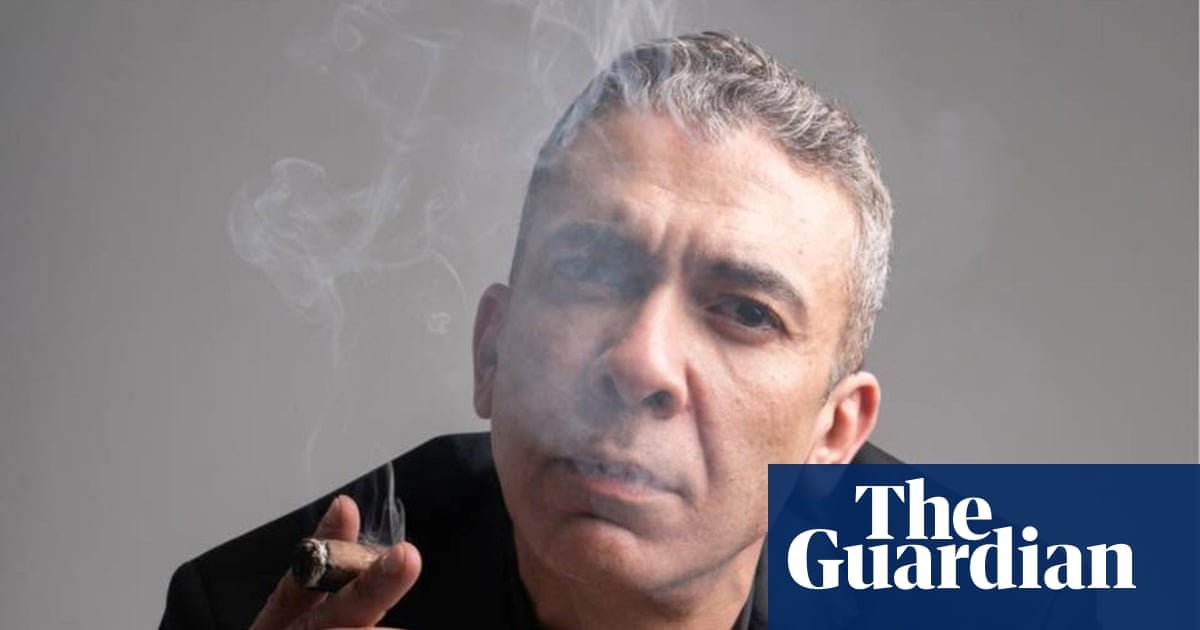
It had been a struggle with conventional treatments. For Fatima Adel, a 50-year-old author living in Cairo’s upmarket Sheikh Zayed neighbourhood, the misdiagnoses and medical errors she had experienced had began to erode her confidence in doctors.
But when the videos of Diaa al-Awadi began circulating – an Egyptian doctor who spoke plainly, invoked the Qur’an, and told his audience that their bodies could heal themselves if they changed their diet – Adel, like tens of thousands of other Egyptians, listened.
After years of not getting anywhere with easing her type 2 diabetes, she began following al-Awadi’s system in early 2024: stopping her medication and altering her diet. The first few months brought what felt like an improvement in her health.
Then the deterioration began. “I felt fatigue I couldn’t explain, but didn’t connect it to [al-Awadi’s] system because people around me said I was looking healthier and I believed them,” she said. After a few months, she had tingling and numbness in her feet. By the time she got a diagnosis in May 2025, she had developed diabetic foot – a preventable complication caused by uncontrolled blood sugar and poor circulation.
“I didn’t connect it to the system at first,” said Adel. “And then it was too late.”
Her big toe is now swollen to several times its normal size, the skin darkened and taut, and she has to have infected tissue periodically removed, to prevent the infection from spreading further into the now-decaying bone. It is an alternative procedure to the amputation that some doctors have recommended.
Al-Awadi’s death in a Dubai hotel in April has amplified his influence rather than ended it. Within hours, his followers spewed conspiracy theories across social media, saying he had been silenced. Thousands turned out for his funeral in Cairo. Egypt’s media regulator ordered all platforms to stop circulating his content but the ban on a dead man’s words made them more sought-after than ever.
Worldwide, cases of misplaced faith in alternative healers are growing. The World Health Organization (WHO) has made tackling health misinformation and disinformation a priority, noting that fake news boosts opposition to vaccinations, delays care and has negative effects on large numbers of patients. A 2024 report by the healthcare firm Tebra found 45% of medical advice on TikTok to be false or misleading, and 67% of content on alternative remedies likely to be false or misleading.
Diaa al-Awadi on his YouTube channel claiming to show what happens in our stomachs when we eat bread. Photograph: YouTube
In Egypt, that trend has found particularly fertile ground. By early 2025, the country had 50.7 million active social media users, the largest audience in the Middle East and north Africa.
And with formal healthcare expensive and inaccessible for many, informal medicine fills the gap. More than 57% of all health expenses are paid directly by patients or their families, according to WHO estimates, compared with an estimated 39% in countries of similar income. In 2025-26, Egypt’s health budget amounted to just 1.1% of GDP, according to Human Rights Watch – far below the WHO’s recommended minimum of 5% for countries pursuing universal health coverage.
Al-Awadi began building a following of more than a million people across several social media platforms in 2023, by telling people that insulin was a fraud, smoking was not harmful, chemotherapy unnecessary and that the body could heal itself through a better diet.
His system – called al-Tayyibat, after the Qur’anic word for wholesome things – prohibited chicken, eggs, dairy and legumes, while permitting jam, hazelnut spread and cigarettes. Al-Awadi cited personal interpretations of verses from the Qur’an as medical evidence, which many Islamic scholars challenged.
Although he had held no university position since his dismissal from Cairo’s Ain Shams University in 2023 for promoting unscientific views, had no documented clinical trials and had not published any peer-reviewed research, he sold his system through online videos, virtual consultations and Facebook groups that drew an audience across the Arab world.
In February 2026, weeks before his death, the Egyptian Medical Syndicate permanently revoked his licence after finding that al-Awadi had promoted treatment advice unsupported by scientific evidence, including claims related to diabetes, kidney and heart conditions, cancer and hormonal disorders. Such content, it said, risked public health.
But even after his clinics were closed in March, his content became more and more sought after. Shaimaa al-Badawi, a lupus patient, died months after stopping her medication having followed al-Awadi’s advice. Meanwhile, Egypt’s National Council for Childhood and Motherhood took legal action against parents who had cut insulin from their children’s treatment on his advice.
Some improvements that followers reported were real, as Dr Mohamed Mamdouh, a consultant in internal medicine, diabetes and nephrology, has acknowledged. The cutting of several categories of food reduced calorific intake, which may help many symptoms, but the actual cause was not addressed, leading to “catastrophes”, Mamdouh said.
skip past newsletter promotionFree newsletter | Every fortnight
Sign up to Global Dispatch
Get a different world view with a roundup of the best news, features, opinion and photography, curated by our global development team
after newsletter promotion
Barbara O’Neill, who told cancer patients to replace chemotherapy with bicarbonate of soda. Photograph: Facebook
Prof Hisham Mehanna, a public health researcher, said: “Others may have experienced a well-documented placebo effect. In clinical trials, up to 30% of patients given inert substances report genuine improvement driven by psychological expectation alone.”
Official bans have encouraged the popularity of misleading health influencers elsewhere: Barbara O’Neill, an Australian alternative healthcare practitioner with no recognised medical qualifications, was permanently banned from providing health services in 2019 after telling cancer patients to replace chemotherapy with bicarbonate of soda.
She became a global phenomenon after her ban. Her videos went viral during the Covid-19 pandemic, amassing hundreds of millions of views on TikTok and Instagram, and spreading across the Arab world in translation. She continues to tour the Middle East, Europe and the US offering paid “natural health” workshops.
Ammar Ali Hassan, an Egyptian writer, sees al-Awadi’s rise as part of the global rise of populism and institutional distrust. “He arrived at a moment when people had lost faith in formal medicine, when they are trapped in cycles of financial exhaustion so they try to find alternatives,” he says.
Abdel Shukri, a 51-year-old man with diabetes, began following al-Tayyibat in 2023 after an online session with al-Awadi. After seeing an improvement in his own health, he launched a WhatsApp group promoting the diet. However, his own blood sugar began to climb to dangerous levels while following the system. “When I complained of any symptoms, I was told to consume more sugar,” recalled Shukri. He eventually left the group. “Ninety per cent of the members stopped,” he says, “because too many problems happened to them.”
Al-Awadi’s videos are still circulating, however, with one Facebook group devoted to his “teachings” numbering 1.8 million members.
Dr Noha Atef, a lecturer in global media at Galway University, identifies social-media algorithms as the key accelerant of al-Awadi’s ideas. Pausing to read a Facebook post, she explains, triggers more of the same content. “You start to feel that everyone is talking about this, that everyone believes it is working – it is an illusion created by the feed.”
On TikTok, providers of bee-sting “therapies” and self-styled “spinal and body engineers” draw tens of thousands of followers. “Any woman who loses 10kg can start making vlogs, take consultation bookings, build an audience,” Atef says. “Everyone has become an online consultant; that is the most dangerous part.”
