

A patient arrives after two weeks of relentless watery diarrhea, sometimes 20 episodes a day. She has lost weight and cannot keep fluids down. Her stool tests come back negative. Unless someone thinks to order an assay that includes Cyclospora cayetanensis, she may leave without a diagnosis and stay ill for weeks longer.
Cyclospora is easy to miss in a clinic. Many routine stool tests do not include it, so a clinician must consider the parasite before the laboratory will look for it. You find it on purpose, or you do not find it.
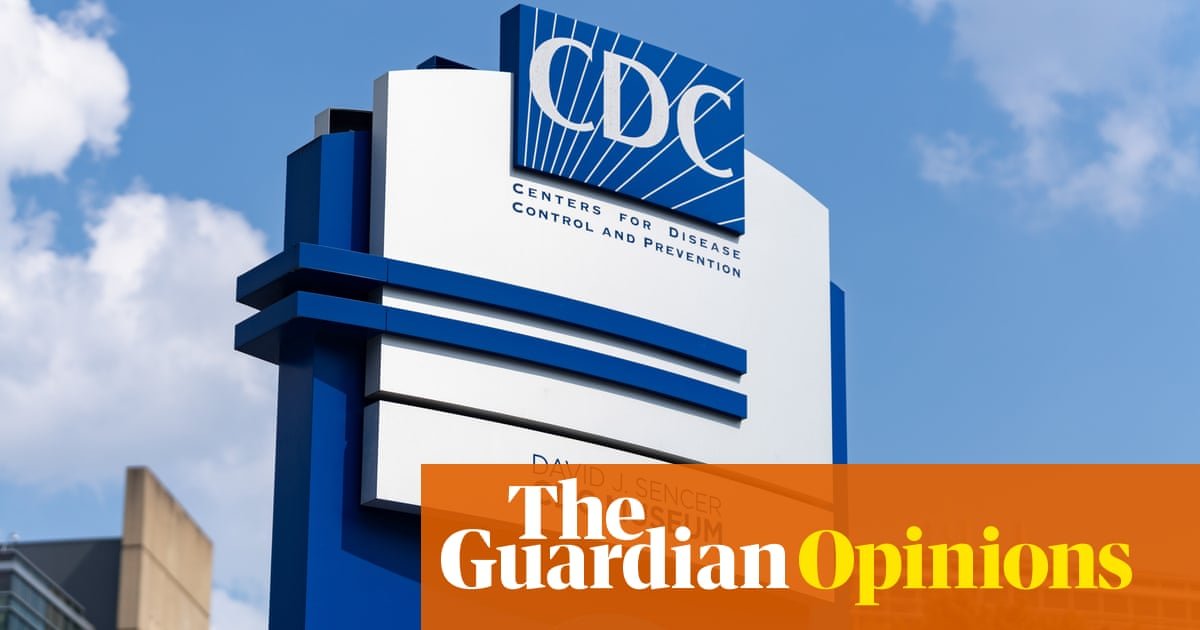
Last year the federal government arranged for the country to miss it too. On 1 July 2025, the CDC downgraded FoodNet, the active surveillance network it has run with the FDA, the USDA and 10 state health departments since 1995, making tracking of Cyclospora optional at its sites, along with listeria, campylobacter, shigella, vibrio and yersinia. Of the eight pathogens it was built to watch, six were downgraded to optional. Salmonella and E coli remained mandatory. The change arrived with budget cuts and no public announcement, and was reported almost two months later, when a journalist asked.
This summer, cyclosporiasis is moving through the US food supply on a scale not seen in years. As of 15 July, the CDC had confirmed 1,645 domestically acquired cases across 34 states, with 141 hospitalizations, and said it was aware of more than 5,100 further cases awaiting analysis. Michigan, which in a normal year records 40 to 50 cases, has reported more than 3,700. Investigators still cannot identify the source, or sources, of the contamination.
That is not for want of effort. It follows from the biology. Cyclospora is not transmitted directly from person to person; the oocysts it sheds must mature in the environment for days before they can infect anyone. Every case traces back to contaminated food or water that someone consumed.
The incubation period runs about a week. By the time a patient is ill enough to be tested, the meal is a hazy memory, and the produce that carried the parasite has been eaten or shipped onward. Effective treatment exists, and it will cure the woman in the clinic. It will do nothing for the next thousand people eating from the same contaminated lot. Ending outbreaks like these means identifying the source and getting it out of the food supply, and that work runs on timely, comparable case counts. For cyclospora, surveillance is not the paperwork that accompanies the treatment. Surveillance is the treatment.
Let me be careful about what I am and am not claiming. The surveillance change did not contaminate anyone’s lettuce. Cyclospora would have entered the food supply this summer, whoever was counting. Nor is FoodNet the system that finds cases in Michigan; it never covered Michigan. It operates at 10 sites covering about 16% of the country, and its purpose is to be the instrument sensitive enough to tell the nation that something unusual is happening, and to say so against a consistent baseline.
That is the capacity the CDC downgraded, and the consequence is on the record. Through early July, the CDC’s national tally held at 145 cases. By 13 July, its own confirmed figure was 1,645, and a single state was reporting more illness than the entire country had officially registered. A count that lands after the food has been eaten can document an outbreak. It cannot stop one.
The official rationale deserves a hearing. The CDC says funding has not kept pace with the resources required to maintain surveillance for all eight pathogens, that the remaining pathogens are still trackable through other systems, and that a narrower mandate lets staff focus on core work. Each of those statements is defensible on its own. But the other systems are the slower, passive ones, and we have just watched what they produce during a fast-moving outbreak.
Nor was the FoodNet downgrade an isolated act of housekeeping. More than 3,000 public health workers have left the CDC through firings, forced retirements and attrition, roughly a quarter of its workforce by the end of last year, according to an analysis by KFF Health News. Much of what the CDC does is push money and expertise down to the state and local departments that conduct the interviews and the food tracebacks, and those are the people who will find whatever is doing this. The Trump administration has called the department it inherited a bloated bureaucracy and promised to close what it deems wasteful and duplicative. The redundancy eliminated here was the capacity to notice.
I have practiced intensive care medicine for more than 40 years. I began on the wards in Los Angeles in 1981, in the months when physicians were first encountering what would come to be called Aids. The diseases are not comparable, and I will not pretend otherwise. The institutional lesson is: what a health system does not measure can spread in plain sight, and by the time the measurement catches up, the argument is no longer about prevention.
The repair is specific. Restore Cyclospora to mandatory active surveillance at FoodNet’s sites, publish national counts weekly through the summer season, and rebuild the state and local teams who do the interviewing and the tracing. That capacity is modest in cost set against the illness and the hospital admissions it prevents, and far cheaper than an outbreak nobody can name.
Surveillance is not clerical overhead. It is the promise a country makes to its citizens that it will notice when they begin to get sick. We are withdrawing that promise quietly, one pathogen at a time, and we are practicing on a parasite that rarely kills. The organism that tests this system next may be less forgiving.
