

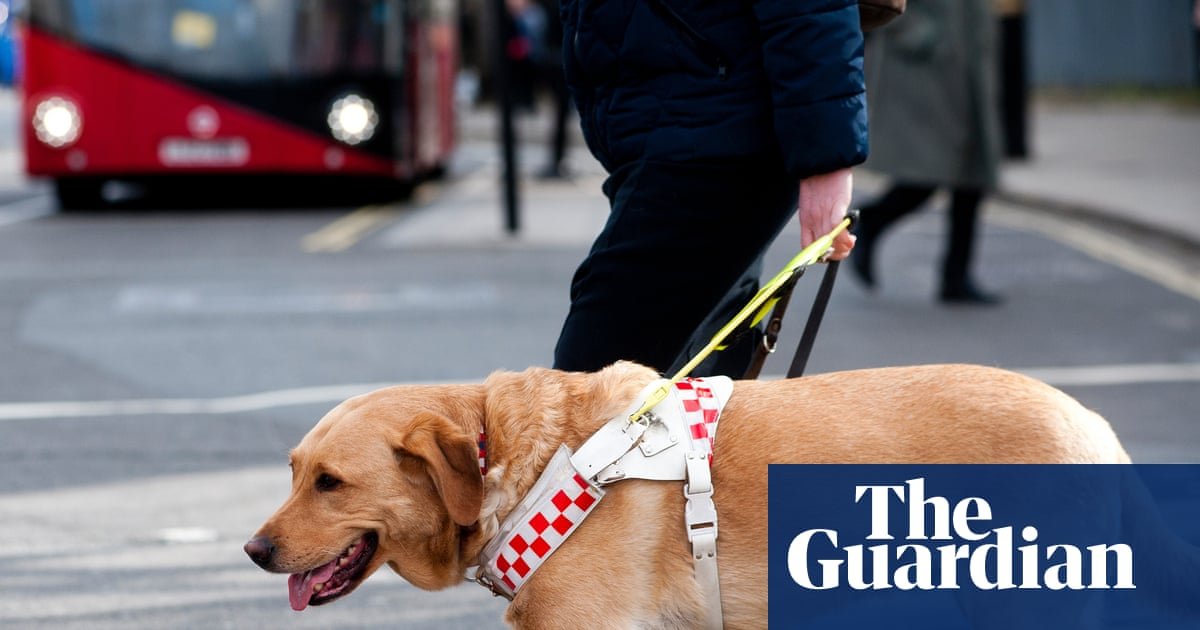
Joanne Hewitson from Hartlepool only wanted to enjoy breakfast at her local pub, accompanied by her guide dog, Rosie. Instead, a member of staff wrongly and repeatedly demanded identification for her guide dog, making her feel so unwelcome that she felt she had to leave (Blind woman ‘livid’ after Wetherspoon’s pub asks for guide dog’s ID, 7 July).
Joanne’s experience is not unique. Guide dog owners are refused entry or told to leave pubs, places to eat, taxis, shops and essential services right across the UK, despite businesses’ own policies stating that assistance dogs are welcome.
It is nearly always illegal to do so, yet almost 90% of guide dog owners have been refused access to a business or service because they were accompanied by their guide dog, many of them repeatedly.
Guide dogs, like other types of assistance dogs, enable people to live independently, and disabled people should not be forced to justify their presence every time they use a business or service. The onus is not on guide dog owners to educate staff. Constantly having to explain your disability and prove why you should be allowed to spend money or access basic services just like everyone else is exhausting.
Heartbreakingly, it has chipped away at the confidence of some people with a vision impairment, so much so that they don’t want another guide dog in the future, despite the freedom their dog usually brings them.
The government must strengthen the Equality Act to make it explicit that businesses cannot refuse guide and other assistance dogs, and service providers need to give staff proper disability equality training on their legal obligations.
Eleanor Briggs
Head of policy, public affairs and campaigns, Guide Dogs
Have an opinion on anything you’ve read in the Guardian today? Please email us your letter and it will be considered for publication in our letters section.
