
Close Menu

    Subscribe to Updates

    Get the latest creative news from FooBar about art, design and business.

    What's Hot

    Italy ordered to compensate woman after allegations of rape by partner dismissed as ‘normal’ | Italy

    Wegovy weight-loss pill goes on sale on UK high street and online pharmacies | Weight-loss drugs

    Sky owner strikes £1.6bn ITV deal; easyJet shares hit four-year high after it agrees £5.5bn takeover ‘in principle’ – as it happened | Business

    Facebook X (Twitter) Instagram
    Facebook X (Twitter) YouTube LinkedIn
    Naija Global News |
    Monday, July 6
    • Business
    • Health
    • Politics
    • Science
    • Sports
    • Education
    • Social Issues
    • Technology
    • More
      • Crime & Justice
      • Environment
      • Entertainment
    Naija Global News |
    You are at:Home»Crime & Justice»The Guardian view on gene-edited humans: darker uses must be acknowledged alongside medical ones | Editorial
    Crime & Justice

    The Guardian view on gene-edited humans: darker uses must be acknowledged alongside medical ones | Editorial

    onlyplanz_80y6mtBy onlyplanz_80y6mtJuly 5, 2026003 Mins Read
    Share Facebook Twitter Pinterest LinkedIn Tumblr Email
    The Guardian view on gene-edited humans: darker uses must be acknowledged alongside medical ones | Editorial
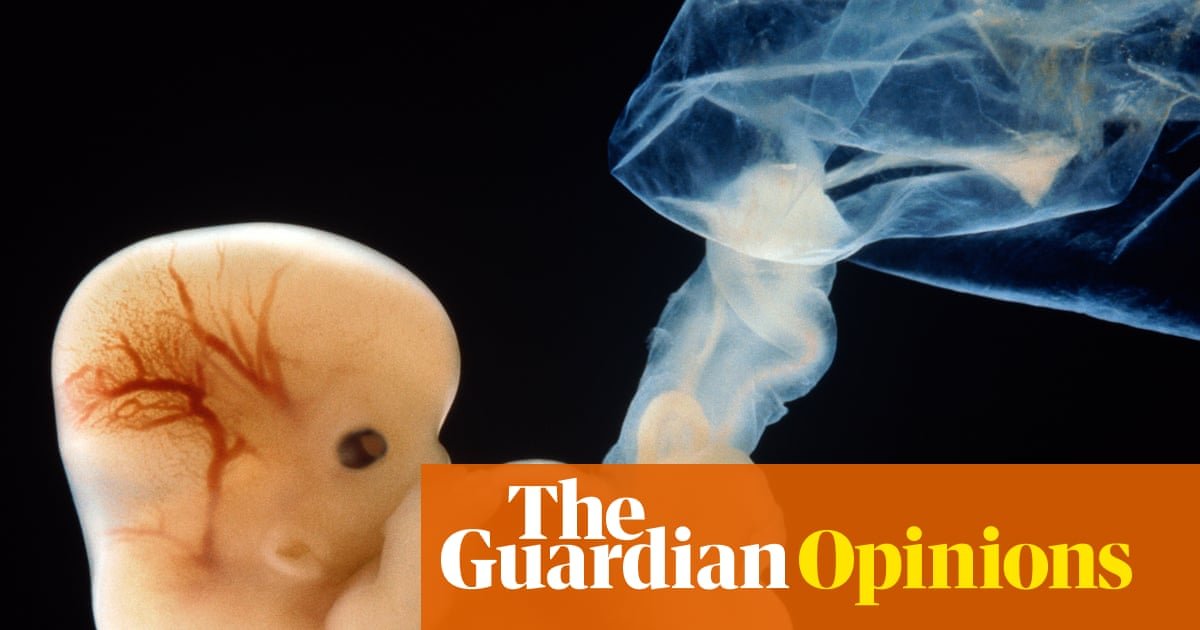
    ‘A majority of citizens in the UK, Spain and the Netherlands supported the use of gene editing to correct life-threatening genetic conditions.’ A six-week-old human embryo. Photograph: Getty Images
    Share
    Facebook Twitter LinkedIn Pinterest Email

    Ever since Crispr-Cas9 gene-editing technology emerged in the early 2010s, ethical questions around genetically altered humans, so-called designer babies, have become increasingly urgent. There is already a worldwide legal prohibition. No country currently allows human germline editing (meaning genetic changes to an embryo that could also be passed on to its children), and 70 have laws against it, including the UK. But a series of recent discoveries and a new poll suggest that scientists and the public believe gene-edited humans are likely – even desirable – in the near future.

    Two new studies use base editing – a more precise next-generation Crispr tool – on human embryos to study early development or disease (this research is legal in the UK and US as long as the embryos are destroyed within 14 days). The lead author of one study, Dieter Egli, said that the technology wasn’t yet ready for the clinic, but the advances would “guide responsible research to achieve its ultimate safe and effective use”. This encapsulates the view of many scientists, who believe the regulated use of germline editing to eradicate hereditary conditions is inevitable, and the main objection is around safety.

    Safety concerns, rather than any larger ethical ones, form the basis of most laws against gene editing – making them less ironclad than they initially appear. The position of the influential Nuffield Council on Bioethics is that human germline editing is not ethically unacceptable in itself, a line also held by the US National Academies of Sciences, Engineering, and Medicine. As the bioethicist R Alta Charo points out, each new technological advance chips away at objections over safety, forcing us toward more fundamental questions on whether this technology should be used at all, and if so in what situations. Any changes to the law must consider these questions and specific uses, rather than a narrow definition of safety.

    The public, it seems, is running ahead of scientists on this front. New polling by Ipsos for the Progress Educational Trust found that a majority of citizens in the UK, Spain and the Netherlands supported the use of gene editing to correct life-threatening genetic conditions like cystic fibrosis, and a plurality support using it on difficult but manageable conditions like asthma (Italy returned a plurality in support on both questions). Given that IVF research was strongly opposed through the 1980s, this shows a remarkable degree of trust in science, and a newfound willingness to tinker with the very stuff of life.

    But human germline editing should not be a fait accompli. There are genetic conditions that can’t be treated with existing methods like embryo selection, and if the technology is deemed safe it should be considered first only in these rare cases. Designer babies are not just a bogeyman. We already know that in jurisdictions including the UK, where donor selection is illegal in IVF, some couples will use companies abroad to screen for desirable traits. It is worrying that in the US there are already collaborations between such IVF companies and labs doing base-editing research, showing how short the leap is likely to be from medical treatment to on-demand genetic designs. Any discussion must make it clear that while regulation can limit these darker uses, it is unlikely to eliminate them entirely.

    Human germline editing should remain banned for the time being – that is clear on the grounds of safety alone. But that argument may not always hold, and we can’t rely on it for ever. It’s time to have the conversation about what happens next.

    acknowledged darker Editorial geneedited Guardian humans Medical view
    Share. Facebook Twitter Pinterest LinkedIn Tumblr Email
    Previous ArticleProblems with Andy Burnham’s drive for devolution | Devolution
    Next Article Man claiming world’s smallest penis says he’s booked enhancement surgery after public’s help | South Carolina
    onlyplanz_80y6mt
    • Website

    Related Posts

    Italy ordered to compensate woman after allegations of rape by partner dismissed as ‘normal’ | Italy

    July 6, 2026

    Jamaican man who has lived in UK for 26 years facing deportation | Immigration and asylum

    July 6, 2026

    Monday briefing: Who are the people trying to protect our right to protest? | Palestine Action

    July 6, 2026
    Add A Comment
    Leave A Reply Cancel Reply

    Top Posts

    The science influencers going viral on TikTok to fight misinformation

    February 17, 20262 Views

    Watch Lady Gaga’s Perform ‘Vanish Into You’ on ‘Colbert’

    September 9, 20251 Views

    Advertisers flock to Fox seeking an ‘audience of one’ — Donald Trump

    July 13, 20251 Views
    Stay In Touch
    • Facebook
    • YouTube
    • TikTok
    • WhatsApp
    • Twitter
    • Instagram
    Latest Reviews

    At Chile’s Vera Rubin Observatory, Earth’s Largest Camera Surveys the Sky

    By onlyplanz_80y6mtJune 19, 2025

    SpaceX Starship Explodes Before Test Fire

    By onlyplanz_80y6mtJune 19, 2025

    How the L.A. Port got hit by Trump’s Tariffs

    By onlyplanz_80y6mtJune 19, 2025

    Subscribe to Updates

    Get the latest tech news from FooBar about tech, design and biz.

    Most Popular

    The science influencers going viral on TikTok to fight misinformation

    February 17, 20262 Views

    Watch Lady Gaga’s Perform ‘Vanish Into You’ on ‘Colbert’

    September 9, 20251 Views

    Advertisers flock to Fox seeking an ‘audience of one’ — Donald Trump

    July 13, 20251 Views
    Our Picks

    Italy ordered to compensate woman after allegations of rape by partner dismissed as ‘normal’ | Italy

    Wegovy weight-loss pill goes on sale on UK high street and online pharmacies | Weight-loss drugs

    Sky owner strikes £1.6bn ITV deal; easyJet shares hit four-year high after it agrees £5.5bn takeover ‘in principle’ – as it happened | Business

    Recent Posts
    • Italy ordered to compensate woman after allegations of rape by partner dismissed as ‘normal’ | Italy
    • Wegovy weight-loss pill goes on sale on UK high street and online pharmacies | Weight-loss drugs
    • Sky owner strikes £1.6bn ITV deal; easyJet shares hit four-year high after it agrees £5.5bn takeover ‘in principle’ – as it happened | Business
    • Jamaican man who has lived in UK for 26 years facing deportation | Immigration and asylum
    • Monday briefing: Who are the people trying to protect our right to protest? | Palestine Action
    © 2026 naijaglobalnews. Designed by Pro.
    • About Us
    • Disclaimer
    • Get In Touch
    • Privacy Policy
    • Terms and Conditions

    Type above and press Enter to search. Press Esc to cancel.