

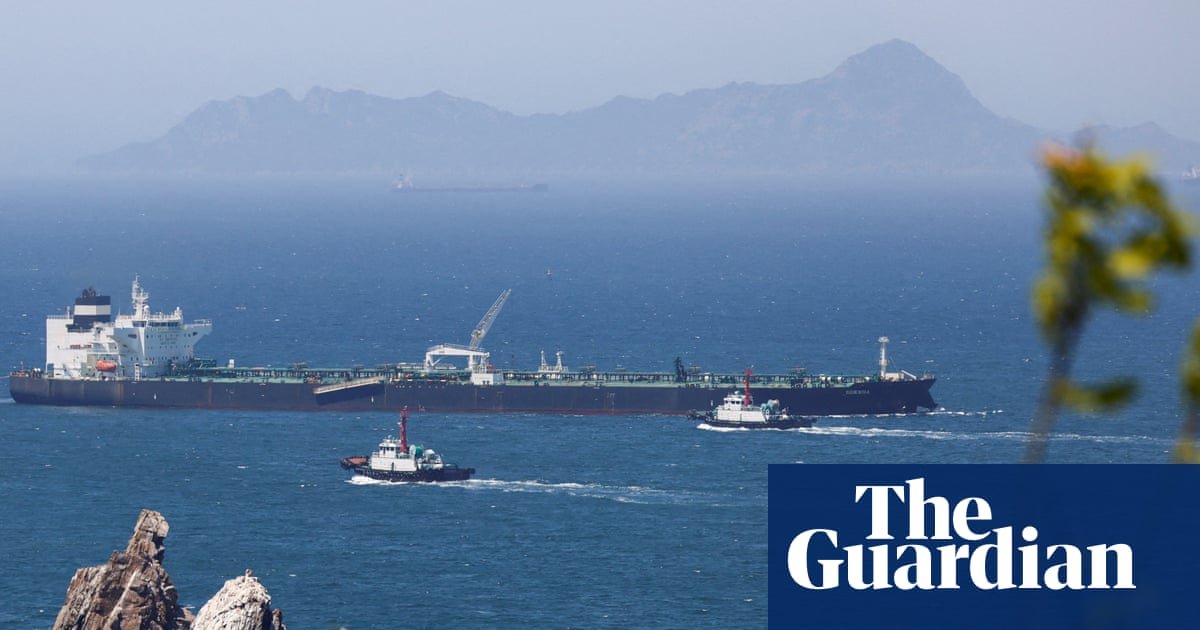
After more than 100 days of the greatest recorded disruption to the world’s energy supplies, the global oil and gas markets have breathed a sigh of relief.
Hours after Donald Trump confirmed that a US-Iran peace deal would lead to the reopening of the strait of Hormuz to tankers carrying millions of barrels of oil and gas, the price of Brent crude tumbled to lows of $83 a barrel. Wholesale gas prices fell about 6%.
The international oil benchmark remains well above the $69 a barrel average recorded last year but the slump from $126 a barrel at the peak of the crisis could mean that the global economy avoids the worst-case consequences predicted in the early days of the Iran war.
The 11th-hour deal has emerged weeks before the oil market was forecast to enter a “red zone” in which soaring summer demand during the travel season was expected to collide with fast-depleting crude stockpiles.
But even as the market exhales after weeks of unprecedented disruption, uncertainty remains: a return to pre-crisis normalcy is months away and relies on the cooperation of the Iranian regime with the White House.
Donald Trump faces midterm elections this year. Photograph: Saul Loeb/AFP/Getty Images
In the US, where Trump faces midterm elections later this year, soaring road fuel prices through the summer driving season represented a real political risk to the Trump administration.
“Trump has to sell this at home as a victory,” said Bjarne Schieldrop, the chief commodities analyst at SEB. When the deal is finalised, US consumers can expect “lower gasoline price and maybe US republicans survive the midterm elections”, he said.
For Iran, a gradual reopening “is tactically preferable”, too, according to Schieldrop, in preventing global governments from restocking their crude stores too quickly and allowing Tehran to maintain its political leverage through its negotiations with the US.
The US and Iran are due to sign the “great deal” on Friday, according to Trump, before the strait is reopened “for purposes of mine removal” during a 60-day negotiation over the terms of Iran’s nuclear phaseout.
Despite the sharp fall in global oil and gas markets in response, prices may now remain between $80 and $90 a barrel over the rest of the year as buyers race to refill the heavily depleted emergency crude stockpiles.
Market observers believe it could be July before the trade route that once carried a fifth of the world’s oil and gas begins to play a role in the Gulf’s long journey back to pre-crisis exports, and the end of the year before oil flows return to prewar levels.
“Even if ships now have safe passage, tankers are in the wrong place, oil production and refining facilities need to get up to full capacity, and questions over the cost and availability of insurance for ships traversing the strait will remain,” according to Neil Shearing, the chief economist at Capital Economics.
About 80% of crude flows could resume by the end of the third quarter, according to Shearing, but exports of gas could take longer because of the damage wrought by Iranian drone strikes on Qatar’s gas processing facilities during the conflict in a blow to countries, including the UK, which are exposed to the economic impact of global gas prices.
The strikes forced QatarEnergy, the world’s largest producer of liquefied natural gas, to halt production, effectively erasing 20% of the world’s LNG at a stroke. The extensive damage to its Ras Laffan complex could mean that it takes years before it is operating at full capacity, spelling higher prices as buyers vie to secure cargoes from a smaller pool of gas producers.
Oil exports from the Gulf could take until next year to reach pre-crisis levels, according to analysts at Rystad Energy, because of the challenge of restarting ageing oilfields in Iraq and Kuwait that were shut within weeks of the strait closure as regional storage facilities were filled to the brim.
Shearing said: “Even if the deal reopens the strait immediately, it will not prevent inflation from rising a bit further in the near term, nor will it avoid some economic damage.”
Still, he predicts even a slightly rosier outlook could mean that rather than face a recession, the global economy will face a period of weaker than previously expected growth in the third quarter, before global GDP growth recovers to its pre-conflict pace of just over 3% in late 2026 and into 2027.
