

For more than two decades, an important part of Britain’s equality laws ensured public institutions had to think about the impact their decisions could have on different groups in society.
Introduced after the Stephen Lawrence inquiry, the public sector equality duty required public bodies – such as local councils, police forces and hospitals – to think proactively about equality law. Now this once uncontroversial public duty is a new battleground in Britain’s culture wars.
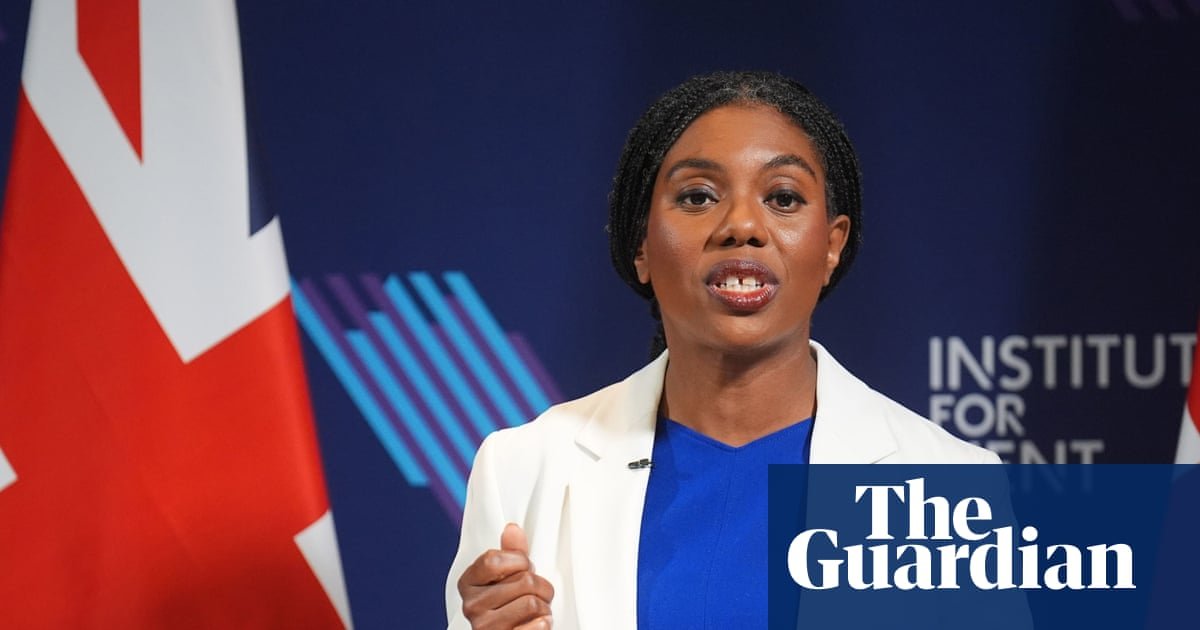
In a speech on Tuesday, the Conservative leader, Kemi Badenoch, pledged to abolish the duty, arguing it had encouraged public bodies to prioritise “dangerous and divisive agendas” over common sense and effective decision-making. For her, it was the culprit behind nonsensical diversity policies and training programmes.
Among the examples she cited was the Bank of England’s decision to replace historical figures, including Winston Churchill, on banknotes with images of British wildlife.
But are Badenoch’s claims borne out by the evidence?
Experts in equality law say many of the examples cited by critics of the duty misunderstand its purpose and how it operates in practice.
Others have gone further. The TUC’s general secretary, Paul Nowak, accused Badenoch of wanting to legalise discrimination. “This proposal would give a future Tory government a free hand to harm your life chances if you’re a woman, gay, black, disabled or working class,” he said.
The Equality Act is designed to protect people from discrimination in the workplace and in wider society on a number of protected characteristics, such as race, sex, disability, religion, age and sexual orientation, as well as rights relating to equal pay, pregnancy and maternity.
The 2010 legislation, which consolidated most equality laws into one act, also introduced the public sector equality duty.
Karon Monaghan KC, a British barrister specialising in equality and human rights law, emphasised that the duty does not require public organisations to provide a particular service or introduce a particular policy. “It requires them to have due regard, which in simple language means take account of a number of aims: eliminating discrimination, advancing equality of opportunity and fostering good relations,” she said.
She used an example of a local authority considering cutting a library service in an area where many disabled people lived, and opening a service for disadvantaged young people instead.
“So they’re trying to balance those needs in the context of a limited budget. When they do, they will have to take account of the need to eliminate discrimination against disabled people and other groups, advance equality and foster good relations,” she said.
The local council must consider the impact of any decision on those groups, Monaghan said, and ask questions such as: how many children will be disadvantaged by the absence of facilities for young people? What can they do to mitigate the impact on disabled people?
When Badenoch was asked whether public sector workers should take things such as disability into account when dealing with people, she responded that she was simply calling for the return of common sense, stating: “You don’t need a duty to tell you to take account of differences. Quite often differences are obvious.”
But experts argue that removing this public duty would not only increase discrimination claims, but also cause greater legal uncertainty.
Colm O’Cinneide, professor of constitutional and human rights law at University College London, said: “What the duty does is to impose a positive obligation upon public bodies to engage with these issues and to do more than just to maintain basic legal compliance, but to actually take proactive steps to eliminate problems that may exist, even if they’re not triggering a specific litigation risk.”
On the examples given by critics of the duty, O’Cinneide said: “A lot of the criticism is effectively cherrypicking individual issues and saying that because these controversies are in some way tangentially related to the duty, the entire mechanism is flawed.”
He added that many of these decisions, such as those by the Bank of England, were not even related to the duty.
For its part, the Bank said the decision to swap public figures with nature was in response to a public consultation, in which people were asked what they would like on new notes.
For Estelle du Boulay, the director of Rights of Women, the duty reflects hard-won progress in understanding and tackling discrimination. “For women, it has been a vital tool in improving accountability and ensuring that public services properly consider the needs of survivors of domestic abuse and violence against women and girls.”
She said that removing the duty could weaken “one of the few practical mechanisms that allows individuals and organisations to secure fairer outcomes for everyone.”
Badenoch’s proposal concerns only the public sector equality duty, but it comes amid a broader debate on the right about the future of Britain’s equality laws. Reform UK has gone further, calling for the Equality Act itself to be abolished.
Monaghan said that without the Equality Act, employers could refuse jobs on the basis of race, fail to make reasonable adjustments for disabled workers, or discriminate against pregnant women or those who may become pregnant.
“Do we want a society where women can be paid unequally, where black people can be told they can’t have a job, where disabled people can’t get into work?” she asked.
In three years’ time, when the next general election is expected to be held, we may get our answer.
