
Close Menu

    Subscribe to Updates

    Get the latest creative news from FooBar about art, design and business.

    What's Hot

    The Guardian view on cancer treatments: new hope for patients now and in the future | Editorial

    Map: 3.6-Magnitude Earthquake Shakes the San Francisco Bay Area

    Billions spent and hypothetical returns: the AI boom explained with six charts | AI (artificial intelligence)

    Facebook X (Twitter) Instagram
    Facebook X (Twitter) YouTube LinkedIn
    Naija Global News |
    Sunday, June 7
    • Business
    • Health
    • Politics
    • Science
    • Sports
    • Education
    • Social Issues
    • Technology
    • More
      • Crime & Justice
      • Environment
      • Entertainment
    Naija Global News |
    You are at:Home»Health»The Guardian view on cancer treatments: new hope for patients now and in the future | Editorial
    Health

    The Guardian view on cancer treatments: new hope for patients now and in the future | Editorial

    onlyplanz_80y6mtBy onlyplanz_80y6mtJune 7, 2026003 Mins Read
    Share Facebook Twitter Pinterest LinkedIn Tumblr Email
    The Guardian view on cancer treatments: new hope for patients now and in the future | Editorial
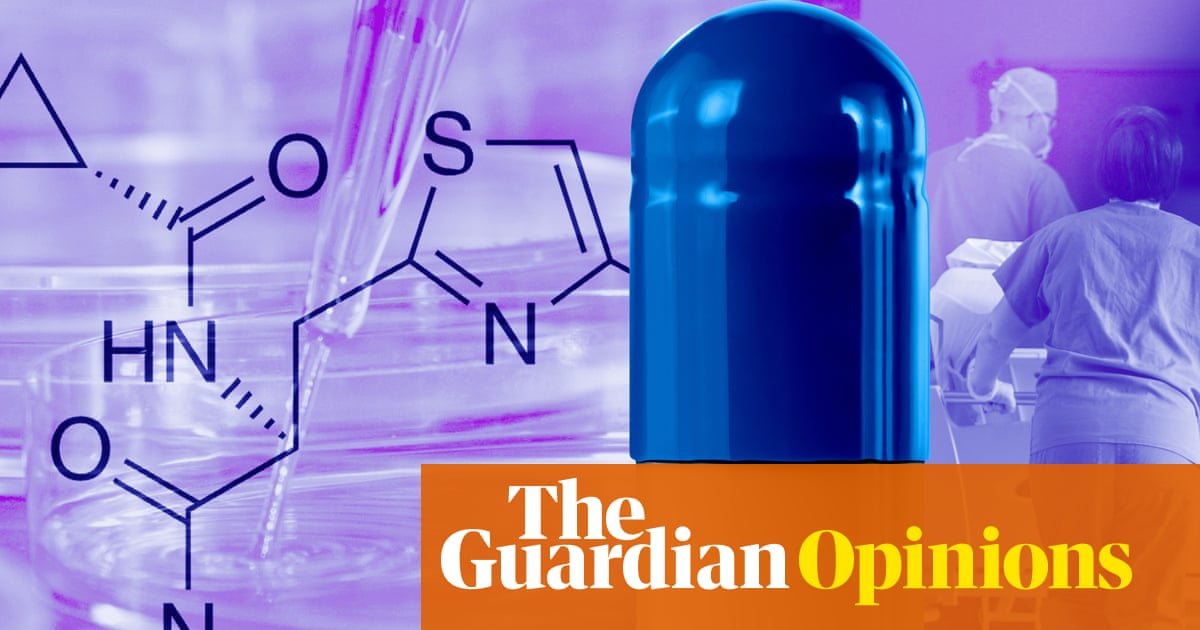
    A new drug called daraxonrasib doubled survival time for pancreatic cancer patients in a recent clinical trial. Illustration: Guardian Design
    Share
    Facebook Twitter LinkedIn Pinterest Email

    It is unlikely that we will ever declare a final victory over cancer. Governments have often promised it: from Nixon’s 1971 “war on cancer” to the 2016 Obama‑Biden plan to fight and cure it “once and for all” and Sajid Javid’s 2022 “war on cancer” initiative in the UK. But framing it this way can obscure how real progress is made: not in stunning routs, but in stalling and turning back the advance of this terrible condition – often in simply giving people more time to live.

    Several such breakthroughs, and a bigger one that could transform the treatment of multiple kinds of cancer over the next decade, emerged at last week’s American Society of Clinical Oncology meeting in Chicago. As the Guardian revealed, there is a new jab effective against head and neck cancers in some patients, and a new immunotherapy that could spare bladder cancer patients invasive and life-changing surgery. Most significantly, there is a new drug called daraxonrasib, which doubled survival time for pancreatic cancer patients in a recent clinical trial.

    This should be celebrated in its own right. Pancreatic cancer has few effective treatments and is particularly deadly. In the UK, only about one in 20 patients are still alive five years after diagnosis. It is easy to be disheartened in the face of such a dim prognosis. In this trial, doubling survival meant that people lived on average 13 months rather than six. But we should not lose sight of the fact that those months are precious to patients and their loved ones. And in the longer view, new treatments can build on this advance. With HIV, the combination of many drugs with relatively modest effects eventually worked to render the virus a manageable condition in the rich world, rather than a death sentence.

    Daraxonrasib may also fundamentally transform  the treatment of other cancers. We are often told that cancer is technically not one disease, but many diseases that behave the same way. This is true, but there are commonalities across types. Daraxonrasib targets a family of molecules known as Ras, which are often misregulated or mutated in cancer cells. Since the 1980s, Ras have been deemed “undruggable” – now, through some impressive medical chemistry, that is no longer the case. Trials are under way to test daraxonrasib in other cases where Ras play a role, for instance in about 40% of colorectal cancers and 30% of small-cell lung cancers.

    This offers two lessons. The first is how often the scientifically impossible can be overcome, but only after generations of seemingly minor advances. This makes the success or failure of research programmes hard to evaluate in their own time. The second is how routine genetic screening has transformed cancer medicine over the past decade. Even in cancers where only a small proportion of patients will have problems with Ras, we can now easily identify those people who would benefit from treatment – potentially expanding the use of each new drug.

    Survival rates have doubled in the UK since the 1970s, similar to many other rich countries, and the head of Cancer Research UK, Michelle Mitchell, says that we are in a “golden age for cancer research”. She is right. Our various wars on cancer have not produced a magic bullet, but each year brings new detection methods, drugs and treatments. This is what real progress looks like: not a grand victory but small advances winning more remissions, more time and more life for patients.

    cancer Editorial Future Guardian hope patients Treatments view
    Share. Facebook Twitter Pinterest LinkedIn Tumblr Email
    Previous ArticleMap: 3.6-Magnitude Earthquake Shakes the San Francisco Bay Area
    onlyplanz_80y6mt
    • Website

    Related Posts

    ‘Significant breakthrough’: NHS hospitals adopt faster, more accurate bladder cancer test | NHS

    June 7, 2026

    Triple-action diabetes jab shown to reduce blood sugar and body weight | Diabetes

    June 7, 2026

    ‘I’ve lost my butt’: how rapid weight loss can leave you with less muscle and more fat | Health & wellbeing

    June 7, 2026
    Add A Comment
    Leave A Reply Cancel Reply

    Top Posts

    Watch Lady Gaga’s Perform ‘Vanish Into You’ on ‘Colbert’

    September 9, 20251 Views

    Advertisers flock to Fox seeking an ‘audience of one’ — Donald Trump

    July 13, 20251 Views

    A Setback for Maine’s Free Community College Program

    June 19, 20251 Views
    Stay In Touch
    • Facebook
    • YouTube
    • TikTok
    • WhatsApp
    • Twitter
    • Instagram
    Latest Reviews

    At Chile’s Vera Rubin Observatory, Earth’s Largest Camera Surveys the Sky

    By onlyplanz_80y6mtJune 19, 2025

    SpaceX Starship Explodes Before Test Fire

    By onlyplanz_80y6mtJune 19, 2025

    How the L.A. Port got hit by Trump’s Tariffs

    By onlyplanz_80y6mtJune 19, 2025

    Subscribe to Updates

    Get the latest tech news from FooBar about tech, design and biz.

    Most Popular

    Watch Lady Gaga’s Perform ‘Vanish Into You’ on ‘Colbert’

    September 9, 20251 Views

    Advertisers flock to Fox seeking an ‘audience of one’ — Donald Trump

    July 13, 20251 Views

    A Setback for Maine’s Free Community College Program

    June 19, 20251 Views
    Our Picks

    The Guardian view on cancer treatments: new hope for patients now and in the future | Editorial

    Map: 3.6-Magnitude Earthquake Shakes the San Francisco Bay Area

    Billions spent and hypothetical returns: the AI boom explained with six charts | AI (artificial intelligence)

    Recent Posts
    • The Guardian view on cancer treatments: new hope for patients now and in the future | Editorial
    • Map: 3.6-Magnitude Earthquake Shakes the San Francisco Bay Area
    • Billions spent and hypothetical returns: the AI boom explained with six charts | AI (artificial intelligence)
    • ‘Significant breakthrough’: NHS hospitals adopt faster, more accurate bladder cancer test | NHS
    • Triple-action diabetes jab shown to reduce blood sugar and body weight | Diabetes
    © 2026 naijaglobalnews. Designed by Pro.
    • About Us
    • Disclaimer
    • Get In Touch
    • Privacy Policy
    • Terms and Conditions

    Type above and press Enter to search. Press Esc to cancel.