

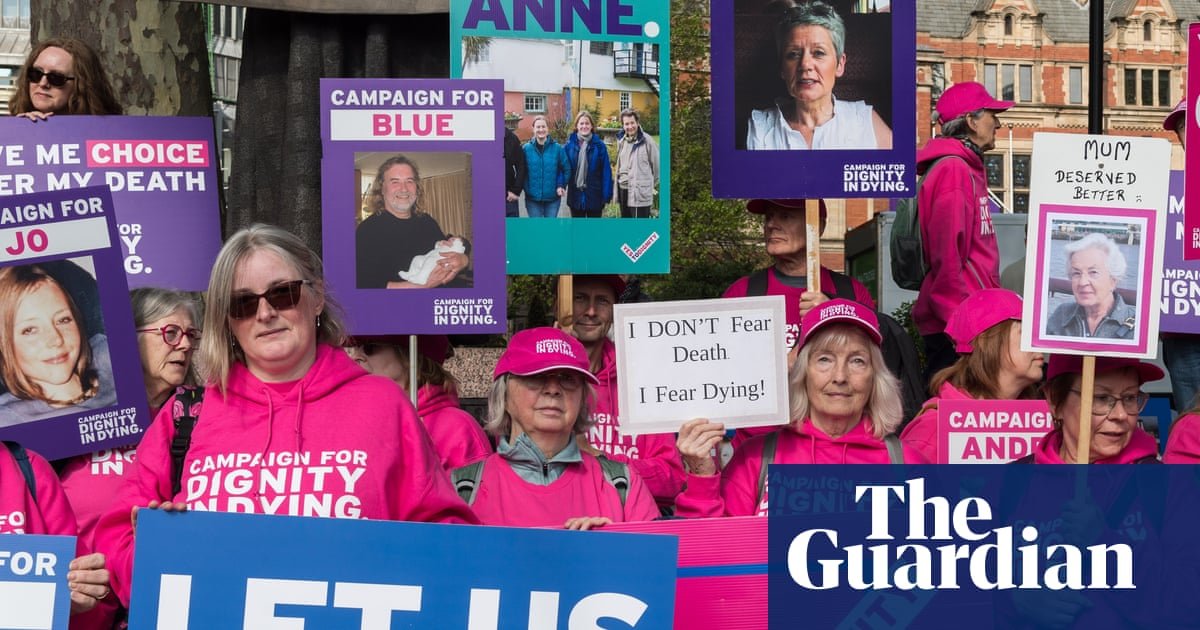
Prominent backers of assisted dying, including the former cabinet ministers Louise Haigh, Ian Murray and Jeremy Hunt, have told constituents they do not expect the bill to be resurrected using the Parliament Acts.
A growing number of MPs who backed the bill have suggested to their constituents they do not support the use of the act which allows the potential bypassing of the House of Lords, where peers blocked the bill.
Kim Leadbeater’s bill passed the Commons by 23 votes, meaning just 12 MPs changing their view would mean any returning bill would fall.
Supporters of Leadbeater’s private member’s bill – which would have applied in England and Wales – have a narrow chance to use the Parliament Acts to bypass the Lords if they can persuade another MP to take it through the Commons again via another private member’s bill.
The bill fell in the House of Lords after opponents submitted more than 1,000 amendments which meant the debate ran too long for the bill to be put to a vote.
Two MPs who backed Leadbeater’s bill came in the top five of the latest private member’s bill ballot: the Labour MP Lauren Edwards came second and the Liberal Democrat MP Andrew George fourth.
Both have said they were considering adopting the bill, though George said he would consult constituents on which issue to choose and said a bill on affordable housing had been preferred by local people.
Louise Haigh, a former transport secretary, told a constituent that she ‘would not support attempts’ to invoke the Parliament Acts. Photograph: Leon Neal/Getty Images
Haigh, the former transport secretary and a prominent ally of the Labour leadership hopeful Andy Burnham, wrote to a voter in her Sheffield Heeley constituency saying that she “would not support attempts” to invoke the Parliament Acts to force through the bill, allowing it to circumvent further blockage in the House of Lords.
Haigh said she believed it was “extremely unlikely that the Parliament Act will be invoked to carry the bill over and can confirm that I would not support attempts to do so”.
Murray, in a letter to his Edinburgh South constituents before the bill fell in the House of Lords, wrote: “Any decision about the use of the Parliament Acts would only arise in specific procedural circumstances and would ultimately be a matter for the government and for parliament as a whole. I think using them is extremely unlikely, but I will continue to monitor the situation closely.”
He said if the bill returned he would again consider it on his merits. He wrote: “I would assess it in the form before us at that time, taking account of the safeguards in place, the amendments agreed, and the views of constituents.
“This is the trickiest issue I’ve ever considered in my 16 years as your MP, and I’ll continue to monitor the bill closely to ensure that legislation remains robust to protect vulnerable people.”
Ian Murray, a former Scottish secretary, said he would ‘continue to monitor the situation closely’. Photograph: Aaron Chown/PA
Hunt, who wrote to his constituents in March, said he would be “extremely disappointed” if the bill collapsed but said invoking the Parliament Acts could “raise ethical questions about the legislation itself”.
In comments first reported in the Telegraph, he said: “The bill addresses complex moral issues and bypassing the Lords would likely be challenged so I would not be in favour of taking this action.”
Several other backbench MPs have also written to constituents expressing doubts about the use of the act, though stopped short of saying they would oppose the bill.
They include the Lib Dem MP Charlotte Cane and the Labour MP Deirdre Costigan. Costigan said she would like to see reform of the House of Lords to prevent the upper chamber from blocking future bills in a similar manner.
The Conservative MP Peter Bedford, one of the co-sponsors of Leadbeater’s bill, wrote to constituents saying he did “not think it will succeed if brought back as a private member’s bill again during this parliamentary session” and did “not agree with this being debated again in the near future”.
But a spokesperson for Bedford told the Spectator that did not mean he would oppose the bill if it returned. “This current session is shorter so it’s unlikely that the bill would pass this time. However, if it is brought forward again, Peter would likely back it because he supports the principle of assisted dying.”
