

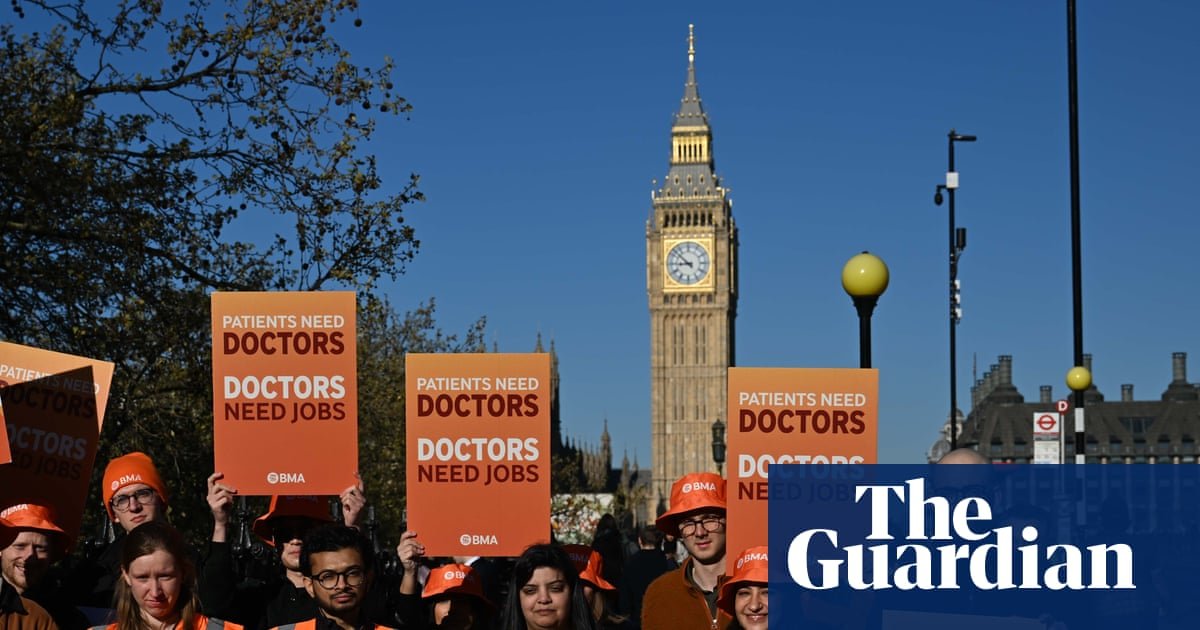
Resident doctors in England will next month stage the 16th strike in their long-running jobs and pay dispute, and have blamed the new health secretary for their decision.
They will strike for four days from 7am on Monday 15 June until 6.59am on Friday 19 June. Announcing the move, the British Medical Association warned that resident doctors would mount a further stoppage in July unless progress towards meeting their demands was made.
Next month’s 96-hour action will be the 16th that resident – formerly junior – doctors have undertaken since their first stoppage in March 2023. It will disrupt NHS care and force hospitals to rearrange tens of thousands of diagnostic tests, outpatient appointments and operations.
The BMA wants England’s 75,000 resident doctors to be given a pay increase that will make up for what they say is the 26% loss in the real-terms value of their salaries since 2008-09.
The doctors’ union and professional body is also urging the NHS to hugely expand the number of training places for resident doctors to pursue careers in medical specialties. The BMA represents about 55,000 of those 75,000 medics.
However, hopes of a resolution to the dispute look as far away as ever as James Murray, who succeeded Wes Streeting as health secretary on 14 May, dismissed their pay claim as “unrealistic, unaffordable, and unsustainable”.
James Murray, the new health secretary, said the BMA’s demands were ‘simply not grounds for more strike action’. Photograph: Wiktor Szymanowicz/Anadolu/Getty Images
“I’m disappointed that the BMA have refused to consider further discussions about how to strengthen the deal on the table and have instead rushed once again to unnecessary and unreasonable strike action,” said Murray, who met BMA representatives earlier on Wednesday.
“I was clear with the BMA that after a 33.4% pay rise for resident doctors over the last four years – the highest anywhere across the public sector – the BMA’s demands for further substantial pay increases this year are unrealistic, unaffordable, and unsustainable.
“These are simply not grounds for yet more strike action, which patients do not support, puts further pressure on other staff and costs the NHS hundreds of millions of pounds.”
Dr Jack Fletcher, the chair of the BMA’s resident doctors committee, offered a very different view of events, however, and warned that further talks seemed pointless.
“We had hoped that a change in leadership at the Department of Health and Social Care would lead to a change in approach. Sadly, we have run up against the same unwillingness to move we encountered under Mr Streeting,” Fletcher said.
“We were prepared to give Mr Murray time to settle into his role before completing the work his predecessor left unfinished – to both make a fair and meaningful pay offer and make concrete commitments to end the jobs bottleneck throttling the careers of our colleagues. He had a genuine opportunity to break this logjam with fresh energy and ambition.
“He has not taken it. Instead, we are hearing the same tired line: vagueness on new jobs and no further money on the table. We cannot be asked to negotiate in good faith for weeks, only to be told there is nothing left to negotiate about on pay and no further details at this stage on jobs.”
