

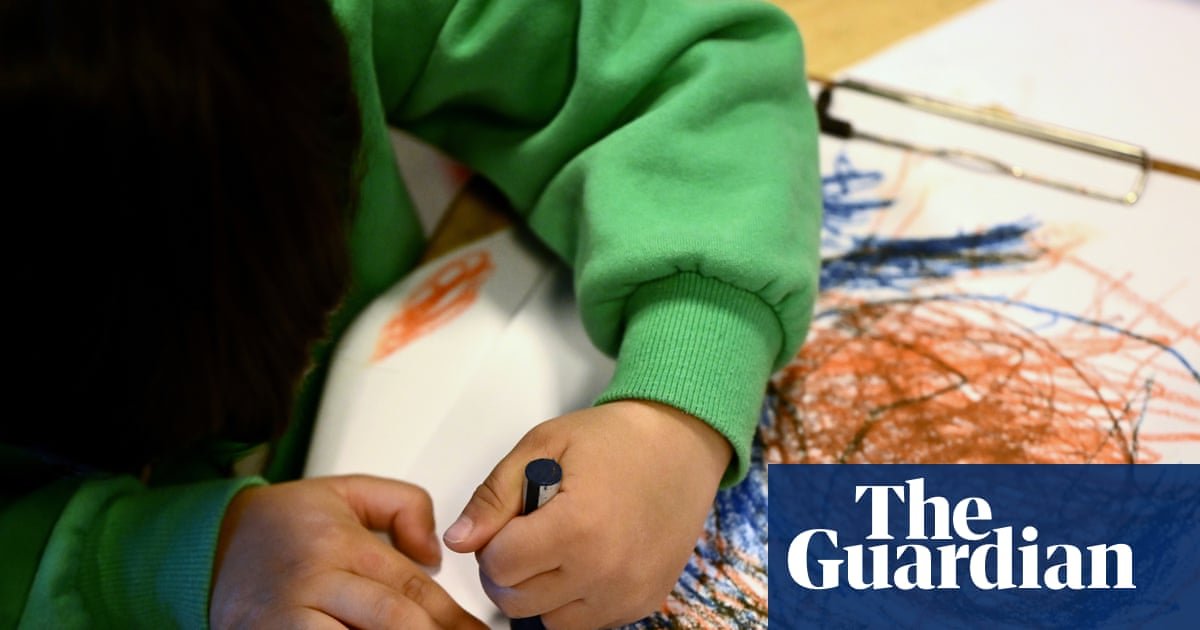
The reported health benefits of engaging with art, discussed in your editorial (The Guardian view on public health and the arts: the all-singing, all-dancing science of ageing, 12 May) should come as no surprise to anyone working with children and young people. The government needs to get serious about wellbeing, school attendance and children’s health, and be much braver in joining up policy across education, culture and health.
At AccessArt, the UK charity I founded nearly 30 years ago to support visual arts teaching and learning, we hear repeatedly from teachers that creative experiences help children feel connected, empowered and engaged. Yet the arts have been undervalued in many schools for years, resulting in pressure to narrow the curriculum and prioritise measurable outcomes over meaningful engagement.
At the same time, England continues to face persistently high levels of school absence. Behind the statistics are many children who simply do not feel they belong in school. A rich creative education cannot solve this alone, but it can help schools become places where children feel seen, valued and motivated to participate.
We cannot keep treating arts education as an optional extra while also worrying about children’s mental health, wellbeing and disengagement from school. Creating space in the school day for making, imagining and cultural connection is not a luxury. It is part of building healthier children and healthier communities.
Paula Briggs
Founder, AccessArt
Recently published UCL research on the link between arts engagement and ageing (Arts and cultural engagement ‘linked to slower pace of biological ageing’, 12 May) should alert us all to the urgent need for more equal access to creative opportunities across society. It is well established that people from lower socioeconomic and otherwise disadvantaged backgrounds have far fewer opportunities to engage with the arts than those who are better off.
The case for the health benefits of creative arts engagement has been firmly made. Beyond this recent research, a mountain of evidence from decades of academic studies conclusively proves that the arts have the power to boost people’s physical and mental wellbeing in profound ways.
I see the transformative power of the arts every day in the work of Create, the charity I founded in 2003 precisely to bring creativity to the most excluded children and adults. To make sure these opportunities are truly accessible, we run artist-led creative workshops completely free of charge for our participants, in locations that are already familiar to them. We now have over two decades’ worth of evaluation data showing that giving people the opportunity to paint, sing, dance, write or engage in any other artform significantly enhances their wellbeing and confidence.
The positive changes we see are often greatest in the most disadvantaged individuals. Sadly, these are often the very people who would otherwise lack access to creativity. If we don’t address this stark imbalance at a societal level, creative arts access (or lack thereof) becomes yet another driver of health inequality instead of what it could be: a vehicle for improving wellbeing and opportunity for marginalised people.
Nicky Goulder
Founding CEO, Create
Have an opinion on anything you’ve read in the Guardian today? Please email us your letter and it will be considered for publication in our letters section.
