

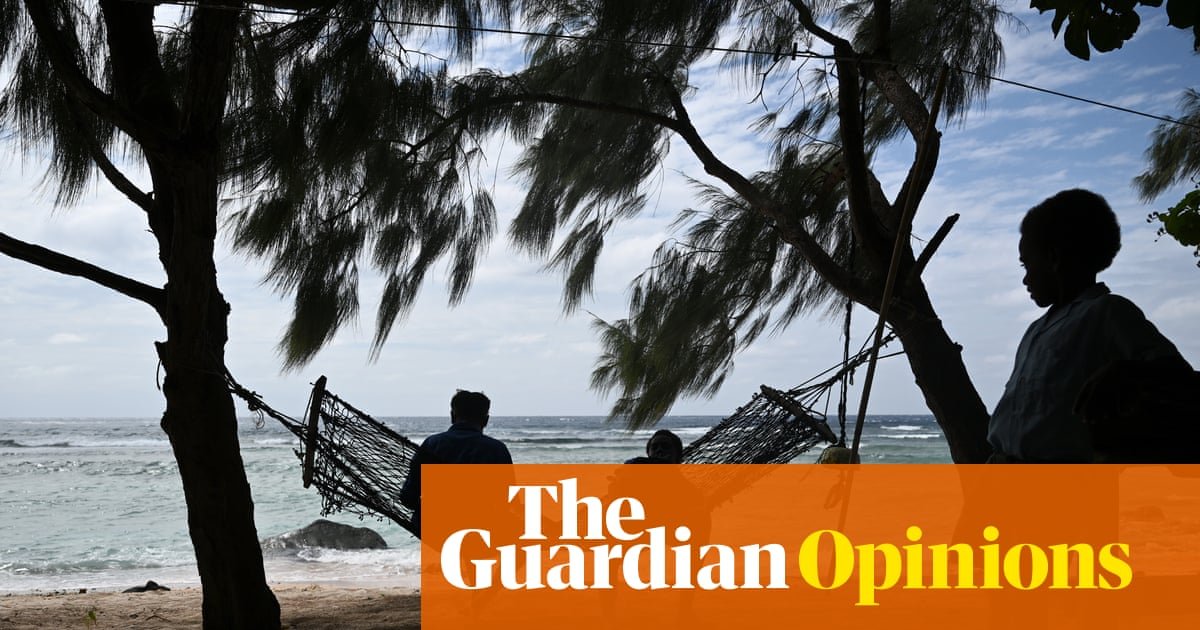
There are moments in history when a crisis long treated as distant reveals itself to be intimate, immediate and profoundly human. Sea-level rise is one of those moments.
For years it has been discussed in the abstract language of centimetres, coastal infrastructure and future projections. This can make it seem like a technical challenge – something for engineers and planners to grapple with. But rising seas are already damaging bodies, minds, livelihoods and cultures. Sea-level rise is a present-day health crisis.
When saltwater intrudes into freshwater supplies, health suffers. When floods overwhelm sanitation systems, diseases spread. When farmland is inundated by king tides, nutrition deteriorates. And when people are forced to contemplate leaving the land of their ancestors, they face a painful mix of physical, financial, emotional, cultural and spiritual harm.
The effect of sea-level rise on property lines and insurance procurement is clear. But what is being lost goes far deeper – it’s safety, dignity, continuity and belonging. Across low-lying coastal regions and small island states, including throughout the Pacific, communities are living with this reality today. For Indigenous peoples especially, land is identity, memory, law, kinship, sustenance today and connection to a shared future.
Those facing the earliest and harshest consequences are, overwhelmingly, those who did the least to create them. Today sea levels are now rising rapidly in a world already shaped by inequality, colonialism and economic exclusion. We cannot allow those unjust legacies to deepen on our watch.
I’m encouraged therefore that we are beginning to name this crisis and its interconnections more clearly. The Lancet Commission on Sea-Level Rise, Health and Justice, newly announced, is bringing together expertise across disciplines and regions, and supported by the World Health Organization Asia-Pacific Centre for Environment and Health, to show how health, justice and climate impacts are inseparable. The rigour in their planned research will help us see what has too often been ignored – and what governments, communities and institutions can do in response.
The commission’s focus reminds me of conversations I had in Vanuatu with the climate activist and youth leader Litiana Kalsrap. Coastal erosion and sea-level rise are a huge threat in Vanuatu. Despite funding cuts, Kalsrap remains determined to inform the community about what’s happening, and to lead mangrove- and grass-planting efforts to help stabilise the land.
I found her dedication and spirit in the face of this threat truly inspirational. I saw that through her efforts something that began as a rehabilitation project for a specific area had become much bigger: it was a source of personal resilience, community building and connection.
Others from Vanuatu took a different approach – going directly to the international court of justice, the highest court of the world. After their request, made together with 129 other nation states, last June the court handed down the most far-reaching legal statement ever made on the responsibility of states to protect the rights of current and future generations to a clean, healthy and sustainable environment.
That advisory opinion is the clearest legal affirmation to date that cooperation among states to address climate change – the main driver of sea-level rise – is a binding obligation. It was unanimous and stated clearly: expanding fossil fuels may constitute a wrongful act.
The seas may be rising in part because too many of our political and economic systems remain organised around extraction without accountability, but things are changing. The ICJ advisory opinion is one critical milestone towards that change. So is every single local community action taken. The extraordinary shift towards renewable energy with storage and electrification in the energy transition is further proof that we are entering a completely different era.
Holding polluters to account in a global economy still addicted to fossil fuels, still willing to privatise profit while socialising harm, is no easy task, but the people I know working to make a difference don’t take on tasks like this because they are easy. They do so because they know what’s at stake. They accept it’s hard and continue anyway. Their courage, just like Kalsrap’s and that of the law students who went to the ICJ, seems to me to be one of the defining characteristics of this decisive decade.
We don’t have to treat sea-level rise as a regrettable side-effect of business as usual, managing its human consequences while preserving the systems that drive it. There is a different way: one that recognises health, justice and climate stability are inseparable, and accountability is not optional. It might not always make headlines but that recognition is there, growing quietly and decisively, building in strength and resilience. And just like sea-level rise, it is beginning to reveal itself to be intimate, immediate and profoundly human.
