

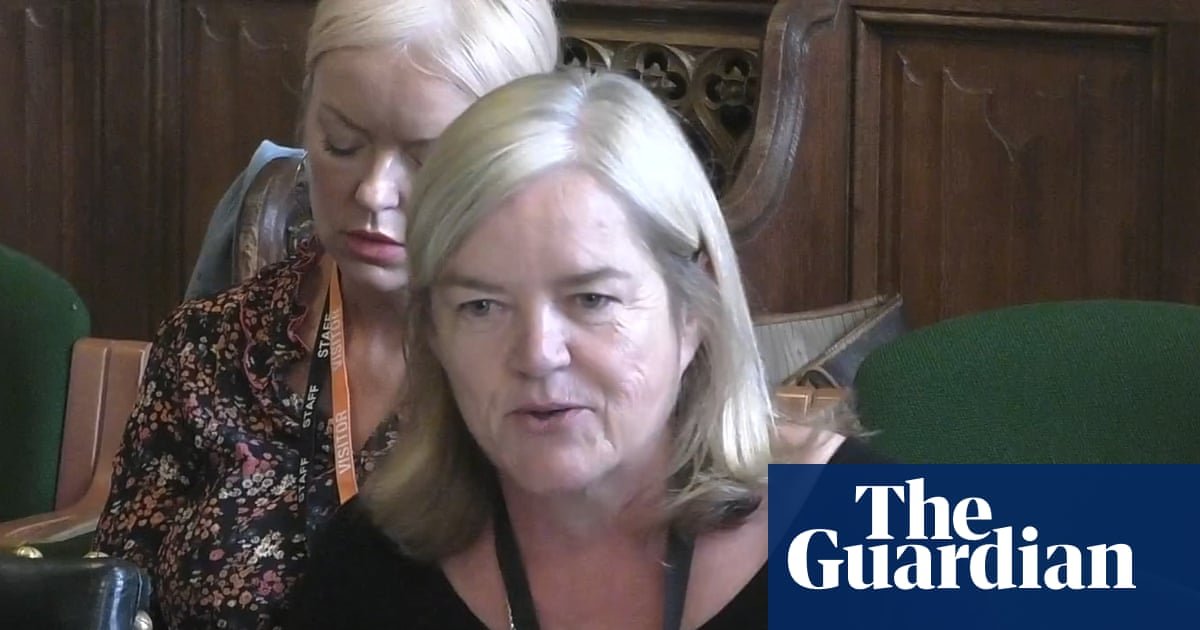
Louise Casey may have the power of words behind her (The blistering speech that tells me Britain’s social care deadlock can finally be broken, 10 March), but what she’s uncovered is a truth that local authorities have been voicing for years: the national care service will fail unless ministers stabilise the local systems that underpin it.
Key Cities (a cross-party network of UK local authorities) has long been calling for an urgent funding reset for the social care system. And while the Casey commission’s reforms are welcome, what’s still missing is the transition plan to enable councils to make this happen. A key part of the government’s NHS 10‑year plan must be a significant expansion of joint commissioning, across regional and national scales. This collaboration will finally end the costly push‑pull between those who fund and those who deliver care and, vitally, lay the foundations for effective transformation from local to national provision.
Polly Toynbee is right that councils have been buckling under pressure, but what about what we’ve learned and the solutions we can contribute? Years on the frontline have taught us that prevention is just as important as access to urgent care, and we’ve developed effective models that reduce crisis demand. With the right powers, councils could build the care homes that communities need and test new approaches through innovation hubs and pilots. We also know that none of this is viable without a national workforce strategy that aligns social care pay, training and career pathways to address retention and improve career prospects.
Plugging the hole in council finances might look like a mammoth task, but it’s also a once in a generation opportunity to secure better health outcomes, better lives and wider prosperity. Get the transition right and we can free up council budgets for the housing and regeneration that underpin better health outcomes in the first place. Get it wrong and the new system will inherit the same dysfunctions of the old one.
Cllr John Merry
Chair, Key Cities; deputy mayor, Salford
Money is not the problem. Social care for all age groups is a local and community need and responsibility. It should therefore be provided and run locally by relatively small, directly responsive, community‑based organisations. There is no one ideal model, but a national or regional approach will not work because the community connection, control and oversight is lost.
Whether we are talking about older people or children, much of the current privatised system of care is of poor quality and high cost, and is crippling local government finances while enriching companies, many of which are based in tax havens. Wages are low and conditions of employment are poor.
The well-off are being fleeced in so-called “luxury” care homes, which provide hotel-type facilities but generally poor care. The not-so-well-off struggle to afford home care and residential/nursing home fees. And then there are thousands of poor people who can’t get any help at all. Money is not the problem and never has been. There’s plenty of money, but it’s not well spent. It’s going out of the system rather than into it.
Among the savings to be made is closing the Care Quality Commission (CQC), which is very expensive to run and hardly ever uncovers poor care that hasn’t already been spotted by someone else, and even then it takes no action. CQC has stopped visiting many care homes altogether, and has hugely increased the bureaucratic and administrative burden on all social care, making life even more costly and difficult for the small, local providers.
John Burton
Author of Leading Good Care: The Task, Heart and Art of Managing Social Care
I read with interest Polly Toynbee’s comments. I would gladly have paid £20,000 on retirement to avoid the perpetual anxiety over finances that I now face. My husband went into a care home in February 2025. The weekly fee is £1,417.95. He has not had to sell the flat I live in, as it’s my only home. We pay his fees by direct debit and I am watching as our lives’ savings dwindle.
In a few weeks’ time they will be down to £23,250, and then I will have to complete a form and submit evidence that what I enter on it is true with supporting documents: bank statements, confirmation that I’ve liquidated his Isa, paid for water, gas and electricity and so forth. I am 83 and the worries are ruining my old age, which I naively thought, when I was younger, would be restful. I try to economise, though I subscribe to the Guardian because I hope that reading it helps keep my brain active.
Name and address supplied
As Polly Toynbee suggests, the question of how to fund social care has, like the Grand Old Duke of York’s men, been marched to the top of the hill and down again 22 times and counting since 1997. I would suggest that the answer has been tiptoed around, and mooted in various guides, since then, but discarded by gutless governments unable to face tabloid criticism.
After 30 years working in health and social care settings, and 20 years retirement, it seems obvious to me that income tax and national insurance should be merged, as a progressive tax. National insurance was introduced when average life expectancy was in the early to mid-50s. It’s now close to 30 years above that, depending on where you live of course.
If Louise Casey is looking for options for increasing funding, I would suggest that she should give this model serious consideration. What’s not fair about it? That way we’re all chipping in according to our means.
Mike Smith
Southampton
Louise Casey is right that social care has never had its “Beveridge moment” (Louise Casey: England’s social care system faces ‘moment of reckoning’, 6 March). When William Beveridge’s report was published in 1942 – in the middle of a war, with the economy under extreme strain – people queued outside the Government Stationery Office in Kingsway, London, in their thousands to buy a copy.
What we have had instead, in 22 major reviews over the past 30 years, is something closer to a building that everyone agrees is structurally unsound. Each survey confirms the cracks. Each report recommends underpinning. And each time, the owners decide the moment isn’t quite right, the costs are unclear, and perhaps the next survey will tell us something different.
Meanwhile the people living inside it – elderly people, disabled people and care workers who are paid barely above the legal minimum wage – are left to manage with “sticking plasters and glue”, in Casey’s own words.
A moment of reckoning, she calls it. With respect, we have had 22 of those. What we have not yet had is a government willing to act on one.
Simon Spiller
Budleigh Salterton, Devon
Have an opinion on anything you’ve read in the Guardian today? Please email us your letter and it will be considered for publication in our letters section.
