

London, San Francisco and Beijing are among 19 global cities that have achieved “remarkable reductions” in air pollution, analysis has found, having slashed levels of two airway-aggravating pollutants by more than 20% since 2010.
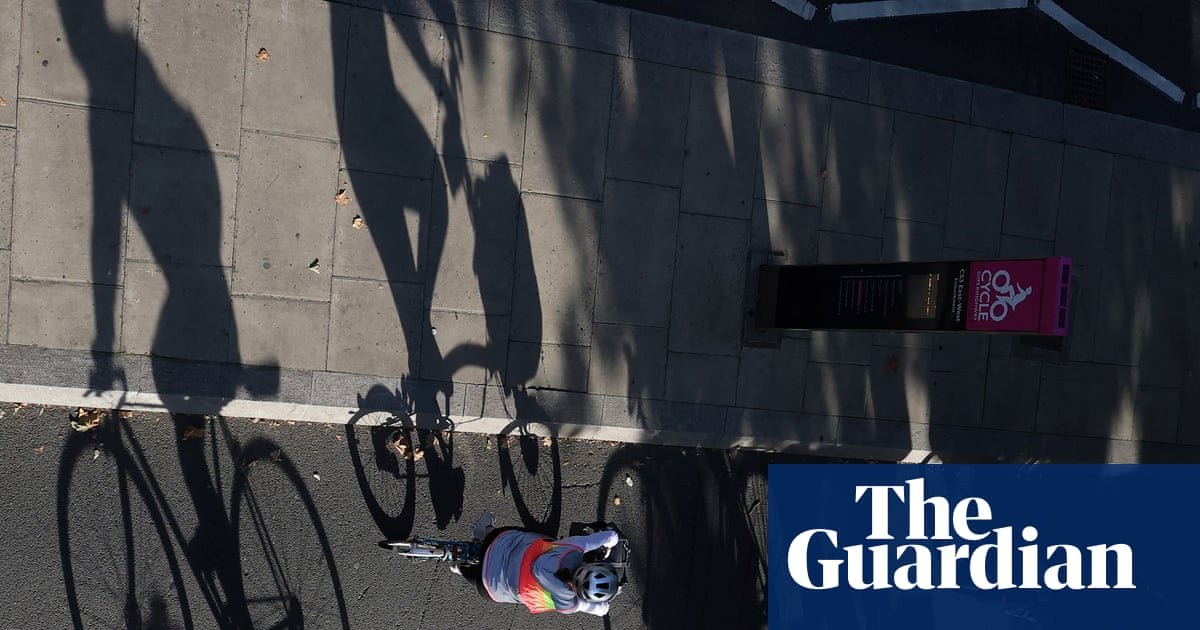
The analysis found interventions such as cycle lanes, uptake of electric cars and restrictions on polluting vehicles had helped to drive the improvements
Beijing and Warsaw topped the ranking for cleaning up fine particulate pollution (PM2.5), reducing levels by more than 45%, while Amsterdam and Rotterdam saw the greatest improvement in nitrogen dioxide (NO2), with cuts of more than 40%.
San Francisco was the only US city that cut levels of both pollutants by more than 20%, according to the analysis of nearly 100 cities around the world. China and Hong Kong are home to nine of the 19 cities, with European cities making up the rest.
“This report shows that cities can achieve what was once thought impossible: cutting toxic air pollution by 20-45% in a little over a decade,” said Cecilia Vaca Jones, executive director of Breathe Cities, one of the organisations behind the report. “This isn’t just happening in one corner of the world; from Warsaw to Bangkok, cities are proving that we have the tools to solve this crisis right now.”
Burning fossil fuels releases toxic gas and harmful particles that are among the biggest threats to human health.
The smallest of these particles can pass into the bloodstream and spread through the body, damaging organs from the brains to the genitals, while nitrogen dioxide hurts the airways and reacts with water to form acid rain.
The report, shared exclusively with the Guardian, looked at air quality in cities in the C40 and Breathe Cities networks – mostly large cities, but also some smaller ones such as Heidelberg in Germany – and found “substantial reductions” can be achieved within 15 years through deliberate action.
It highlighted examples of action that had helped to clean the air, such as China’s rapid switch from combustion engine cars to electric ones, the expansion of cycle lanes in dense European cities, London’s restrictions on dirty vehicles and Warsaw’s shift away from coal and wood home heating. It did not explore the causal chain to distinguish between air quality improvements from local policies versus national ones.
“Air pollution is often presented as a problem that is too difficult to solve and one that is politically unpopular,” said Dr Gary Fuller, an air pollution scientist at Imperial College London, who was not involved in the report. “This report shows that bold policies can improve the air that we breathe.”
Last year, a report found nearly every country on Earth has dirtier air than doctors recommend breathing. Just seven countries that met the World Health Organization’s guidelines for PM2.5 last year, according to IQAir, a Swiss air quality technology company.
There are no safe levels of PM2.5, but doctors estimate millions of lives could be saved each year by following their guidelines.
Breathing polluted air affects our health through every stage of our lives, said Fuller, from low birth weight babies and asthma in children to cancer and heart problems in adult life.
“In the last 10 years, we have learned that air pollution is linked to cognitive decline and dementia in old age,” he added. “All of these illnesses exert a massive toll on families, hamper our economies – as people are off work ill or looking after others – and exert a direct cost on our health services. All of these illnesses are preventable.”
