

As U.S. and Israeli forces pummel Iran, oil installations and a desalination plant have come under fire. Experts warn that attacks on key infrastructure threaten the supply of fresh water in a country already coping with a brutal drought.
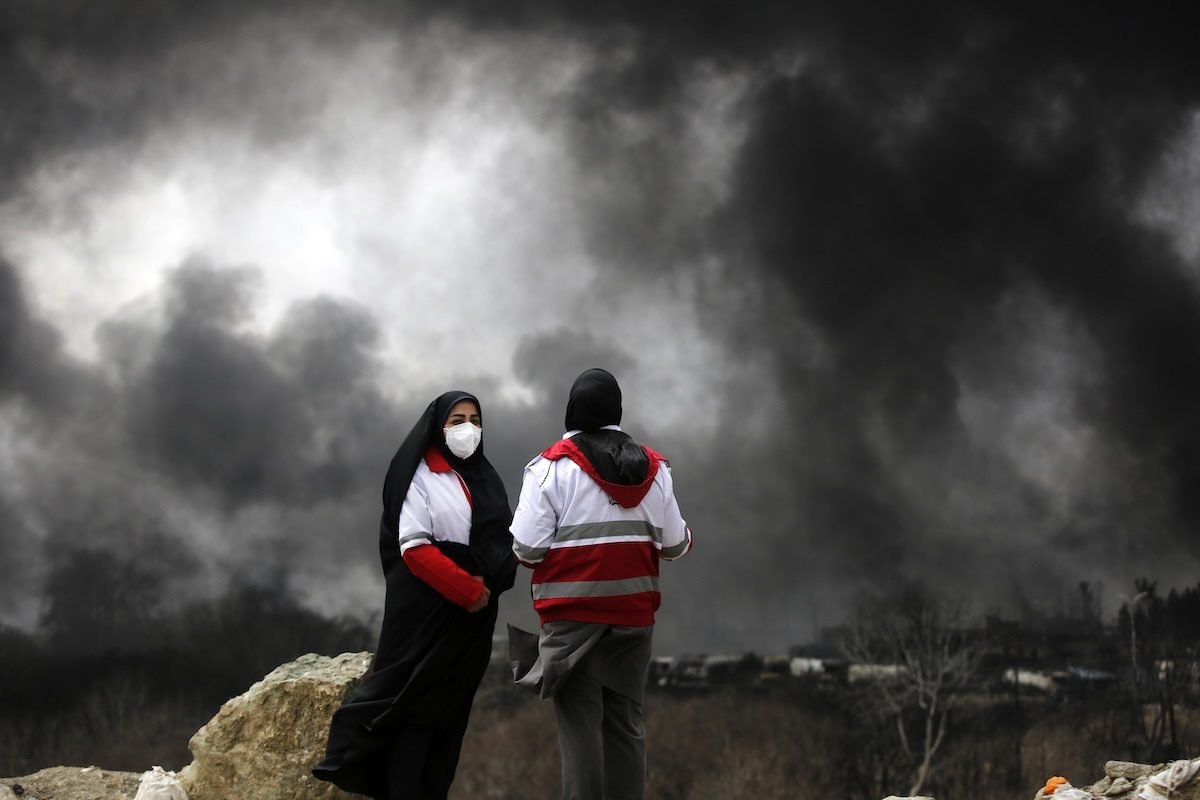
For the first time since the bombing campaign began, Israel has begun targeting oil infrastructure, hitting several storage sites and a refinery near Tehran this weekend, TIME reported. Fires at bombed oil installations sent huge plumes of smoke over the Iranian capital. As black, acidic rain fell on the city, locals complained of sore throats and burning eyes, and some feared the tainted rain would contaminate the water supply.
“Most of Tehran’s water comes from dams,” an Iranian activist told The Guardian. “If those become polluted, what happens then?”
As rain falls, it mixes with pollution on its way down. In Tehran, rain likely collected pollution issuing from bombed oil sites, including particulates, heavy metals, and the compounds that give rise to acid rain, according to Gabriel da Silva, an associate professor of chemical engineering at the University of Melbourne.
“People exposed to this black smoke in Iran might have headaches or difficulty breathing,” da Silva wrote in The Conversation. Polluted rain may also drain into waterways, tainting drinking water, he said.
Over the weekend, bombs also fell on a desalination plant on Qeshm Island in the Persian Gulf, which supplies water to 30 Iranian villages, The New York Times reported. The strike, which Iran blamed on the U.S., is legally dubious, as international law gives special protection to drinking water installations.
“If water infrastructure is now considered a military target, whether deliberately or through reckless escalation, then the region is entering a far more dangerous phase of war,” journalist Nik Kowsar wrote in analysis for Foreign Policy. The U.S. denied carrying out the attack.
The strikes on oil and water infrastructure come as Iran grapples with a years-long drought that has desiccated rivers, lakes, and marshlands and strained water reserves. Warmer weather and more meager rainfall are depleting snowpack, a key source of fresh water. But experts say that most of the blame for the ongoing water crisis falls on the Iranian regime, which has aggressively dammed waterways, drained aquifers, and dried key wetlands. The country is on the verge of “water bankruptcy,” experts say.
Decades of bad governance have already brought Iran close to systemic failure, Kowsar wrote. “War now threatens to deepen that damage through infrastructure loss, industrial contamination, energy disruption, and public health decline.”
ALSO ON YALE E360
After Ruining a Treasured Water Resource, Iran Is Drying Up
