

Colleges have spent years building systems to flag students in academic trouble. But a new report from TimelyCare suggests many students at risk of stopping out aren’t struggling in class—they’re performing fine but quietly disengaging in ways institutions often miss.
The findings come from a national survey conducted in January of more than 1,000 undergraduate students enrolled at four-year institutions. The report found that 92 percent reported academic confidence, with a majority reporting a GPA of 3.0 or higher.
However, when asked about persistence, 31 percent said they had considered transferring and 24 percent said they had considered stopping out—highlighting a disconnect between academic performance and the overall college experience.
Nicole Trevino, vice president for student success at TimelyCare, said academic stability is no longer a reliable proxy for student well-being.
“Institutions do a good job of gathering metrics as it relates to academic progression and utilization—whether that’s utilization of campus counseling or utilization of services on campus—but those are outcomes support,” Trevino said. “What’s happening is institutions are not really listening to students, and that’s where there’s a disconnect.”
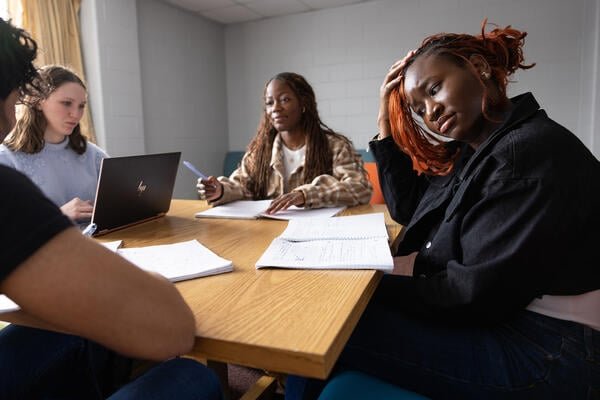
In particular, the report highlights that the most distinctive finding isn’t about students in crisis; it’s students who report they’re “doing OK.” These students represent 49 percent of respondents—the largest group in the survey—and carry the least visible retention risk.
“From an academic standpoint, they do look like they’re doing OK, but what we know is that emotionally, there are some concerns that are emerging,” Trevino said.
The quiet middle: The report found that institutions have robust systems for identifying students when challenges arise. However, it notes that these measures are “reactive by design” and often miss earlier signals of disengagement—such as stress and burnout that has not yet become a crisis, a gradual loss of belonging, growing uncertainty about academic or career direction, and silent withdrawal from campus life.
Trevino said institutions often don’t recognize these early signs in students who are “doing OK.” She emphasized the importance of tracking students’ belonging multiple times throughout their time in college.
“Students might start their freshman year on track, for instance, but if something changes, being able to detect that and intervene, creating pathways to support students, is important,” Trevino said.
She added that burnout is often normalized rather than treated as a warning sign, causing students to adapt to unsustainable conditions long before they ask for help.
“Students need structured, content-based ways to check in earlier and really surface those nonacademic signals before they become disengaged,” Trevino said.
Addressing listening problem: For Trevino, it’s important for higher education leaders to rethink how they define students at risk and the way they gather and use such information.
“Before that drift happens, intervene on it before students decide to leave the institution or stop out of college altogether,” Trevino said.
The best way forward is for higher education leaders to move beyond academic and utilization-based metrics and prioritize listening to student needs, she said, adding that many students would welcome a structured check-in. According to the survey, about 85 percent said they would respond positively to proactive outreach from their institution asking how they are doing.
“That’s where the opportunity lives,” Trevino said. “The opportunity to integrate all that good metric information they’re capturing with a student voice—and being able to act on those pieces combined—gives a more holistic picture of what students are dealing with.”
Get more content like this directly to your inbox. Subscribe here.
