

March 6, 2026
3 min read
Add Us On GoogleAdd SciAm
NASA must delay deorbiting the ISS, U.S. lawmakers say
U.S. lawmakers are moving to delay the International Space Station’s retirement, giving more time for commercial replacements to be built
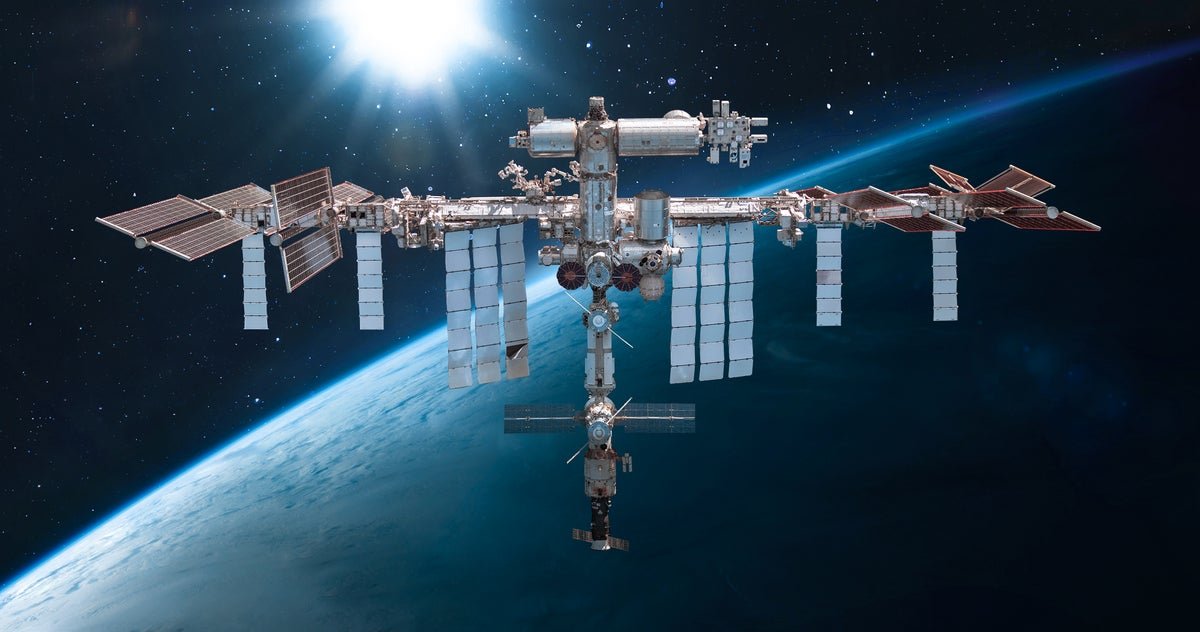
NASA could soon be scrambling to shore up the U.S.’s presence in low-Earth orbit, thanks to a key Senate committee that wants the space agency to extend the life of the International Space Station (ISS) past its current retirement date. If made law, the move would have international consequences for human space exploration.
The Senate Committee on Commerce, Science and Transportation has added a draft measure to the NASA Authorization Act of 2026 that would order the space agency to extend ISS operations through 2032, two years longer than currently planned. The draft measure also forbids NASA from deorbiting the station until a replacement commercial space station is operational.
Perhaps the most ugly truth of human spaceflight is that the ISS is old and its days are numbered. Construction began in 1998, and humans have maintained a continuous presence on the orbiting outpost since November 2000. But space is a harsh environment, and the longer the massive station remains in orbit, the higher the chances are that a catastrophic failure could send it tumbling down to Earth.
On supporting science journalism
If you’re enjoying this article, consider supporting our award-winning journalism by subscribing. By purchasing a subscription you are helping to ensure the future of impactful stories about the discoveries and ideas shaping our world today.
READ MORE: It’s Nearly Time to Say Goodbye to the International Space Station. What Happens Next?
Right now NASA and its international partners hope to keep the ISS working through 2030. (The station was built such that it requires both NASA and the Russian space agency’s full attentions; neither side can operate it alone.)
Then the station will die: SpaceX is building a beefed-up version of its Dragon vehicle to safely destroy the ISS in 2031. NASA hired SpaceX for the task in June 2024 on a contract worth up to $843 million—a remarkably tight time line to design and build a specialized vehicle for an operation that must proceed flawlessly or risk raining debris on Earth’s surface.
At the same time, NASA has also been working to support private companies to develop new orbital outposts that it could use to house astronauts and their research in low-Earth orbit. NASA worked with the now defunct company Bigelow Aerospace to test an inflatable module, for example, and the agency has hired Axiom Space to build what will initially be a module for the ISS but will subsequently undock and fly independently as the seed of a new station.
Yet just as NASA has repeatedly delayed the ISS’s retirement—the station was built to last 15 years—so, too, have the time lines for would-be commercial replacements slipped.
The Senate committee—and particularly its leaders, Republican senator Ted Cruz of Texas and Democratic senator Maria Cantwell of Washington State—are trying to speed things along via the authorization bill. Congress is meant to approve an annual authorization bill to set NASA’s priorities and an appropriations bill that allocates money, but the former is often neglected; the most recent finalized NASA authorization bill dates to 2022. And like all bills, the proposed measure must be approved by the full Senate and House of Representatives and then signed by the president to become law.
But even if the measure never becomes law, it’s an important signal of how key legislators think about NASA’s purpose and priorities. The language is stark. It sets an aggressive time line for making real progress on establishing commercial space stations: under the bill, NASA would need to release requirements for such stations within 60 days and final language to solicit proposals within 90 days and would have to enter contracts with two or more companies within 180 days. And the bill explicitly links the space station’s retirement schedule with the successful operation of a commercial replacement by forbidding a controlled deorbit until that time.
NASA and U.S. legislators alike have long worried that the inevitable demise of the ISS—whether controlled or not—could leave the country with no capacity for long-duration human spaceflight. Currently, the only other existing space station is China’s Tiangong station, which launched in 2021. Ultimately, it doesn’t seem like the U.S. is ready to give up on the ISS just yet.
It’s Time to Stand Up for Science
If you enjoyed this article, I’d like to ask for your support. Scientific American has served as an advocate for science and industry for 180 years, and right now may be the most critical moment in that two-century history.
I’ve been a Scientific American subscriber since I was 12 years old, and it helped shape the way I look at the world. SciAm always educates and delights me, and inspires a sense of awe for our vast, beautiful universe. I hope it does that for you, too.
If you subscribe to Scientific American, you help ensure that our coverage is centered on meaningful research and discovery; that we have the resources to report on the decisions that threaten labs across the U.S.; and that we support both budding and working scientists at a time when the value of science itself too often goes unrecognized.
In return, you get essential news, captivating podcasts, brilliant infographics, can’t-miss newsletters, must-watch videos, challenging games, and the science world’s best writing and reporting. You can even gift someone a subscription.
There has never been a more important time for us to stand up and show why science matters. I hope you’ll support us in that mission.
