

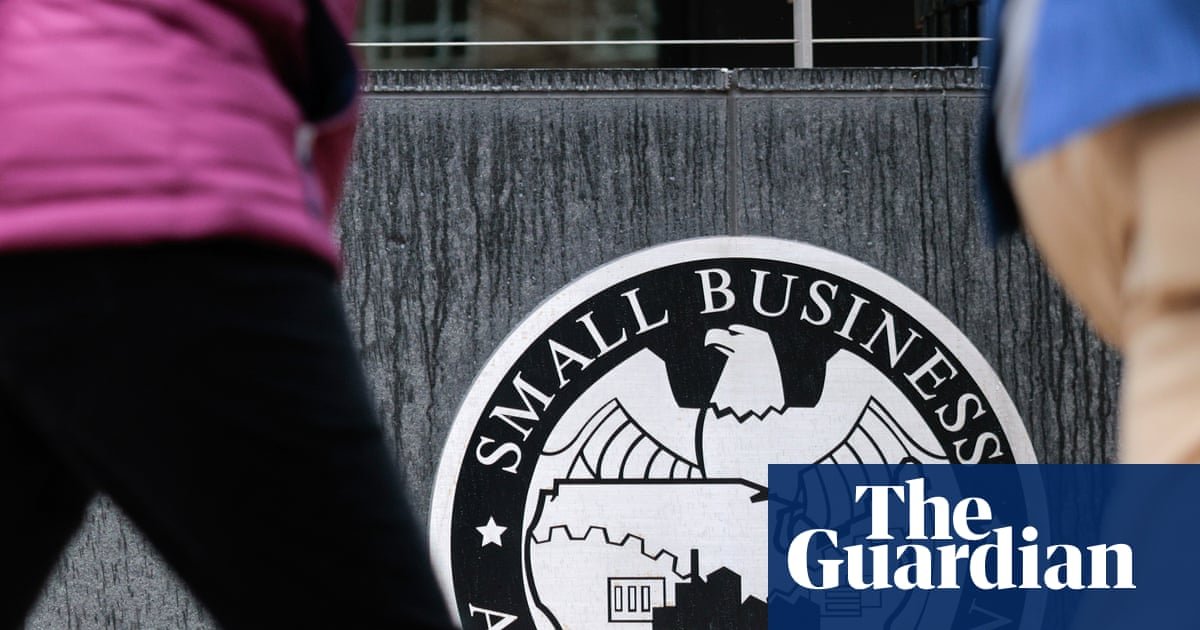
The US federal agency in charge of helping small businesses has cut off an essential line of funding for immigrant entrepreneurs for the first time in the agency’s history.
Legal residents, or green card holders, are now ineligible for loans backed by the Small Business Administration (SBA). The change was first announced in February and comes as the agency carries out an “America First” agenda under SBA administrator Kelly Loeffler, a billionaire and staunch Donald Trump loyalist who was appointed last February.
The decision has left some small business owners reeling. “I’m really shocked,” says restaurateur and chef Aneesa Waheed of Tara Kitchen, with five locations across New York and New Jersey that serve Moroccan cuisine. A naturalized citizen, Waheed was crowned the SBA’s New York state small business person of the year in 2024. “I’ve been in the SBA world for a long time … You think of the SBA as a source of support and strength for small businesses. So you never really think of it in terms of ‘Are you a Democrat? Are you a Republican? Are you an independent?’”
Aneesa Waheed of Tara Kitchen. Photograph: Photo courtesy of Aneesa Waheed
The SBA was created in 1953 to help small businesses, primarily through its small business loan program. The agency typically doesn’t provide individual business owners with loans directly but underwrites portions of loans issued by banks, credit unions and other institutions.
The SBA classifies businesses with 500 or fewer employees as a small business and loans can range from $50,000 to $5m. In fiscal year 2025, the agency gave out over $44bn in thousands of loans to small businesses. Many SBA loans are used for “main street” enterprises – retail shops, restaurants, cafes or franchises – as well as “business-to-business” services in sectors like manufacturing to transportation.
While support for small businesses is typically a bipartisan issue, the SBA under Loeffler has embraced Trump’s economic agenda. Last June, Loeffler changed rules for the SBA’s loan program, dictating that 100% of a business must be owned by citizens or green card holders to receive a loan. Previously, the SBA required 51% of a business be owned by citizens or legal residents to qualify for a loan. Loeffler also announced last year that SBA regional offices would move out of sanctuary cities that opposed Trump’s policies.
Kelly Loeffler in Plover, Wisconsin, on 26 February 2026. Photograph: Matt Rourke/AP
“Trump has restored confidence and opportunity to Main Street with a commonsense economic agenda designed to put hardworking families and small businesses – not Washington bureaucrats, illegal aliens or coastal elites – in the driver’s seat,” Loeffler said in an op-ed that was posted on to the SBA’s website in February.
Before she was SBA administrator, Loeffler served as Georgia’s interim US senator for one year before losing her election to Democrat Raphael Warnock in 2022. Loeffler, along with several other senators, had been accused of insider trading at the beginning of the pandemic, but was later exonerated by the Department of Justice in May 2020.
Loeffler and her husband, Jeffrey Sprecher, CEO of financial marketplace Intercontinental Exchange and a former chair of the New York Stock Exchange, have been major Trump campaign donors, contributing $13.5m to the president’s campaigns and related Super Pacs since 2020.
The new eligibility requirements have rattled those who work with entrepreneurs to help them get SBA loans.
“SBA loans are really only meant to be issued in situations where folks wouldn’t be able to get access to credit on similar terms without the government guarantee,” said Keegan McBride, co-founder of SBA Source, a company that specializes in finding and securing SBA loans, primarily for those in the franchise sector. “It’s challenging because SBA is kind of designed to fill that gap.”
Many franchisees are immigrants, McBride said, a mix of green card holders and naturalized US citizens. Under the new rule, even married couples who want to launch a business together won’t be able to get an SBA loan if they are not both US citizens. Though there are other sources of non-SBA loans, they can be harder to obtain.
“I mean, for most people, you’re not going to be able to get an unsecured line of credit, or at least not a sizable one,” McBride said. “You either need to have home equity that you can use, or an investment portfolio that you can use, or something to secure the line of credit.”
Green card holders are lawful permanent residents who must wait at least five years (three years if married to a US citizen) to become US citizens, with an additional year or so for filing. Some immigrants choose to remain permanent residents because their home country doesn’t allow dual citizenship, and they don’t want to give up citizenship there. These entrepreneurs may be permanently barred from receiving SBA loans under the new policy.
Aissatou Barry-Fall, the CEO of the Lower East Side People’s Federal Credit Union, a non-profit SBA lender in New York City, said the new policy makes “no sense whatsoever”.
“I think it’s discrimination,” Barry-Fall said. “That’s all it is.”
In a statement to the Guardian, SBA spokesperson Maggie Clemmons said that the agency is “committed to driving economic growth and job creation for American citizens” and ensuring that every taxpayer dollar goes to support “US job creators and innovators”.
Waheed, who moved to the US from India when she was a teenager, said that barring green card holders from these loans will probably hurt communities, as flourishing businesses are employers who pay taxes and make neighborhoods more vibrant.
“Somebody who’s here on a green card, they’ve made a commitment to this country,” Waheed said.
Though Trump has promised to create a better economy, times have been particularly rough for small businesses, she added.
“Look at the number of closures, job losses, and a record number of restaurants closing and small businesses closing,” Waheed said. “It seems like it doesn’t even matter to them, all that matters is the S&P and the Dow.”
