

March 4, 2026
4 min read
Add Us On GoogleAdd SciAm
People who took GLP-1 drugs had lower risk of all kinds of drug and alcohol addiction
A large epidemiological study of more than 600,000 veterans with diabetes suggests GLP-1 weight-loss medications may reduce drug- and alcohol-related overdoses and deaths
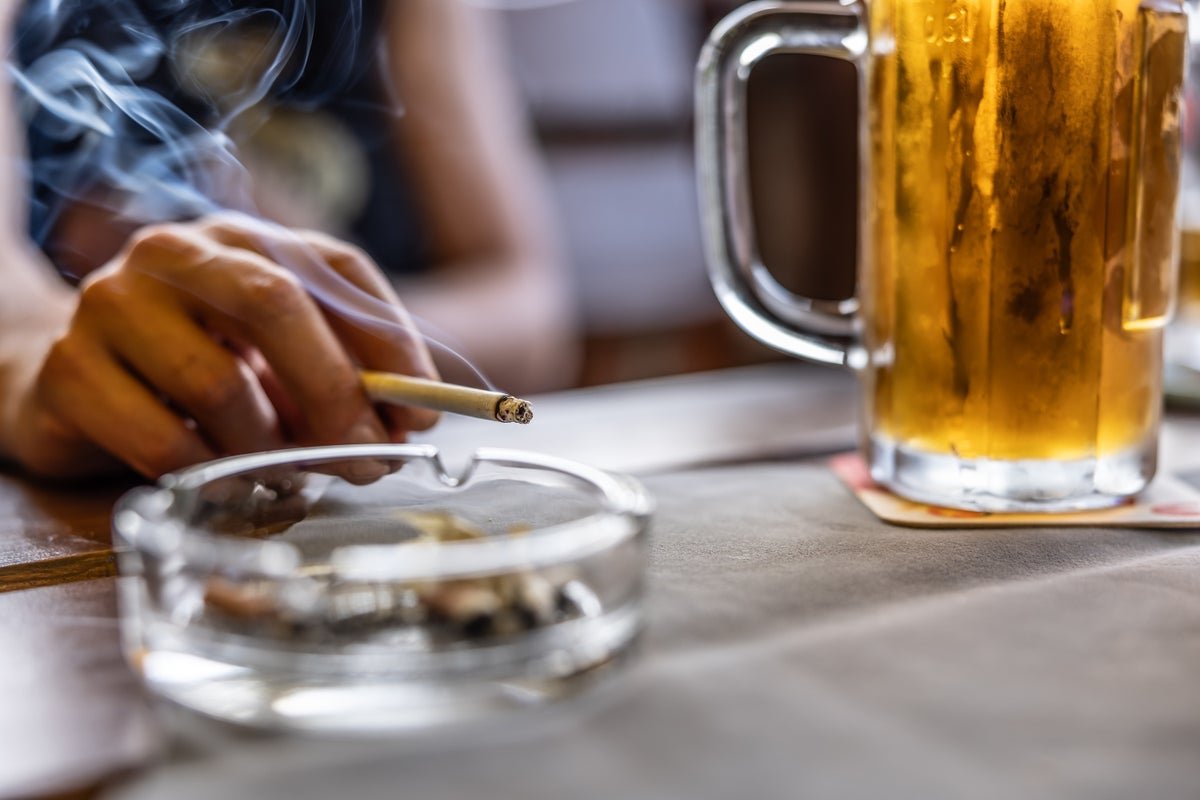
SimpleImages/Getty Images
From online forums to the clinic, people have reported that diabetes and weight-loss drugs such as Ozempic and Wegovy can dramatically quell their compulsive behaviors—including cravings for alcohol and nicotine. The swell of anecdotes has spurred a wave of preliminary trials and one-off studies that have mostly investigated specific substance use disorders individually. But researchers haven’t grasped how broad the effects might be.
Now a large epidemiological study published today in the BMJ suggests that glucagonlike peptide 1 (GLP-1) medications—as these drugs are called—reduce the risk of all kinds of substance use disorders, including those involving alcohol, nicotine, cannabis, opioids and cocaine. Not only did GLP-1 drugs appear to prevent people from developing these addictions, but they also decreased rates of life-threatening events, including drug-related overdoses and deaths.
Seeing reductions across every disorder, “I was like, ‘Is this real?’ because there is nothing like it,” says clinical epidemiologist Ziyad Al-Aly, lead author of the study and chief of research and development at the U.S. Depart of Veterans Affairs St. Louis Health Care System. “This is an obesity and diabetes drug; this is not an addiction drug. So the big surprise was: it was consistently working across all substances.”
On supporting science journalism
If you’re enjoying this article, consider supporting our award-winning journalism by subscribing. By purchasing a subscription you are helping to ensure the future of impactful stories about the discoveries and ideas shaping our world today.
The analysis followed more than 600,000 people with type 2 diabetes in the U.S. VA health care system for three years. Participants who took GLP-1 medications for diabetes were compared with those on another diabetes treatment that has not been linked to decreasing addiction. In veterans with no history of a substance use disorder, GLP-1 drugs were associated with a 14 percent reduced risk across all substance use conditions, with the largest drop—25 percent—seen in opioid use disorders.
The widespread preventive effects “didn’t surprise me, but it’s really good to see,” says Patricia “Sue” Grigson, a neuroscientist and addiction researcher at the Pennsylvania State University College of Medicine, who was not involved in the study. She also notes that the protective benefits took effect in the first year and persisted through the third year of observation.
The study also looked at people who had an existing substance use disorder. Those results were striking: starting a GLP-1 treatment was linked to a 31 percent reduction in substance-use-disorder-related emergency department visits, a 26 percent decline in related hospital admissions, a 39 percent decrease in overdoses and a 25 percent reduction in suicidal ideation or attempts. Drug-related deaths were cut by 50 percent.
The link between GLP-1s and reduction in drug-related deaths “is really powerful,” says Alex DiFeliceantonio, a neuroscientist who studies appetite at Virginia Tech and wasn’t involved in the new research. This finding is particularly appealing for treatments, she says.
Exactly how GLP-1 medications might diminish drug cravings and curb addiction is still unclear. Al-Aly suggests it might have to do with overlapping reward pathways in the brain.
“People taking GLP-1 drugs often describe the quieting of ‘food noise,’ the constant mental chatter about food and eating,” he says. “I think something similar may be happening with addiction: a quieting of what I think of as ‘drug noise,’ the relentless craving that pulls people back to a substance.”
The new weight-loss medications mimic the gut hormone GLP-1, which ramps up insulin production and satiety. The hormone’s receptors are also found in the brain’s mesolimbic system—circuits that control reward, motivation, impulse control and stress, Al-Aly says. These circuits are active in animal studies of addiction. If GLP-1 drugs work similarly on this brain circuit in humans, they “might actually dampen or put the brakes on cravings” of all kinds, he says. Further investigation of GLP-1 might reveal a “common biologic pathway at the root of all addictions”—one that might eventually be druggable, he adds.
DiFeliceantonio notes that another important part of the mechanism likely lies in the gut: her team’s recent research suggests that GLP-1 medications’ ability to slow digestion might also play a role in people cutting back alcohol consumption.
The new study’s population was largely older white male veterans. A subset of women in the dataset showed similar trends in reductions, however. The research also did not examine varying dosages or fully compare all the types of GLP-1 drugs.
When it comes to GLP-1 drugs, “we need to really start figuring out what are the most effective ones and what’s the most effective dose” for possible addiction treatments, DiFeliceantonio says. Previous studies provide some clues: research has shown different GLP-1 drugs have efficacy against alcohol use disorder, smoking and opioid craving, even at low doses. Grigson is now leading a multisite clinical trial testing Ozempic as an opioid use disorder treatment.
“Some [GLP-1] medicines are going to work better for some people than others,” Grigson says. “We have a lot to learn still about the appropriate regimen.”
It’s Time to Stand Up for Science
If you enjoyed this article, I’d like to ask for your support. Scientific American has served as an advocate for science and industry for 180 years, and right now may be the most critical moment in that two-century history.
I’ve been a Scientific American subscriber since I was 12 years old, and it helped shape the way I look at the world. SciAm always educates and delights me, and inspires a sense of awe for our vast, beautiful universe. I hope it does that for you, too.
If you subscribe to Scientific American, you help ensure that our coverage is centered on meaningful research and discovery; that we have the resources to report on the decisions that threaten labs across the U.S.; and that we support both budding and working scientists at a time when the value of science itself too often goes unrecognized.
In return, you get essential news, captivating podcasts, brilliant infographics, can’t-miss newsletters, must-watch videos, challenging games, and the science world’s best writing and reporting. You can even gift someone a subscription.
There has never been a more important time for us to stand up and show why science matters. I hope you’ll support us in that mission.
