
Close Menu

    Subscribe to Updates

    Get the latest creative news from FooBar about art, design and business.

    What's Hot

    Oil price continues to rise amid Middle East crisis but stock markets rebound across Asia | Commodities

    See Death Valley covered in an ethereal blanket of wildflowers

    How these koalas bounced back from the brink of extinction

    Facebook X (Twitter) Instagram
    Facebook X (Twitter) YouTube LinkedIn
    Naija Global News |
    Friday, March 6
    • Business
    • Health
    • Politics
    • Science
    • Sports
    • Education
    • Social Issues
    • Technology
    • More
      • Crime & Justice
      • Environment
      • Entertainment
    Naija Global News |
    You are at:Home»Science»Climate change and geopolitics threaten water supplies — but disaster is not inevitable
    Science

    Climate change and geopolitics threaten water supplies — but disaster is not inevitable

    onlyplanz_80y6mtBy onlyplanz_80y6mtMarch 4, 2026003 Mins Read
    Share Facebook Twitter Pinterest LinkedIn Tumblr Email
    Climate change and geopolitics threaten water supplies — but disaster is not inevitable

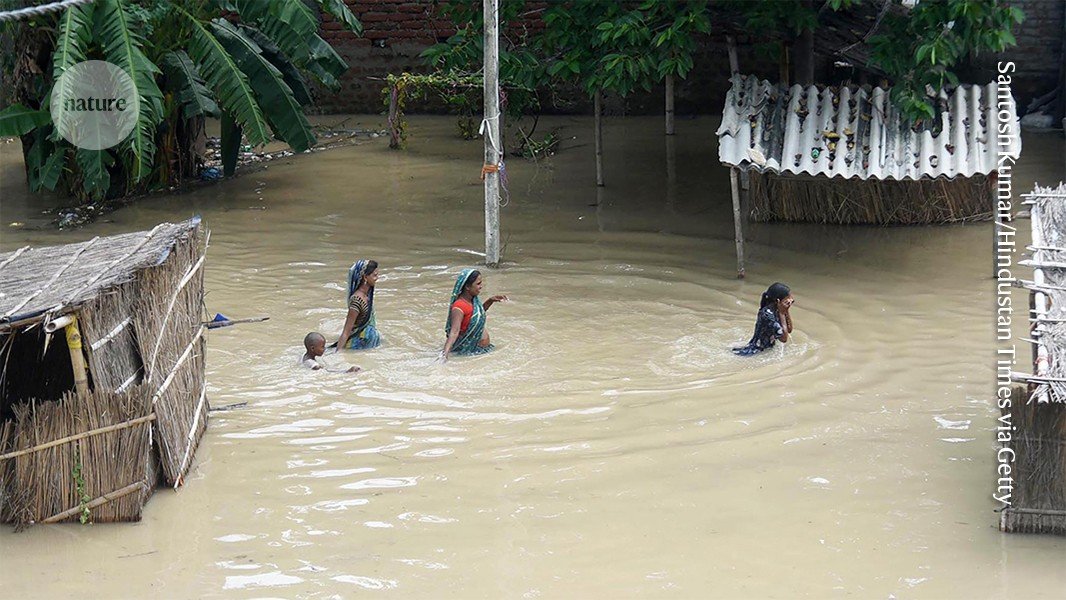
    Flooding of the Ganges River in India (pictured) and Bangladesh affects millions of people.Credit: Santosh Kumar/Hindustan Times via Getty

    Share
    Facebook Twitter LinkedIn Pinterest Email

    Flooding of the Ganges River in India (pictured) and Bangladesh affects millions of people.Credit: Santosh Kumar/Hindustan Times via Getty

    The United Nations warned in January that the world faces imminent water ‘bankruptcy’. Overuse, pollution and climate change are threatening water systems; many will not return to their historical levels. Glaciers on the Tibetan Plateau are melting at a rapid rate, for instance. This affects the seasonal volumes of melt water entering the Indus, Ganges and Brahmaputra river systems as well as the dynamics of monsoons in South Asia.

    How to achieve safe water access for all: work with local communities

    Meanwhile, geopolitical tensions are jeopardizing regional water-sharing agreements. In April 2025, India suspended the 1960 Indus Waters Treaty — an accord with Pakistan. Similarly, friction is increasing over Afghanistan’s plans to construct a reservoir in the Kunar River that will reduce downstream water flows in Pakistan. And the 1996 Ganges Water-sharing Treaty, which sets out how India and Bangladesh share resources during dry seasons, expires in December, affecting 630 million people.

    The international community must urgently strengthen, not just preserve, water treaties. The Ganges treaty’s renewal negotiations, which are currently strained, present an opportunity. Agreements should transition from a static process that aims to maintain historical river levels to a dynamic one that uses monitoring and modelling data on rainfall, snow and ice as well as river levels and flows. Real-time data would enable water managers to better control sediment and salinity levels. And such information can feed into ‘digital twin’ simulations that aim to mitigate climate volatility, as was used for the Yangtze River basin, for instance (see X. Wang et al. Nature 639, 303–305; 2025).

    As a water- and climate-governance expert who has advised the Pakistan government, I urge the UN water agencies, multilateral development banks and institutions working in the region to draw from, and improve on, the experience of the Indus treaty. Until its suspension last year, it sustained millions of people through several wars and military operations, as well as a 13% loss of glacier mass between 2000 and 2021 (A. Khan et al. Remote Sens. Appl. 34, 101192; 2024).

    The durability of the Indus treaty stems from three features: a neutral mediator (the World Bank), a commission comprising specialists from both India and Pakistan who could resolve technical issues without formal political renegotiations and a shared investment system (with an initial fund of £320 million (around US$900 million in 1960). A few practical steps could increase the resilience of water treaties.

    Environmental treaties are paralysed — here’s how we can do better

    First, turn the commissions that oversee water treaties into proactive data-driven basin-management authorities, rather than reactive adjudicating bodies. And treat a network of rivers as a whole ecosystem, rather than just as a volume of water to be shared. Such a process should be informed by real-time satellite monitoring and predictive modelling, to adjust water allocations without constant renegotiations. The Indus treaty already has the institutional structure and experience necessary for making such a transition.

    Change climate disaster Geopolitics inevitable supplies Threaten Water
    Share. Facebook Twitter Pinterest LinkedIn Tumblr Email
    Previous Article‘Not a happy place’: CNN staff fret about the future under David Ellison
    Next Article This BBC tech reporter hacked ChatGPT with a simple trick involving hot dogs
    onlyplanz_80y6mt
    • Website

    Related Posts

    How these koalas bounced back from the brink of extinction

    March 6, 2026

    Koala genetics show how species can bounce back from bottlenecks

    March 6, 2026

    High-rise transistors can be used to build space-saving circuits

    March 6, 2026
    Add A Comment
    Leave A Reply Cancel Reply

    Top Posts

    Watch Lady Gaga’s Perform ‘Vanish Into You’ on ‘Colbert’

    September 9, 20251 Views

    Advertisers flock to Fox seeking an ‘audience of one’ — Donald Trump

    July 13, 20251 Views

    A Setback for Maine’s Free Community College Program

    June 19, 20251 Views
    Stay In Touch
    • Facebook
    • YouTube
    • TikTok
    • WhatsApp
    • Twitter
    • Instagram
    Latest Reviews

    At Chile’s Vera Rubin Observatory, Earth’s Largest Camera Surveys the Sky

    By onlyplanz_80y6mtJune 19, 2025

    SpaceX Starship Explodes Before Test Fire

    By onlyplanz_80y6mtJune 19, 2025

    How the L.A. Port got hit by Trump’s Tariffs

    By onlyplanz_80y6mtJune 19, 2025

    Subscribe to Updates

    Get the latest tech news from FooBar about tech, design and biz.

    Most Popular

    Watch Lady Gaga’s Perform ‘Vanish Into You’ on ‘Colbert’

    September 9, 20251 Views

    Advertisers flock to Fox seeking an ‘audience of one’ — Donald Trump

    July 13, 20251 Views

    A Setback for Maine’s Free Community College Program

    June 19, 20251 Views
    Our Picks

    Oil price continues to rise amid Middle East crisis but stock markets rebound across Asia | Commodities

    See Death Valley covered in an ethereal blanket of wildflowers

    How these koalas bounced back from the brink of extinction

    Recent Posts
    • Oil price continues to rise amid Middle East crisis but stock markets rebound across Asia | Commodities
    • See Death Valley covered in an ethereal blanket of wildflowers
    • How these koalas bounced back from the brink of extinction
    • Toyota supplier makes $8bn bid for Japanese chipmaker Rohm
    • Mass stranding of whales on Scottish beach caused by loyalty to their pod, report finds | Whales
    © 2026 naijaglobalnews. Designed by Pro.
    • About Us
    • Disclaimer
    • Get In Touch
    • Privacy Policy
    • Terms and Conditions

    Type above and press Enter to search. Press Esc to cancel.