

Tech companies and industrial agriculture are “playing with the food system” by using AI and algorithms to undermine farmers in choosing what the world eats, leading food security experts have warned.
Companies such as Google, Microsoft, Amazon, IBM and Alibaba are working with industrial agriculture firms to influence what crops are grown and how, according to a report by the thinktank International Panel of Experts on Sustainable Food Systems (IPES-Food).
The result, the experts say, is a “top-down” approach to farming systems where large companies tell farmers what to grow, often focusing on the most productive and profitable crops.
“Companies are playing with the food system, and we can’t afford to have that played with,” said Pat Mooney, a Canadian author and expert on agriculture who contributed to the Head in the Cloud report, adding that these companies tend to focus only on five crops: corn, rice, wheat, soya beans and potatoes.
“Their advice is going to be: ‘Well, we don’t know about your using [the grain] teff in Ethiopia – we never heard about teff – but we do know about how to use corn in Ethiopia, so we’ll advise you on the ways you can use corn, and we know how to link corn to pesticides, because that’s our expertise’,” he said.
Farmers are at risk of being locked into a globalised system where, instead of growing locally adapted crops they have cultivated for generations, they are forced to buy seeds manufactured by industrial companies that come bundled with machinery and chemical inputs from other parts of the world, Mooney added.
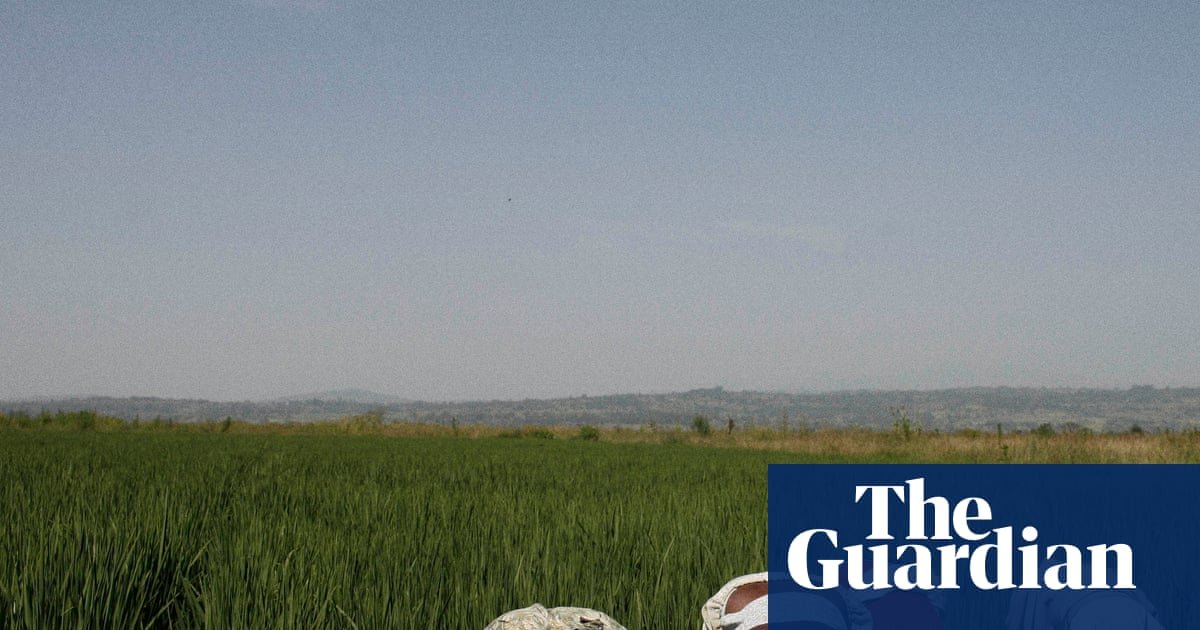
A farmer displays his harvest of teff grain in Germama, Ethiopia. Experts fear that locally adapted crops like teff will suffer under globalised systems. Photograph: Xaume Olleros/Bloomberg/Getty Images
He said the globalised food system has already shown it is vulnerable to shocks, such as the climate crisis or the war in Ukraine.
“The more global the system is, the harder it is to guarantee that you’re actually going to have it work, and food security is something which really needs to be as local as possible,” he said. “Don’t lock yourself into a global system which is broken and can’t be repaired. Why would we make it even more globalised than before and more dependent upon multinational companies that are operating out of Silicon Valley?”
The tech companies feed their algorithms and AI models with data collected from farmers and from tools such as satellite and drone sensors that can monitor climate conditions and soil health. They then take that information to advise farmers on what should be grown, for example by suggesting a particular seed would be suited to the soil moisture in their area.
But Mooney said these suggestions are likely to be focused only on crops the companies have an interest in and that would require the farmer to buy seeds, equipment and inputs such as fertilisers.
The report warns that these digital tools are portrayed as innovative and so easily attract the attention of policymakers and investors. That means that even if farmers are hesitant to adopt the advice of the tech companies, it could be promoted by their governments as the way forward.
The market for using digital tools in farming was $30bn (£22bn) last year and is projected to reach $84bn by 2034, according to the forecaster Fortune Business Insights. The report also said that the World Bank has financed $1.15bn in loans for digital agriculture projects and the EU has spent €200m on research in the area.
Lim Li Ching, co-chair of IPES-Food, said “farming by algorithm” is not something farmers want and there should be more focus on a bottom-up approach that prioritises the knowledge and needs of farmers.
“Innovation that actually works for people has to be grounded in their realities … [It should support them] as guardians and stewards of agricultural biodiversity,” said Lim. “[We need] innovations that genuinely support sustainability, that empower farmers, that are governed locally and that can strengthen agroecological practices and not entrench further industrial agriculture or monocultures or a heavily chemical-driven agriculture.”
She said those examples already exist, pioneered by farming communities in places such as Peru, where families are protecting hundreds of varieties of potatoes; in China where farmers are conserving seeds; and in Tanzania where they are using social media to communicate with each other about weather conditions and market prices.
Mooney said that the focus of policymakers should be on funding research with these local farmers and supporting their innovations.
“Food security is something which really needs to be as local as possible, which is the advantage of agroecology: you don’t lock yourself into a global system which is broken and can’t be repaired.”
Google, Microsoft, Amazon, IBM and Alibaba were approached for comment.
