
Close Menu

    Subscribe to Updates

    Get the latest creative news from FooBar about art, design and business.

    What's Hot

    Some Americans call us ‘Europoor’ – but there are seven ways we’re exceedingly rich | Emma Beddington

    The body snatchers: how a young Nigerian man was lured to London in an organ-trafficking plot – podcast

    Six-week-old child in Pennsylvania died from measles, coroner says | Pennsylvania

    Facebook X (Twitter) Instagram
    Facebook X (Twitter) YouTube LinkedIn
    Naija Global News |
    Sunday, September 6
    • Business
    • Health
    • Politics
    • Science
    • Sports
    • Education
    • Social Issues
    • Technology
    • More
      • Crime & Justice
      • Environment
      • Entertainment
    Naija Global News |
    You are at:Home»Science»Nasa announces Artemis III mission no longer aims to send humans to moon | Nasa
    Science

    Nasa announces Artemis III mission no longer aims to send humans to moon | Nasa

    onlyplanz_80y6mtBy onlyplanz_80y6mtFebruary 27, 2026004 Mins Read
    Share Facebook Twitter Pinterest LinkedIn Tumblr Email
    Nasa announces Artemis III mission no longer aims to send humans to moon | Nasa
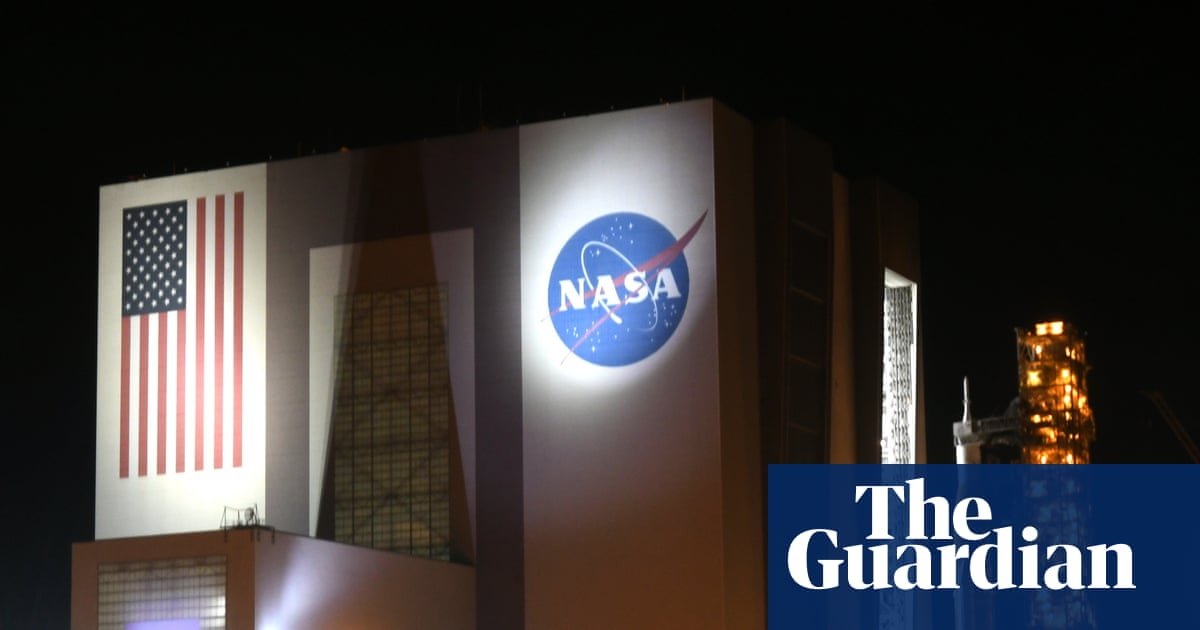
    NASA’s Artemis II Space Launch System (SLS) rocket with the Orion spacecraft at the Kennedy Space Center on 25 February 2026 in Cape Canaveral, Florida. Photograph: Anadolu/Getty Images
    Share
    Facebook Twitter LinkedIn Pinterest Email

    Nasa announced on Friday radical changes to its delayed Artemis III mission to land humans back on the moon, as the US space agency grapples with technical glitches and criticism that it is trying to do too much too soon.

    The abrupt shift in strategy was laid out by the space agency’s recently confirmed administrator, Jared Isaacman. Announcing the changes on Friday, he said that Nasa would introduce at least one new moon flight before attempting to put humans back on the lunar surface for the first time in more than half a century, in 2028.

    The new, more incremental approach would give the Nasa team a chance to test flight and refine its technology. As part of the changes, the Artemis II mission to fly humans around the moon this year, without landing, would also be pushed back from its latest scheduled launch on 6 March to 1 April at the earliest.

    “Everybody agrees this is the only way forward,” Isaacman told reporters at a news conference. “I know this is how Nasa changed the world, and this is how Nasa is going to do it again.”

    The revised course came as Nasa has been wrestling with a number of delays and technical problems. Earlier this week, the independent body that reviews space safety issued a blunt report sharply criticising the space agency’s current plans as too risky.

    The aerospace safety advisory panel recommended that Nasa rethink its objectives for Artemis III, which had been conceived as the first human landing on the moon since the final flight in the Apollo series in December 1972. The panel said that the call for a revision was urgent, “given the demanding mission goals”.

    Isaacman said that under the new plan, the eventual moon landing would be achieved through evolutionary steps rather than big leaps in technological procedures. “We’re going to get there in steps, continue to take down risk as we learn more and we roll that information into subsequent designs,” he told CBS News.

    He added: “We’ve got to get back to basics.”

    Step one in the revised schedule is the launch of the Artemis II moon mission, which has been plagued by delays. The rocket was returned to its hangar at the Kennedy Space Center in Florida earlier this week.

    Engineers had discovered a blockage in the rocket’s helium flow in the upper stage of the booster.

    The latest delay followed disappointment in February, when Nasa was forced to put off the launch of Artemis II after hydrogen was found leaking from its Space Launch System rocket.

    Artemis II will send four astronauts on a 10-day journey around the moon, designed to take people further into space than ever before, beyond the record set by Apollo 13 in 1970.

    Isaacman said on Friday that additional missions would then be included in the schedule. He likened the extra steps to the approach taken in Nasa’s original moon landing in which Neil Armstrong and Buzz Aldrin first stepped on to the lunar surface in 20 July 1969.

    That legendary event was hazarded only after three separate moon missions had been completed.

    The Artemis III mission will no longer aim to land on the moon. Instead, under the revised plans, it will be launched by mid-2027 as a low-Earth orbit designed to test essential technologies.

    That extra stage is intended to give Nasa extra flight experience with the massively complex advanced systems and the chance to test its space vehicles before it attempts a human moon landing. Should all that go to plan, then a new Artemis IV mission would set out in 2028 to land on the moon.

    The eventual aspiration is to land astronauts near the moon’s south pole. A second moon landing, Artemis V, could be conducted in 2028, followed by a moonshot attempted each year thereafter, Nasa said.

    aims announces Artemis humans III Longer Mission moon Nasa Send
    Share. Facebook Twitter Pinterest LinkedIn Tumblr Email
    Previous ArticleThe Case for Centers for Teaching and Learning (opinion)
    Next Article Winter getting shorter in 80% of major US cities, new data shows | US weather
    onlyplanz_80y6mt
    • Website

    Related Posts

    Millions in England face longer waits for mental health care as NHS providers plan cuts | Mental health

    August 7, 2026

    Andy Burnham announces review of prisoner early release scheme | Prisons and probation

    July 22, 2026

    Drugmaker Merck announces approval of new cholesterol-fighting drug | US news

    July 16, 2026
    Add A Comment
    Leave A Reply Cancel Reply

    Top Posts

    The science influencers going viral on TikTok to fight misinformation

    February 17, 20262 Views

    Conservative MP Patrick Spencer cleared of sexual assault | UK news

    July 17, 20261 Views

    10 of the most terrifying moments in film

    October 30, 20251 Views
    Stay In Touch
    • Facebook
    • YouTube
    • TikTok
    • WhatsApp
    • Twitter
    • Instagram
    Latest Reviews

    At Chile’s Vera Rubin Observatory, Earth’s Largest Camera Surveys the Sky

    By onlyplanz_80y6mtJune 19, 2025

    SpaceX Starship Explodes Before Test Fire

    By onlyplanz_80y6mtJune 19, 2025

    How the L.A. Port got hit by Trump’s Tariffs

    By onlyplanz_80y6mtJune 19, 2025

    Subscribe to Updates

    Get the latest tech news from FooBar about tech, design and biz.

    Most Popular

    The science influencers going viral on TikTok to fight misinformation

    February 17, 20262 Views

    Conservative MP Patrick Spencer cleared of sexual assault | UK news

    July 17, 20261 Views

    10 of the most terrifying moments in film

    October 30, 20251 Views
    Our Picks

    Some Americans call us ‘Europoor’ – but there are seven ways we’re exceedingly rich | Emma Beddington

    The body snatchers: how a young Nigerian man was lured to London in an organ-trafficking plot – podcast

    Six-week-old child in Pennsylvania died from measles, coroner says | Pennsylvania

    Recent Posts
    • Some Americans call us ‘Europoor’ – but there are seven ways we’re exceedingly rich | Emma Beddington
    • The body snatchers: how a young Nigerian man was lured to London in an organ-trafficking plot – podcast
    • Six-week-old child in Pennsylvania died from measles, coroner says | Pennsylvania
    • ‘I don’t have any friends’: why do young people today have fewer mates? | Loneliness
    • Even in safe-haven Massachusetts, trans care is at risk. Young people are fighting to protect it | LGBTQ+ rights
    © 2026 naijaglobalnews. Designed by Pro.
    • About Us
    • Disclaimer
    • Get In Touch
    • Privacy Policy
    • Terms and Conditions

    Type above and press Enter to search. Press Esc to cancel.