

February 26, 2026
2 min read
Add Us On GoogleAdd SciAm
DHS agents reportedly detain Columbia University neuroscience student
Federal officers entered Columbia University property and detained a student on Thursday, university officials said
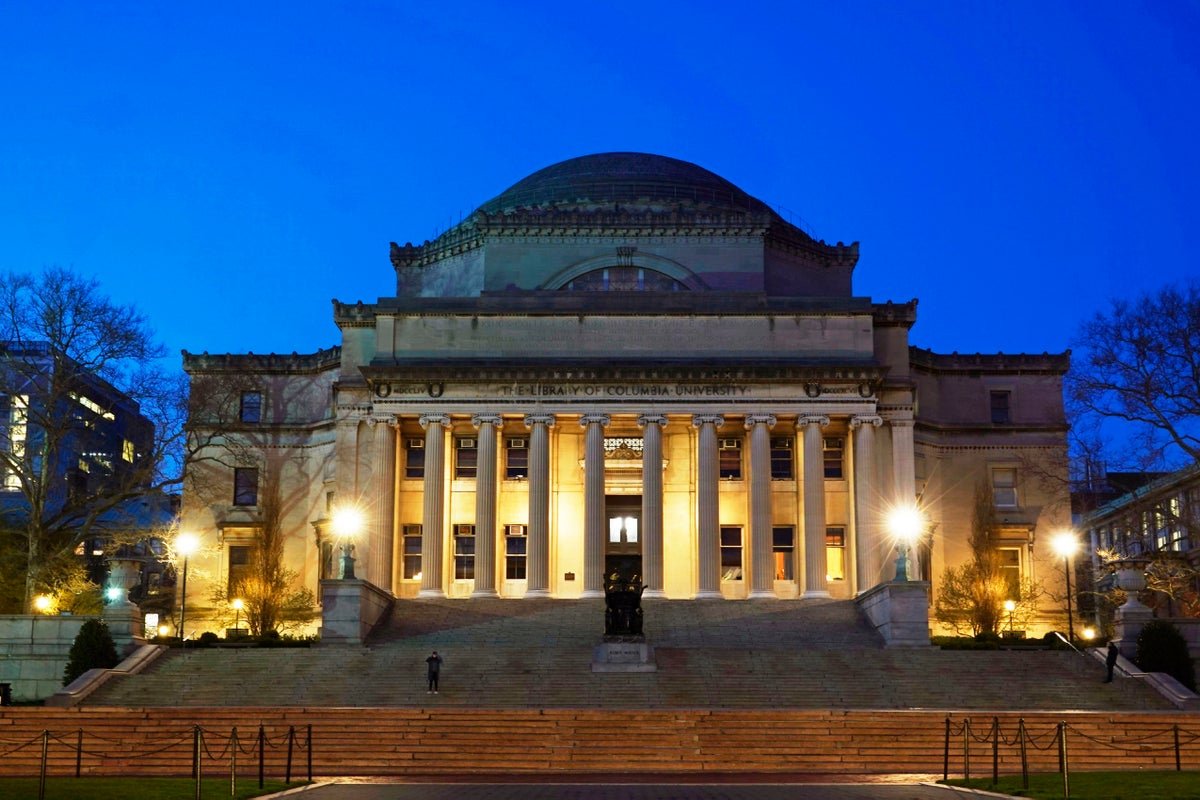
Peter Titmuss/Education Images/Universal Images Group via Getty Images
Department of Homeland Security agents detained a student at Columbia University, the institution’s acting president said in a statement on Thursday.
The university’s student newspaper, the Columbia Daily Spectator, identified the student as Ellie Aghayeva, who describes herself as a neuroscience researcher and is pursuing an undergraduate degree in neurobiology and behavior and political science, according to her LinkedIn account. A statement reviewed by the New York Times and provided to the American Association of University Professors by Aghayeva’s friends also identifies her as an international student with a visa majoring in neuroscience and political science.
“We are exporting education to the world by having students come to the United States to study, and that is being undermined in in ways that are really problematic,” says Virginia Page Fortna, Harold Brown Professor of U.S. Foreign and Security Policy at Columbia University.
On supporting science journalism
If you’re enjoying this article, consider supporting our award-winning journalism by subscribing. By purchasing a subscription you are helping to ensure the future of impactful stories about the discoveries and ideas shaping our world today.
Aghayeva is listed as a co-author on a book entitled Ways of Thinking and Imagining, which explores mental imagery and visual perception. The book was published by the Living Lab, which was run by former Columbia University faculty member Alfredo Spagna, who is also a co-author of the book. His research focuses on the neural and psychological underpinnings of visual perception and mental imagery. Spagna did not immediately respond to a request for comment from Scientific American.
Columbia University’s acting president Claire Shipman said in the statement that federal agents “made misrepresentations to gain entry to the building to search for a ‘missing person.’” Columbia did not confirm the student’s identity to Scientific American.
The DHS action comes just under a year after federal immigration agents detained another Columbia student, Mahmoud Khalil, in March 2025. He was released last June, and legal action surrounding his case is continuing.
DHS did not immediately respond to a request for comment from Scientific American.
Editor’s Note (2/26/26): This is a developing story and may be updated.
It’s Time to Stand Up for Science
If you enjoyed this article, I’d like to ask for your support. Scientific American has served as an advocate for science and industry for 180 years, and right now may be the most critical moment in that two-century history.
I’ve been a Scientific American subscriber since I was 12 years old, and it helped shape the way I look at the world. SciAm always educates and delights me, and inspires a sense of awe for our vast, beautiful universe. I hope it does that for you, too.
If you subscribe to Scientific American, you help ensure that our coverage is centered on meaningful research and discovery; that we have the resources to report on the decisions that threaten labs across the U.S.; and that we support both budding and working scientists at a time when the value of science itself too often goes unrecognized.
In return, you get essential news, captivating podcasts, brilliant infographics, can’t-miss newsletters, must-watch videos, challenging games, and the science world’s best writing and reporting. You can even gift someone a subscription.
There has never been a more important time for us to stand up and show why science matters. I hope you’ll support us in that mission.
