

Imagine a place hidden deep in a pine forest, with small lakes and ponies. Far from the noisy city. In the middle of it there is a modernist Soviet building with marble walls. Walls that have heard so many stories of suffering, loss and death.
This place was built in 1974 as a secret sanatorium for the ministers of Soviet Ukraine. Later it hosted soldiers returning from the 1979-89 Afghan-Soviet war. Then, from 2014, those coming back from the war in eastern Ukraine. And now, soldiers from every part of the Ukrainian front.
This place is called Forest Glade. An unusual mental health rehabilitation hospital, where war-weary soldiers dance tango, practice yoga, climb walls, play music, tend gardens, care for ponies, practice archery and take part in medieval battle games – all to heal the invisible wounds of war.
Forest Glade combines medical, psychological, physical and social support. It helps soldiers experiencing symptoms of stress disorders, depression, anxiety, adjustment disorders and the consequences of trauma, including PTSD. It has only three weeks to treat each soldier before they are sent back to the front.
I remember my first visit to Forest Glade with unsettling clarity. From the outside, the building retains the severity of late-Soviet modernism – symmetry, institutional coldness. It is a structure designed for authority not vulnerability. Yet inside, light falls generously across the corridors. Green plants interrupt the hardness of the stone. The space feels less like a hospital than a suspended zone, removed, briefly, from the velocity of war.
It was the first medical facility where I saw a billiard table – and not just one. Subsequently I began to feel as though preparations for tournaments were happening here every day. The sharp sound of billiard balls striking each other constantly echoed through a large hall. I saw how the expressions of newly arrived patients immediately changed. The same thing happened to me when I first arrived, too.
On the second floor, there is a small kiosk where men buy coffee before stepping out on to a terrace overlooking the pines. They stand in silence, listening to birdsong. Down the corridor, others sit shoulder to shoulder watching television, playing cards, speaking in fragments about positions, shelling and lost friends. The stories are rarely linear. Trauma rearranges chronology. Some accounts are delivered flatly, stripped of adjectives. Others arrive disguised as humour.
In the courtyard, a rehabilitation doctor teaches archery. Later, I try it myself. Drawing the bow demands stillness. Breath must be regulated. The body has to anchor itself to the ground. You focus on a single point until everything else recedes. Archery becomes an exercise in reclaiming attention from intrusive memory. The body, disciplined and present, begins to counteract the mind’s reflex to scan for threat.
In a sunlit office upstairs, a doctor works with patients on memory reconstruction and fine motor skills. They handle small objects. They plant seedlings in pots. In spring, they carry the soil outdoors. There is something profoundly dissonant in watching men trained for combat relearn patience through tending to fragile plants. Yet it is precisely this dissonance that matters.
Every few weeks, a travelling petting zoo arrives. The foyer fills quickly. Soldiers cradle a cockerel against their chests, allow a stick insect to move slowly across their hands, laugh as someone dares to hold a large cockroach. They stroke a rabbit’s back with deliberate gentleness. Physical contact, uncomplicated and non-verbal, restores a register of touch that war distorts. For a brief moment, the nervous system softens.
In the evenings, several times a week, Forest Glade hosts “buhurt”, staged medieval combat. Soldiers wear padded armour and fight in teams using blunted foam weapons.
The choreography is controlled but the physicality is real. Buhurt creates a structured arena in which aggression can be expressed without causing injury. In Ukraine, it has evolved into an unconventional but deliberate tool of psychological rehabilitation, particularly for veterans with PTSD. It channels combat energy into ritual rather than chaos.
Beyond the hospital grounds, trips are organised to karting tracks, ski slopes, climbing walls, equestrian centres. These excursions are not entertainment. They are exposure – controlled re-entry into environments that demand focus without mortal consequence. Over the years, I have rarely encountered a soldier who spoke about Forest Glade without a certain intensity. Not gratitude, exactly. Something closer to recognition.
I stopped being a detached observer of Forest Glade when my father became a patient there. He spent most of his time undergoing acupuncture. Later, he told me that the persistent ringing in his ears had begun to subside, that the headaches were no longer constant. I noticed his stammer softened during those weeks. For a time, he seemed less internally braced.
Then he returned to service. He remained there for some time before being formally discharged. The triggers reappeared quickly. The hypervigilance. The physical symptoms. I understood then how provisional recovery can be. How easily the conditions of war reactivate what treatment temporarily quiets. Three weeks is an impossibly short period to address cumulative trauma. The doctors know this. The soldiers know this. But the war dictates the timetable.
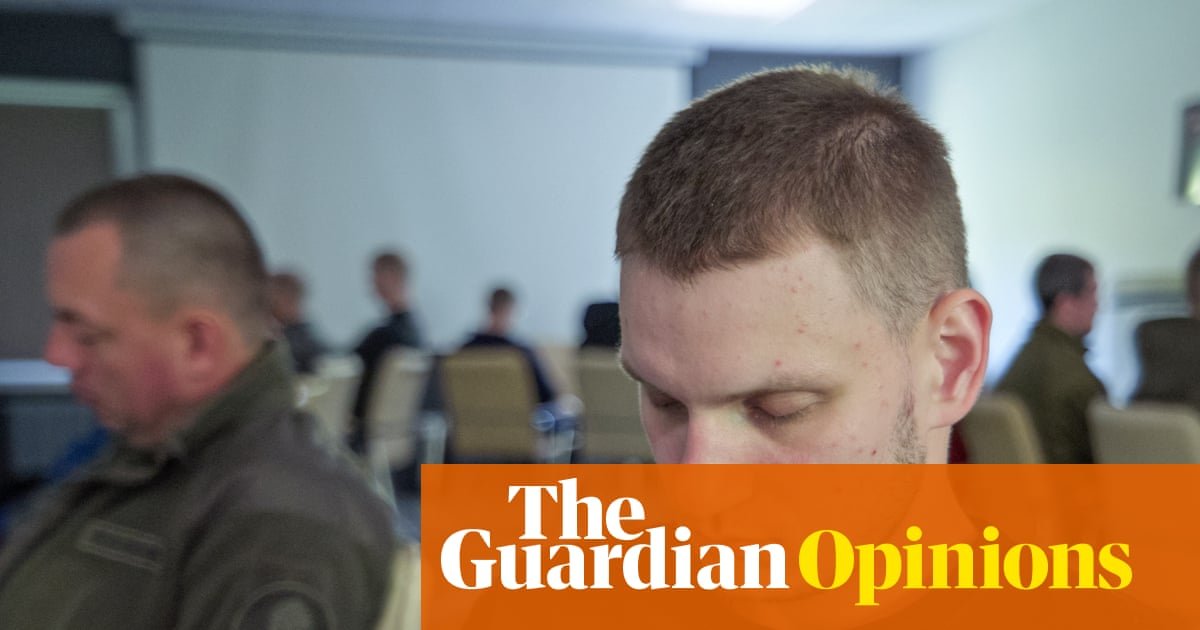
The hero of No Time to Heal, the film we made about Forest Glade, Kyrylo, told me that he first heard about it while in captivity. A fellow soldier advised him: when you get home, go there. I understand why.
Each time I return, the outside world feels momentarily held at a distance. Anxiety does not disappear, but it becomes containable. There is a schedule. Tomorrow has a defined structure. In war, unpredictability is constant; here, predictability becomes therapeutic. Forest Glade teaches to focus on what you can change, what you can influence. Events and news beyond your control do not deserve your energy or your nerves. There is only you and those who understand you.
Soldiers have repeatedly told me that they feel supported here, that this is their own environment. An island of safety in the middle of a pine forest. An island that, for three weeks, shields you from the brutality of war.
Ksenia Savoskina is a Ukrainian film-maker and the director of No Time to Heal
Do you have an opinion on the issues raised in this article? If you would like to submit a response of up to 300 words by email to be considered for publication in our letters section, please click here.
