
Close Menu

    Subscribe to Updates

    Get the latest creative news from FooBar about art, design and business.

    What's Hot

    David Lammy lifts cap on court sitting days in effort to cut backlog of cases | UK criminal justice

    What are the Send changes in England likely to cost and what are the hurdles? | Special educational needs

    This AI can improve your peer review — and make it more polite

    Facebook X (Twitter) Instagram
    Facebook X (Twitter) YouTube LinkedIn
    Naija Global News |
    Tuesday, February 24
    • Business
    • Health
    • Politics
    • Science
    • Sports
    • Education
    • Social Issues
    • Technology
    • More
      • Crime & Justice
      • Environment
      • Entertainment
    Naija Global News |
    You are at:Home»Health»People with rare genetic conditions are ‘systematically ignored’ by NHS | NHS
    Health

    People with rare genetic conditions are ‘systematically ignored’ by NHS | NHS

    onlyplanz_80y6mtBy onlyplanz_80y6mtFebruary 23, 2026004 Mins Read
    Share Facebook Twitter Pinterest LinkedIn Tumblr Email
    People with rare genetic conditions are ‘systematically ignored’ by NHS | NHS
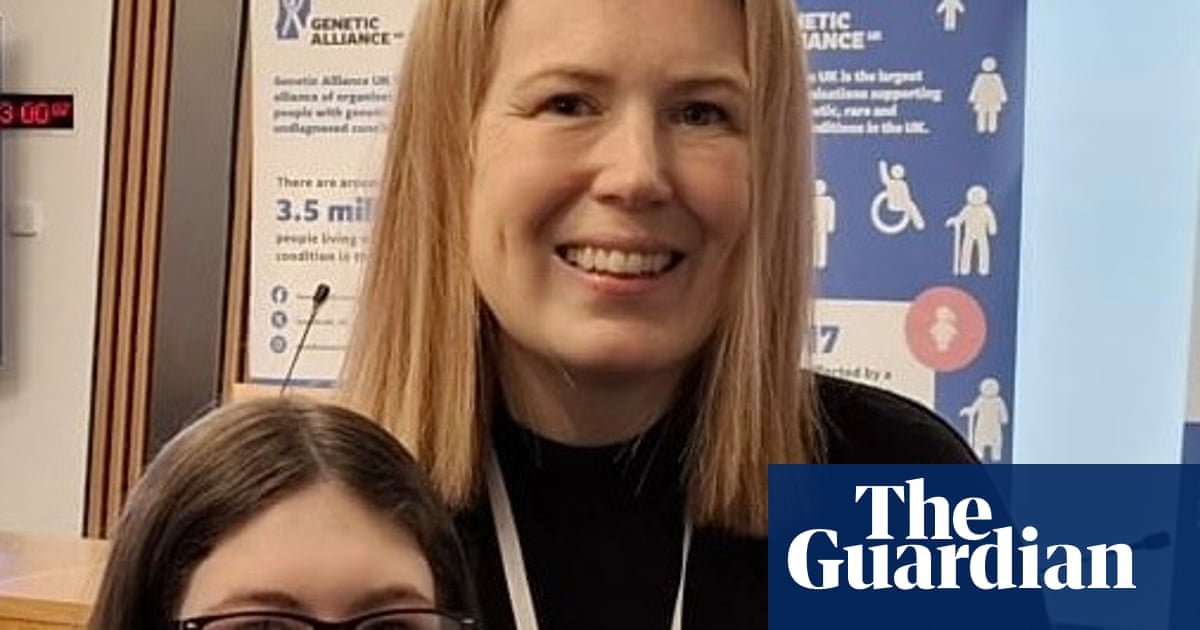
    Ali Reed, whose daughter Emma has Williams syndrome, a rare genetic condition thought to affect about one in 18,000 people in the UK. Photograph: The Guardian/handout
    Share
    Facebook Twitter LinkedIn Pinterest Email

    Millions of people living with rare genetic conditions across the UK are being “systematically ignored” by the NHS and facing inadequate care, according to a report.

    Rare genetic conditions, such as Williams syndrome and Duchenne muscular dystrophy, affect more than 3.5 million people across the UK. One in 17 people are affected by a rare condition at some point during their lives.

    The research, published by the charity Genetic Alliance UK, surveyed 290 people living with a rare condition about their experience with the healthcare system.

    One in four people had to wait at least three years for a diagnosis despite actively seeking NHS care, the survey found, while only one in 10 adults had a professional care coordinator to help manage appointments and follow-ups.

    The report also identified an “access lottery” for treatments, meaning that only 5% of rare conditions have treatment available that has been approved and licensed.

    Ali Reed’s daughter, Emma, has Williams syndrome, which affects about one in 18,000 people across the UK. The condition, caused by an issue with chromosomes, can result in delayed development for children, mild to moderate learning disabilities and an increased risk of cardiovascular disease.

    Reed said it wasn’t until Emma was nine months old that healthcare professionals questioned her development, and it was a further year before she was diagnosed.

    “During our diagnosis journey, what I found strange is that we had three or four healthcare professionals who had met other children with Williams syndrome, but didn’t see it in Emma,” Reed said. “Once you know what Williams syndrome is, it’s not difficult to recognise people with it because they tend to share similar facial characteristics.”

    Emma, who has been under the care of the same paediatrician for 13 years, is now preparing to move to adult care. Reed is concerned about the quality of care her daughter will receive.

    “Emma’s paediatrician has been excellent and she’s coordinated everything, but soon Emma will transition to adult services where she’s seen by a GP,” Reed said. “Only one in about 30 GPs have heard of Williams syndrome, so it’s a concern to me that Emma won’t get the level of care she needs.”

    Nick Meade, the chief executive of Genetic Alliance UK, said the NHS in some cases was ill-equipped to provide care for people living with rare genetic conditions.

    “In the main, the NHS does an excellent job of looking after us when we need it, but this isn’t true for everyone. In fact, for those of us living in the UK with a rare condition, it can be quite the reverse,” Meade said. “Our healthcare model is made up of lots of different care pathways. If your symptoms fit neatly into one of these, then great. It means there will be a defined pathway of care for diagnosis and treatment. But these are rigid processes that tend to focus on the most common conditions.”

    He added: “They don’t have the flexibility required when dealing with much rarer conditions that are often complex in nature and require expertise from a range of specialisms or services, including those outside of healthcare. It essentially penalises people for having the ‘wrong’ kind of condition and has a serious detrimental effect on the millions of people in our country living with a rare condition.”

    An analysis of the 163 most prevalent rare conditions from the European Orphanet database found that only a quarter (26%) were supported by National Institute for Health and Care Excellence guidance. And for 79 of these conditions, where a commissioner for England could be found, more than half (55%) did not have a specialised service.

    The charity recommended that a comprehensive rare condition registry should be funded and developed across the UK, alongside further research investment in rare genetic conditions.

    conditions genetic NHS people Rare systematically
    Share. Facebook Twitter Pinterest LinkedIn Tumblr Email
    Previous ArticlePeter Attia resigns from CBS News amid revelations about ties to Epstein | CBS
    Next Article World Nature Photography awards 2026 – in pictures
    onlyplanz_80y6mt
    • Website

    Related Posts

    Palantir deals are a threat to our data rights as UK citizens | Data protection

    February 23, 2026

    No evidence behind RFK Jr’s claim keto diet can cure schizophrenia, experts say | Robert F Kennedy Jr

    February 23, 2026

    Influencers, misinformation and aid cuts: the fight to halt polio in Malawi | Global health

    February 23, 2026
    Add A Comment
    Leave A Reply Cancel Reply

    Top Posts

    Watch Lady Gaga’s Perform ‘Vanish Into You’ on ‘Colbert’

    September 9, 20251 Views

    Advertisers flock to Fox seeking an ‘audience of one’ — Donald Trump

    July 13, 20251 Views

    A Setback for Maine’s Free Community College Program

    June 19, 20251 Views
    Stay In Touch
    • Facebook
    • YouTube
    • TikTok
    • WhatsApp
    • Twitter
    • Instagram
    Latest Reviews

    At Chile’s Vera Rubin Observatory, Earth’s Largest Camera Surveys the Sky

    By onlyplanz_80y6mtJune 19, 2025

    SpaceX Starship Explodes Before Test Fire

    By onlyplanz_80y6mtJune 19, 2025

    How the L.A. Port got hit by Trump’s Tariffs

    By onlyplanz_80y6mtJune 19, 2025

    Subscribe to Updates

    Get the latest tech news from FooBar about tech, design and biz.

    Most Popular

    Watch Lady Gaga’s Perform ‘Vanish Into You’ on ‘Colbert’

    September 9, 20251 Views

    Advertisers flock to Fox seeking an ‘audience of one’ — Donald Trump

    July 13, 20251 Views

    A Setback for Maine’s Free Community College Program

    June 19, 20251 Views
    Our Picks

    David Lammy lifts cap on court sitting days in effort to cut backlog of cases | UK criminal justice

    What are the Send changes in England likely to cost and what are the hurdles? | Special educational needs

    This AI can improve your peer review — and make it more polite

    Recent Posts
    • David Lammy lifts cap on court sitting days in effort to cut backlog of cases | UK criminal justice
    • What are the Send changes in England likely to cost and what are the hurdles? | Special educational needs
    • This AI can improve your peer review — and make it more polite
    • Who should shovel the snow? This weird math puzzle can help
    • World Nature Photography awards 2026 – in pictures
    © 2026 naijaglobalnews. Designed by Pro.
    • About Us
    • Disclaimer
    • Get In Touch
    • Privacy Policy
    • Terms and Conditions

    Type above and press Enter to search. Press Esc to cancel.