

February 19, 2026
4 min read
Add Us On GoogleAdd SciAm
Alzheimer’s blood tests predict what age people will be when the disease may cause symptoms, study finds
Tests that could reveal when Alzheimer’s disease will emerge, while promising, are not ready for use in otherwise healthy people, scientists say
Simon Dawson/Bloomberg Creative/Getty Images
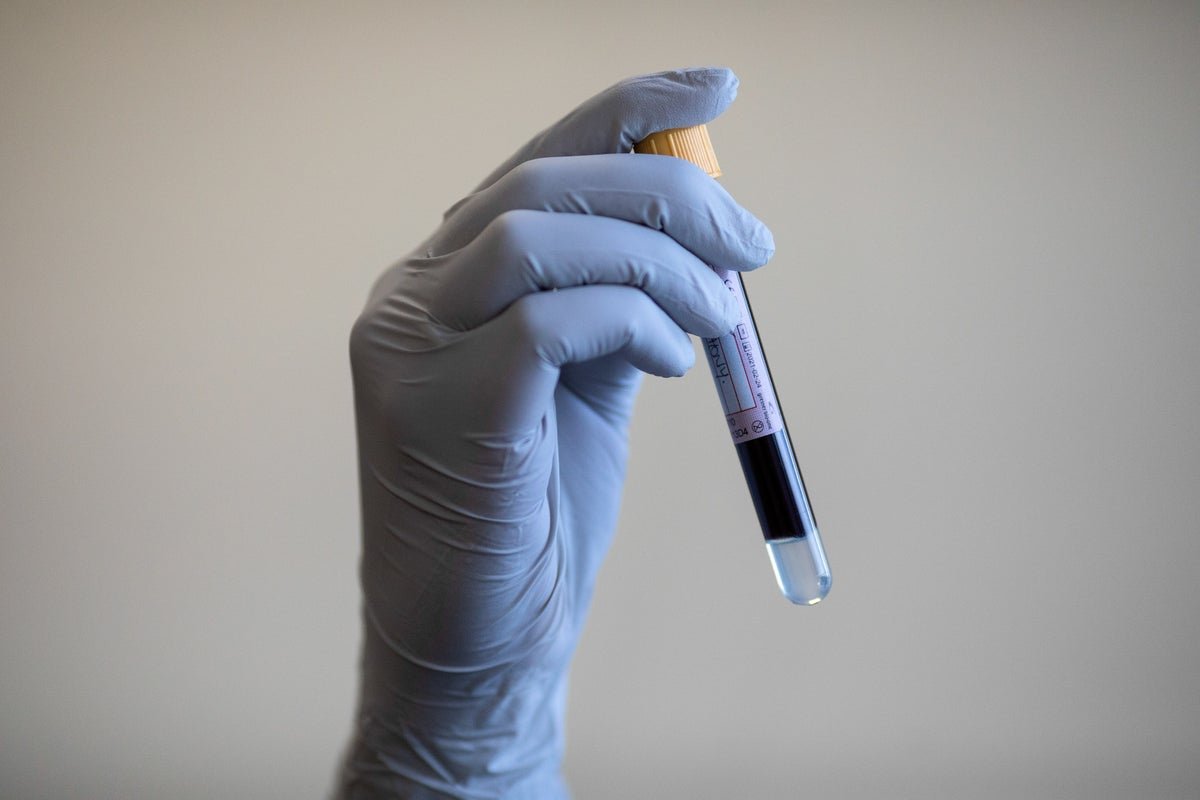
Blood tests that detect a protein involved in Alzheimer’s disease could help predict the age at which the disease may strike people long before they develop symptoms, according to a new study. But questions remain about the accuracy and uncertainty of these tests, and experts caution that the assays aren’t ready for prime time.
“While the results here are encouraging, they are not yet at the level of having significant clinical benefit for individual patients,” says Corey Bolton, a clinical neuropsychologist and an assistant professor of medicine at Vanderbilt University Medical Center, who was not involved in the new study. “Alzheimer’s disease is a complex condition with numerous intersecting risk and resilience factors that vary from person to person. These factors can have a large influence in the age of symptom onset and the rate of clinical decline.”
The study included more than 600 people aged 62 to 78 who were not cognitively impaired. They had blood tests to detect a protein called p-tau217, which accumulates in the brains of people with Alzheimer’s. The researchers then used a model based on the tests to predict the age of onset of the disease in people with no cognitive impairment with three to four years of uncertainty.
On supporting science journalism
If you’re enjoying this article, consider supporting our award-winning journalism by subscribing. By purchasing a subscription you are helping to ensure the future of impactful stories about the discoveries and ideas shaping our world today.
“A key innovation was estimating when they’re going to develop symptoms,” says Suzanne Schindler, an associate professor of neurology at the Washington University School of Medicine in St. Louis, who co-authored the study. The research was published on Thursday in Nature Medicine. Several of the study authors have consulted for or received funding from companies that make these Alzheimer’s blood tests. Schindler says she provides unpaid consulting to diagnostic companies.
More than seven million Americans are living with Alzheimer’s disease, and there is no cure. The neurodegenerative condition is associated with the buildup of plaques of amyloid protein and tangles of tau protein in the brain, which can develop for a decade or more before visible symptoms such as memory loss or confusion arise.
Blood tests are increasingly used to detect biological signs of the disease. They are much cheaper and easier to administer than traditional diagnostics such as spinal taps or positron-emission tomography (PET) scans. Two tests are approved for use in the U.S. in people with Alzheimer’s symptoms—Lumipulse (made by Fujirebio) and Elecsys (made by Roche Diagnostics).
But these tests may not always accurately predict who will and won’t develop Alzheimer’s, experts say. And the medical consensus is that they should not be taken by people who do not have symptoms of cognitive decline.
Detecting Alzheimer’s before symptoms show up, however, may be crucial to treating it: although there is no cure for the condition, two drugs have been approved that can slow the rate of progression in some people when the disease is caught early. And there are clinical trials of these drugs underway to determine whether treatment could head off the disease in people who have biological signs of the disease but no symptoms. The results are expected in the next few years.
In the new study, Schindler and her colleagues tested how well a blood test for p-tau217 could predict the age at which people who had the protein would develop symptoms of the disease. They found that these blood, or plasma, “clocks” could predict how likely and when people would develop symptoms of the disease. Interestingly, the older a person was, the sooner symptoms would appear.
“So, for example, if you have a positive blood test when you’re 60, it may take 20 years before you develop symptoms—versus, if you don’t have a positive blood test until you’re 80, it may take only 10 years,” Schindler says.
Of course, the tests are not foolproof. It’s important to note that the researchers are “not recommending this for people who are asymptomatic,” says Zaldy Tan, a memory and aging specialist at the Cedars-Sinai Medical Center in Los Angeles. And a three- to four-year error margin on either side of diagnosis is “a big window,” he notes, especially if you’re using the knowledge to make decisions about retirement plans or finances.
“Other medical conditions, such as chronic kidney disease and obesity, seem to have a large impact on the circulating levels of these proteins and can greatly influence results, leading to false positives or false negatives,” Bolton says. This study used a type of test that limits the effect of these conditions, he says, but “there are still many unanswered questions about how these blood tests perform in diverse populations.”
Despite their limits, however, the tests are still valuable for diagnosis and planning treatment, Bolton says. People found to be at greater risk of developing the disease could still benefit from interventions such as exercise, a healthy diet and cognitive or social stimulation.
Nathaniel Chin, a geriatrician and medical director at the Wisconsin Alzheimer’s Disease Research Center in Madison, who was not involved in the study, is “impressed and excited” by its results. He hopes researchers will replicate the findings in other populations.
The study was funded by a public-private partnership through the Foundation for the National Institutes of Health Biomarkers Consortium. Schindler notes that the study data are publicly available and that anyone can download and analyze them.
It’s Time to Stand Up for Science
If you enjoyed this article, I’d like to ask for your support. Scientific American has served as an advocate for science and industry for 180 years, and right now may be the most critical moment in that two-century history.
I’ve been a Scientific American subscriber since I was 12 years old, and it helped shape the way I look at the world. SciAm always educates and delights me, and inspires a sense of awe for our vast, beautiful universe. I hope it does that for you, too.
If you subscribe to Scientific American, you help ensure that our coverage is centered on meaningful research and discovery; that we have the resources to report on the decisions that threaten labs across the U.S.; and that we support both budding and working scientists at a time when the value of science itself too often goes unrecognized.
In return, you get essential news, captivating podcasts, brilliant infographics, can’t-miss newsletters, must-watch videos, challenging games, and the science world’s best writing and reporting. You can even gift someone a subscription.
There has never been a more important time for us to stand up and show why science matters. I hope you’ll support us in that mission.
