

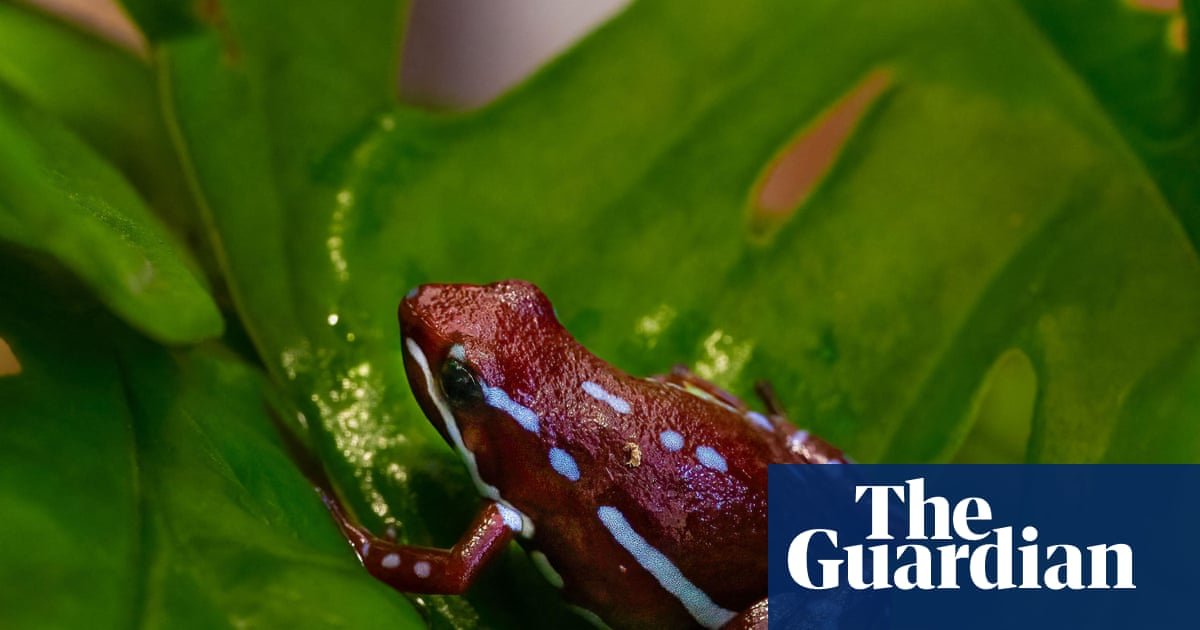
Epibatidine, the dart frog toxin Britain says was used to kill Alexei Navalny, is about 100 times more potent than morphine.
The extremely toxic, nicotine-like substance was first derived from the Epipedobates genus of poison dart frogs native to northern South America – which are not found naturally in Russia.
Frogs that secrete the toxin on to their skin include the brightly coloured Anthony’s poison arrow frog and the Phantasmal poison frog.
Researchers believe the frogs acquire it through their diet because animals from different habitats have displayed different levels of the toxin and those raised in captivity have none.
Epibatidine has been investigated as a painkiller and for relief from painful inflammatory conditions of the lung, such as asthma and pulmonary fibrosis.
However, because of its toxicity, it is not used clinically.
Alastair Hay, emeritus professor of environmental toxicology at the University of Leeds, said epibatidine acts to inhibit nerve action by blocking nicotinic receptors in the central and peripheral nervous systems.
He added: “The effect of blocking these receptors is muscle paralysis and paralysis of the respiratory system.
“So, breathing is blocked, and any person poisoned dies from suffocation.”
Hay said the presence of the toxin in a person’s blood “suggests deliberate administration”.
He added: “Epibatidine toxicity can even be increased by co-administration of certain other drugs and these combinations have been researched.
“If epibatidine, a toxin, was indeed used to poison Alexei Navalny, this is in violation of the 1972 Biological and Toxin Weapons Convention (BTWC) and the 1993 Chemical Weapons Convention (CWC).
“The Soviet Union was a co-sponsor of the BTWC. Russia is a signatory of both the BTWC and CWC. If Russia used epibatidine to poison Mr Navalny it has violated two treaties it has sworn to uphold.”
Epibatidine can be detected using a combination of gas chromatography and mass spectrometry.
Gas chromatography helps separate compounds of interest and mass spectrometry breaks chemicals into fragments to create a unique fingerprint of the substance, which can then be identified.
