

February 12, 2026
4 min read
Add Us On GoogleAdd SciAm
The physics of ‘Penisgate’ and how ski jumpers fly
A scandal involving allegedly enlarged ski suits ahead of this year’s Winter Olympics has highlighted the intriguing physics behind ski jumps
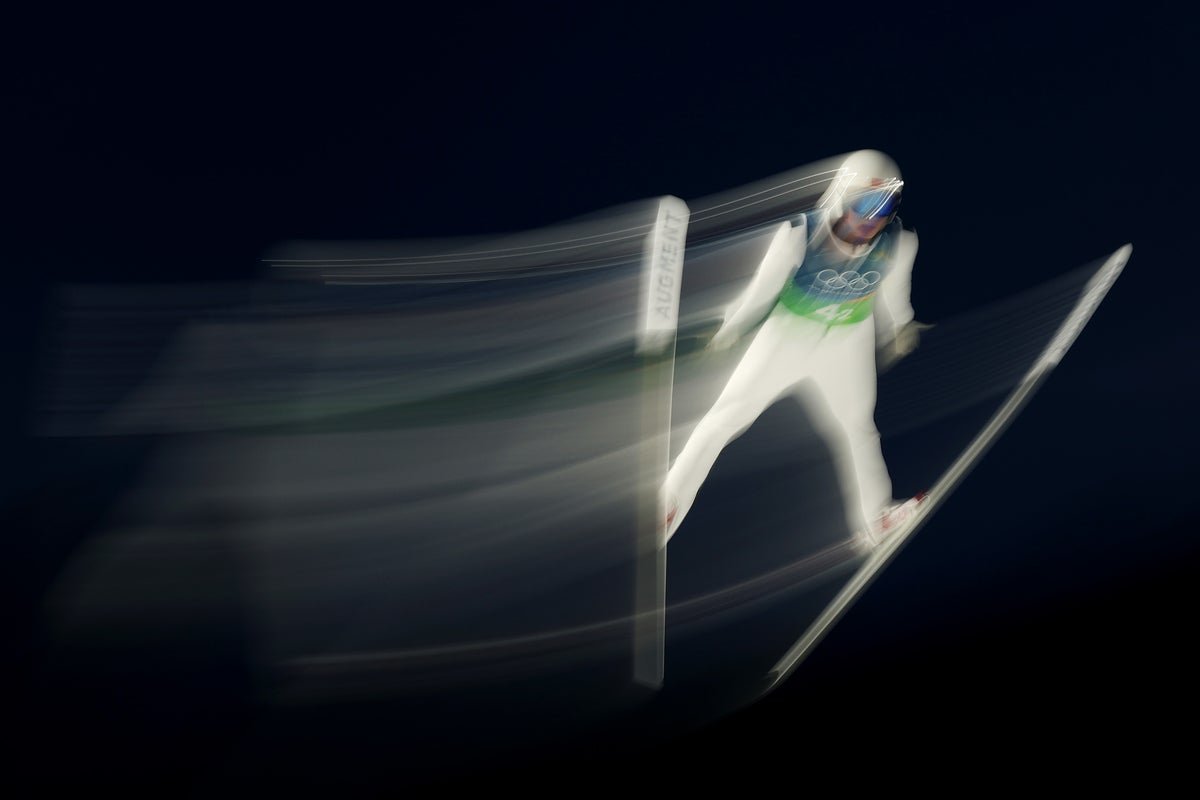
Qiwu Song of Team People’s Republic of China competes in the Mixed Team Trial Round on day four of the Milano Cortina 2026 Winter Olympic games
From skating to curling, the thrilling sports of the Winter Olympics have plenty of science behind them. Follow our coverage here to learn more.
In the run-up to this year’s Winter Olympics, and even as the Games have got underway, a scandal has been brewing: allegedly, some competitive ski jumpers may have artificially enlarged their crotch area by injecting their genitals with engorging chemicals or stuffing their underwear to create bigger bulges. The apparent reason: to alter their suit measurements—ski jumpsuits are precisely tailored to jumpers’ bodies—and, reportedly, to gain a boost in jumps.
The allegations, first reported by a German media outlet and since dubbed “Penisgate,” have caught not only the Internet’s attention but also the World Anti-Doping Agency’s eye, although no athletes have been implicated by name.
On supporting science journalism
If you’re enjoying this article, consider supporting our award-winning journalism by subscribing. By purchasing a subscription you are helping to ensure the future of impactful stories about the discoveries and ideas shaping our world today.
Still the affair raises an important science question: How does a slight increase in a ski jumper’s suit surface area actually change their jumping distance?
Let’s start with the crotch. According to rules issued by the International Ski and Snowboard Federation (FIS), the body that regulates ski jumping, “crotch height” measurements for an athlete’s suit are taken by laser. So, in theory, if an athlete’s crotch is temporarily a little larger, they would get a slightly roomier suit than they might otherwise.
The extra fabric might be enough to minimally lengthen their jumps by providing a little more lift in the air—much like the patagium of a flying squirrel—and, in turn, more distance. In a sport that’s often decided by a matter of centimeters, any additional hang time can be the difference between gold and silver.
“It has a huge impact,” says Lasse Ottesen, now race director for the Nordic Combined event at FIS and a former Olympic ski jumper. He said research conducted in the 2000s suggested jumpers with a single centimeter of extra material at the crotch could increase jump length by as much as four meters. And according to a more recent study accepted for publication by Frontiers in Sports and Active Living, scientists found that adding one centimeter to the overall circumference of ski jumpers’ suits could lengthen jumps by 3.2 meters.
Athletes, coaches and regulators are aware of this. In January, before “Penisgate” went viral, several officials from Norway’s ski jumping team were temporarily banned from competition after they were found to have altered athletes’ suits with extra crotch stitching at last year’s Nordic World Ski Championships. That incident went “way beyond what we have ever seen before,” Ottesen says, adding that the FIS is working to refine ski jumping regulations—not least to make sure that “everyone is measured in the correct way.”
Suit size is far from the only factor to influence ski jump lengths, however. Amy Pope, a principal lecturer in physics and astronomy at Clemson University, explains that how far a ski jumper flies is ultimately the result of physics.
To prepare for their jumps, ski jumpers race down ramps etched with ice grooves in the snow, Pope says. As they descend, the jumpers are aiming to minimize air resistance and the friction on their skis to juice their speed. By the time they reach the bottom, they’re hitting speeds of about 60 miles per hour and a “huge” wall of air resistance—imagine sticking your hand out the window of a car barreling down the highway. “That’s exactly what the athletes are feeling,” she says. And then they jump.
At this point, if the jumper was in a vacuum, their trajectory would be parabolic, with the ideal launch angle of 45 degrees, says Philip Langill, an associate professor in the department of physics at the University of Calgary. A degree more or less, and they wouldn’t travel as far as possible.
Of course, no one is jumping in a vacuum at the Winter Olympics. Instead the athletes harness “the power of the air around them” to stay aloft longer, Pope says. They contort their bodies to maximize lift, reduce drag and fight the pull of gravity.
That’s where the sport’s signature “V” style jump comes in—the “biggest revolution” in ski jumping in the last three decades, Ottesen says. In the early 1980s long jumpers would often keep their skis parallel in the air, he says. But by the 1990s skiers started to fly with their skis in a “V,” increasing their surface area and lift. “All of a sudden, we were jumping a lot farther than we used to,” he says, “and we were crashing more.”
Do the athletes think about all this physics? Sometimes, according to Ottesen, at least—in training, he recalls being “more observant” of the forces acting on his body. But when it comes to competition time, muscle memory takes over. “You’re not thinking about any of this at all. The body and mind are just doing what it’s been practicing,” he says.
It’s Time to Stand Up for Science
If you enjoyed this article, I’d like to ask for your support. Scientific American has served as an advocate for science and industry for 180 years, and right now may be the most critical moment in that two-century history.
I’ve been a Scientific American subscriber since I was 12 years old, and it helped shape the way I look at the world. SciAm always educates and delights me, and inspires a sense of awe for our vast, beautiful universe. I hope it does that for you, too.
If you subscribe to Scientific American, you help ensure that our coverage is centered on meaningful research and discovery; that we have the resources to report on the decisions that threaten labs across the U.S.; and that we support both budding and working scientists at a time when the value of science itself too often goes unrecognized.
In return, you get essential news, captivating podcasts, brilliant infographics, can’t-miss newsletters, must-watch videos, challenging games, and the science world’s best writing and reporting. You can even gift someone a subscription.
There has never been a more important time for us to stand up and show why science matters. I hope you’ll support us in that mission.
