

Monogamy, you may have heard, is in crisis. Fewer people are in relationships, let alone opting to be in one ’til death. And even those who have already exchanged vows seem to be increasingly looking for wiggle room. “Quiet divorce” – mentally checking out of your union, rather than going through the rigmarole of formally dissolving it – is reportedly on the rise, as is “ethical non-monogamy” (ENM) and opening up a relationship to include other partners.
This is borne out by my experience on mainstream dating apps. About one profile in every 10 I come across seems to express a preference for “ENM” or polyamory, or mentions an existing wife or girlfriend. The best you can hope for, if you’re prepared to accept those terms, is that the “primary partner” really is across the arrangement as described.
From Lily Allen’s headline-grabbing album spilling the gory details of how her glitzy marriage came undone, to Haim’s Relationships, a song that expresses fretful ambivalence about the mere concept of monogamy itself, pop culture narratives seem to be just as cynical about our capacity to commit to one person. No wonder it is hard to feel optimistic about monogamy.
A survey in May last year of 1,000 Britons found that nearly a third (31%) believed monogamy was no longer a “realistic” ideal; among 18- to 24-year-olds, that rose to 42%. A larger poll in 2023 by YouGov found respondents were nearly exactly split on whether humans were “naturally monogamous” or not (with nearly a third not being sure).
For conservatives, of course, all this is deeply troubling, and evidence of the erosion of good Christian values and the traditional family unit. But what if this uneasy reckoning with monogamy is not society acting out against the natural order, but moving us closer in line with it?
Late last year, a study from the University of Cambridge shed light on how humans’ tendency towards monogamous pairings compared to that of other mammals. This “monogamy league table”, ranking the proportion of half and full-siblings in 35 species, put us comfortably in the top 10 – but not at No 1.
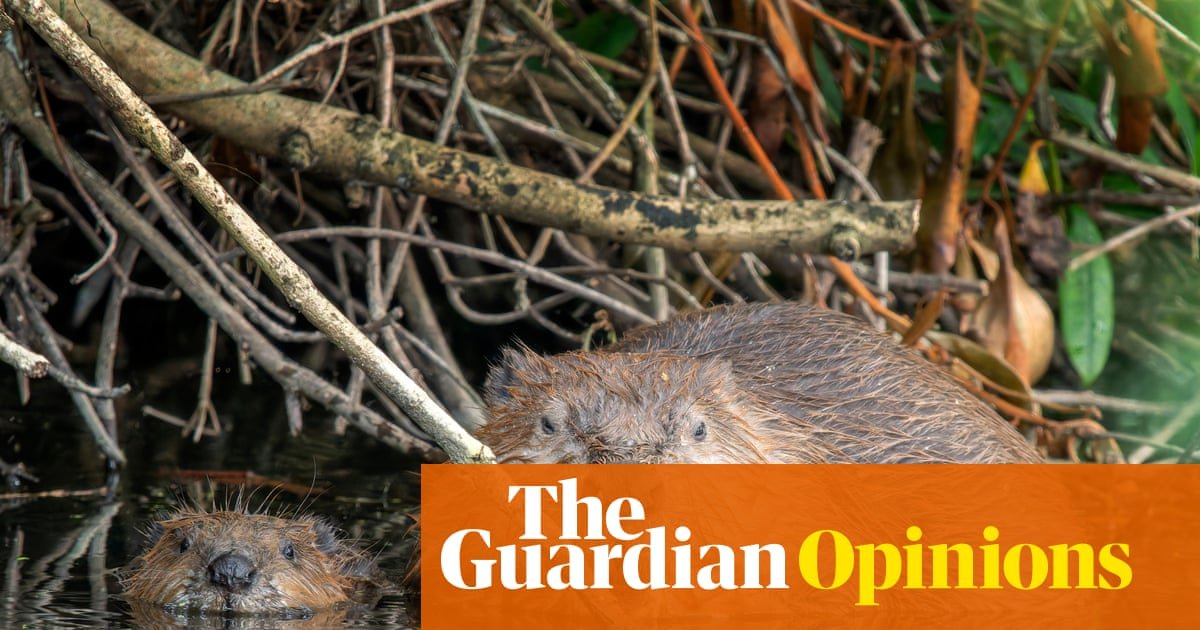
In fact humans ranked below African wild dogs, moustached tamarins and Eurasian beavers, and with a “monogamy rate” just above that of white-handed gibbons and meerkats. Placed bottom of the species studied was the Scottish Soay sheep, reflecting each ewe’s mating with several rams; at the top was the California deermouse, which, once mated, stays paired for life.
So what does this tell us? That we should be looking to beavers for secrets to a happy, lasting marriage? That traditionalists should take up the California deermouse as a mascot for monogamy (it is admittedly quite cute)? Or that efforts to loosen the marital tie, “ethically” or otherwise, are at odds with our species’ essential nature?
Though the study establishes monogamy as “the dominant mating pattern for our species”, its takeaways for us are of course limited, as acknowledged by its author Dr Mark Dyble, an evolutionary anthropologist at the University of Cambridge. It measures reproductive monogamy, that is, whether an animal procreates with multiple partners, because “in most mammals, mating and reproduction are tightly linked”. But humans haven’t been so bound for a long time, especially since the development of birth control.
Unlike other animals, complex cultural norms have always influenced our approach to sexual and romantic pairings. Marriage itself – a relatively recent institution in our species’ 300,000-year-long history, thought to be roughly 4,300 years old – served to bind women to men (for a long time as property), ensure paternity and protect the male line.
Christianity began to become involved from the eighth century, and then the state added more layers of baggage, regulating interpersonal unions in order to govern property and inheritance.
Monogamy (reproductive or otherwise) has never been guaranteed through any of these permutations of pair-bonding. It certainly hasn’t always been uniformly expected: women have historically faced greater social and personal repercussions for infidelity than men.
And to focus only on the western approach to pairing and reproduction actually elides huge diversity among humans. Only a minority of societies globally (a reported 17%) are strictly monogamous, according to a 2013 study. As a species we have come up with a range of potential approaches to partnership, “from serial monogamy to stable polygamy”, as Dyble notes in the Cambridge study, and within all of them created conditions for committed parenting.
This is all the more remarkable in comparison with our primate relatives. Mountain gorillas and chimpanzees rank very low in the “monogamy league table”, instead living in non-monogamous groups. Yet our own preference for monogamy is likely to have developed on from that arrangement.
Viewed in this context, the recent second-guessing of monogamy seems less like an affront to our nature, or a threat to our societies, and more like another step in our evolution. Not only has it always tolerated different kinds of pairings; it has always been in flux, negotiated not just between individuals but in line with our society and times. Indeed, given the tremendous baggage we’ve wrapped up with our “mating system”, it’s somewhat remarkable that it’s proved so load-bearing yet so flexible.
We may be nothing but mammals, but the Cambridge study is a timely reminder of the diversity not just between species but within them. The state or health of monogamy can’t be assessed separate from the effects of politics, religion, culture, economics and – lately, increasingly – technology.
As such, it will continue to evolve. Perhaps it’s no wonder the California deermouse manages to mate for life: its average life expectancy in the wild is less than two years.
