
Close Menu

    Subscribe to Updates

    Get the latest creative news from FooBar about art, design and business.

    What's Hot

    Investigators Say Doorbell Camera Was Disconnected Before Nancy Guthrie’s Kidnapping

    St. John’s Suspends CBP Partnership

    South Carolina measles outbreak is triggering dangerous brain swelling in some children

    Facebook X (Twitter) Instagram
    Facebook X (Twitter) YouTube LinkedIn
    Naija Global News |
    Friday, February 6
    • Business
    • Health
    • Politics
    • Science
    • Sports
    • Education
    • Social Issues
    • Technology
    • More
      • Crime & Justice
      • Environment
      • Entertainment
    Naija Global News |
    You are at:Home»Science»Bonobos can play make-believe much like children, study suggests | Animal behaviour
    Science

    Bonobos can play make-believe much like children, study suggests | Animal behaviour

    onlyplanz_80y6mtBy onlyplanz_80y6mtFebruary 5, 2026003 Mins Read
    Share Facebook Twitter Pinterest LinkedIn Tumblr Email
    Bonobos can play make-believe much like children, study suggests | Animal behaviour
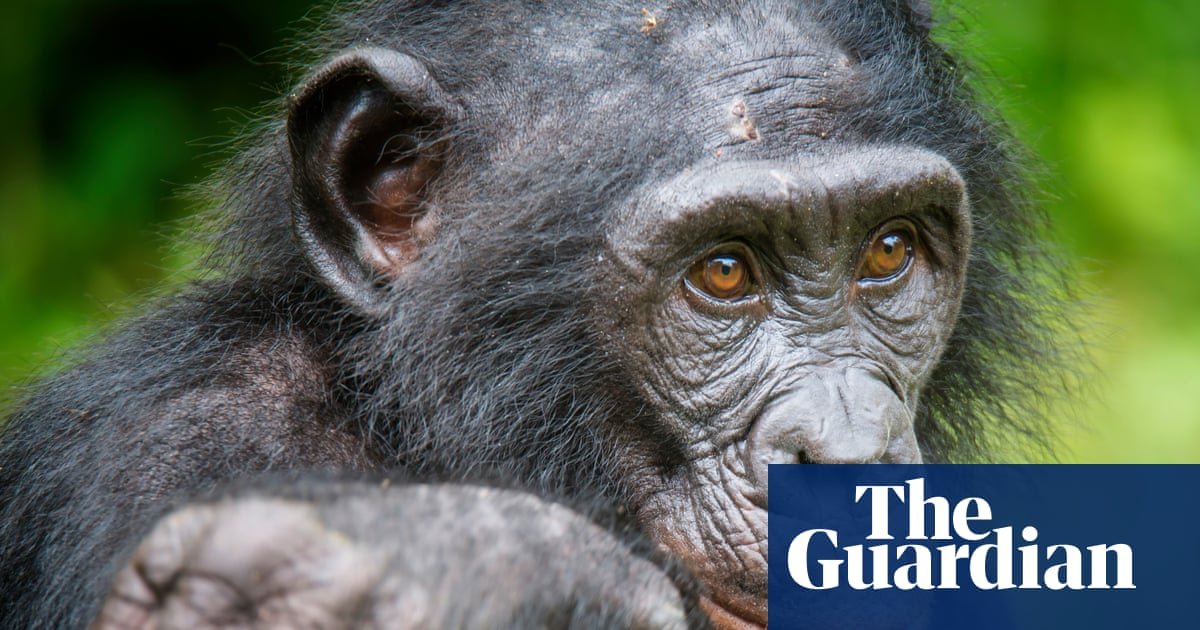
    The study provides a first rigorous experimental test that apes have a form of imaginative thinking. Photograph: guenterguni/Getty Images
    Share
    Facebook Twitter LinkedIn Pinterest Email

    Whether it’s playing at being doctors or hosting a toy’s tea party, children are adept at engaging in make-believe – now researchers say bonobos can do it too.

    While there have been anecdotal reports of apes using imaginary objects, including apparently dragging pretend blocks across the floor, experts say it is possible such instances have other explanations.

    For example, apes might be carrying out actions that have previously brought benefits without actually imagining a pretend object.

    Now scientists working with a bonobo named Kanzi, who has since died at the age of 44, say the ape was able to identify the location of imaginary objects in pretend scenarios.

    “[It] shows that animals are capable of understanding pretence in a controlled experimental setting, which hadn’t been done before,” said Dr Amalia Bastos, first author of the research from the University of St Andrews.

    The ability to make believe could reach deep into our evolutionary past, the researchers added.

    “Because we share this [ability] with bonobos, we could reasonably expect that this sort of dates back to our common ancestor. So that would have been somewhere between 6- and 9m years ago,” said Bastos.

    Writing in the journal Science Bastos and co-author Dr Christopher Krupenye from Johns Hopkins University report how they first trained Kanzi to point to containers filled with juice by rewarding him for doing so.

    They then presented Kanzi with two empty transparent cups and pretended to fill them with an empty jug. The imaginary contents of one cup was then tipped back into the jug, and Kanzi was asked to indicate which of the cups contained juice.

    Kanzi selected the correct, “full” cup in 34 of 50 trials – better than would be expected from chance – suggesting he was able to understand the concept of pretend liquids.

    Crucially, Kanzi was not rewarded for the correct answer, meaning he was not simply learning a desired response based on the human’s physical motions.

    To test whether Kanzi believed a real liquid was being poured into the cups, the team presented him with two cups – one containing juice with the other left empty. They pretended to fill the empty cup using an empty jug, and asked Kanzi to choose a cup.

    In 14 out of 18 trials Kanzi chose the cup containing real liquid, suggesting he was able to distinguish between tangible and imaginary juice.

    In a third experiment, the team found Kanzi was able to correctly identify the location of an imaginary grape placed in one of two transparent containers.

    While the team say it is not clear if their findings would apply to apes that have not been trained to communicate with humans, they note their results provide experimental evidence that a non-human animal can follow imaginary objects in pretend scenarios.

    “As such, our findings suggest that the capacity for representing pretend objects is not uniquely human,” they write.

    Prof Zanna Clay of Durham University, who was not involved in the work, said that while further work was needed in apes without Kanzi’s unique rearing and learning environment, the study provided a first rigorous experimental test that apes have a form of imaginative thinking.

    “In this respect, what’s then striking is why people should be amazed that our closest living relatives can do something we can do too, given that they also show advanced cognitive abilities and have to navigate complex social and ecological environments,” Clay said.

    “It would be more surprising if we found this ability in more distantly related species with more divergent social and cognitive abilities.”

    Animal behaviour Bonobos Children makebelieve play study suggests
    Share. Facebook Twitter Pinterest LinkedIn Tumblr Email
    Previous ArticleBitcoin loses half its value in three months amid crypto crunch | Bitcoin
    Next Article Rising Send costs will ‘bankrupt’ four in five English local authorities, leaders say | Special educational needs
    onlyplanz_80y6mt
    • Website

    Related Posts

    South Carolina measles outbreak is triggering dangerous brain swelling in some children

    February 6, 2026

    ‘Stark warning’: pesticide harm to wildlife rising globally, study finds | Pesticides

    February 5, 2026

    Rare Giant Phantom Jelly Spotted in Deep Waters Near Argentina

    February 5, 2026
    Add A Comment
    Leave A Reply Cancel Reply

    Top Posts

    Watch Lady Gaga’s Perform ‘Vanish Into You’ on ‘Colbert’

    September 9, 20251 Views

    Advertisers flock to Fox seeking an ‘audience of one’ — Donald Trump

    July 13, 20251 Views

    A Setback for Maine’s Free Community College Program

    June 19, 20251 Views
    Stay In Touch
    • Facebook
    • YouTube
    • TikTok
    • WhatsApp
    • Twitter
    • Instagram
    Latest Reviews

    At Chile’s Vera Rubin Observatory, Earth’s Largest Camera Surveys the Sky

    By onlyplanz_80y6mtJune 19, 2025

    SpaceX Starship Explodes Before Test Fire

    By onlyplanz_80y6mtJune 19, 2025

    How the L.A. Port got hit by Trump’s Tariffs

    By onlyplanz_80y6mtJune 19, 2025

    Subscribe to Updates

    Get the latest tech news from FooBar about tech, design and biz.

    Most Popular

    Watch Lady Gaga’s Perform ‘Vanish Into You’ on ‘Colbert’

    September 9, 20251 Views

    Advertisers flock to Fox seeking an ‘audience of one’ — Donald Trump

    July 13, 20251 Views

    A Setback for Maine’s Free Community College Program

    June 19, 20251 Views
    Our Picks

    Investigators Say Doorbell Camera Was Disconnected Before Nancy Guthrie’s Kidnapping

    St. John’s Suspends CBP Partnership

    South Carolina measles outbreak is triggering dangerous brain swelling in some children

    Recent Posts
    • Investigators Say Doorbell Camera Was Disconnected Before Nancy Guthrie’s Kidnapping
    • St. John’s Suspends CBP Partnership
    • South Carolina measles outbreak is triggering dangerous brain swelling in some children
    • Rising Send costs will ‘bankrupt’ four in five English local authorities, leaders say | Special educational needs
    • Bonobos can play make-believe much like children, study suggests | Animal behaviour
    © 2026 naijaglobalnews. Designed by Pro.
    • About Us
    • Disclaimer
    • Get In Touch
    • Privacy Policy
    • Terms and Conditions

    Type above and press Enter to search. Press Esc to cancel.