

February 2, 2026
2 min read
Add Us On GoogleAdd SciAm
6 weird groundhog facts for Groundhog Day
Groundhogs don’t really forecast the weather, but there are plenty of other strange things about these rodents
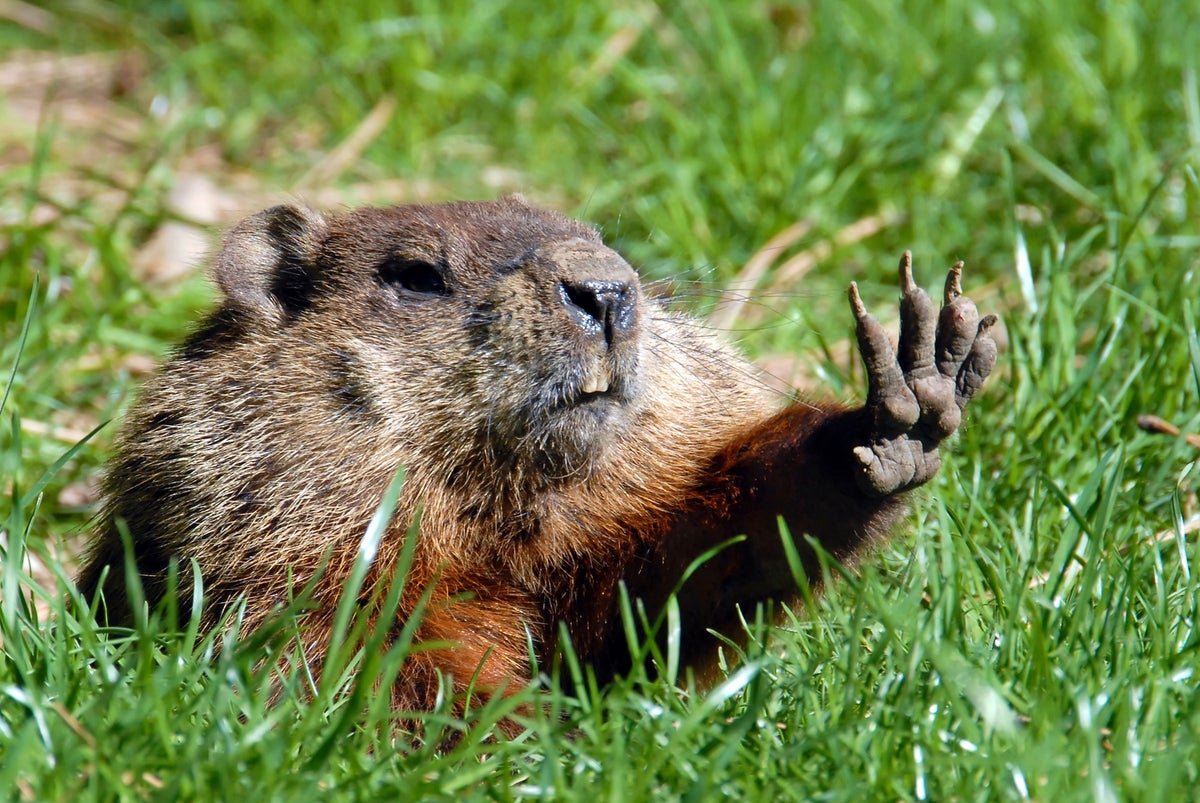
Groundhogs are unique, and it’s not just because of their annual weather forecasts
Since at least 1886, a groundhog now named Punxsutawney Phil has emerged from his burrow every Groundhog Day to predict when winter weather will end. Other groundhogs (Marmota monax) around the country have joined him in this climatological soothsaying. Folklore, likely stemming from Celtic mid-season festivals, dictates that if Phil sees his shadow, winter will continue for six more weeks, whereas if he doesn’t, spring will come early. (Many people around the country are probably hoping that shadow doesn’t appear after recent winter weather.)
Of course, Phil’s “forecasts” are actually no better than chance, but thousands, drawn by the allure of an unusual event for an unusual creature, still gather to see him emerge every February 2.
To celebrate these odd critters, here are six of the weirdest facts about groundhogs, one for each week of winter we might have left.
On supporting science journalism
If you’re enjoying this article, consider supporting our award-winning journalism by subscribing. By purchasing a subscription you are helping to ensure the future of impactful stories about the discoveries and ideas shaping our world today.
Fraudulent Forecasters
When groundhogs emerge this time of year, they are actually more interested in finding mates than making forecasts. The first ones to go aboveground are usually males that take a few days to mark their territory and gauge potential partners before they head back into their burrows for another month of hibernation.
Towering Teeth
Groundhogs’ teeth never stop growing, so gnawing on things to keep them from getting too long is essential. The animals usually use their powerfully regenerative teeth to break off pieces of food, defend themselves and gather materials they might use to build their nests.
Able Architects
From the surface, a groundhog’s burrow might just look like a hole in the ground, but inside, it can be elaborate. Burrows frequently have distinct chambers that act as bathrooms and bedrooms, multiple entrances and tunnels twisting through the earth that total as much as 65 feet in length.
Accidental Archeologists
As groundhogs dig deep to create their burrows, they have sometimes stumbled upon historical relics. In at least three cases, groundhogs have helped locate new archeological sites—including one of the oldest known sites of human habitation in North America: Pennsylvania’s Meadowcroft Rockshelter.
Medical Models
Archeology isn’t the only science groundhogs help us with—they also help medical researchers better understand the connection between hepatitis B (HBV) and liver cancer. Because the groundhog equivalent of HBV is so similar to that in humans, researchers can use them as a stand-in for people to better understand how HBV causes liver issues.
Numerous Names
Groundhogs are conspicuous critters—the largest ground-dwelling rodent in the squirrel (Sciuridae) family—and are found throughout much of North America. Their ubiquity means lots of groups, including Indigenous Americans, have had a chance to name them. Besides “groundhog,” a few of the more common names include woodchuck and whistle-pig, referring to the “chuck” and “whistle” sounds they make or their stocky build.
It’s Time to Stand Up for Science
If you enjoyed this article, I’d like to ask for your support. Scientific American has served as an advocate for science and industry for 180 years, and right now may be the most critical moment in that two-century history.
I’ve been a Scientific American subscriber since I was 12 years old, and it helped shape the way I look at the world. SciAm always educates and delights me, and inspires a sense of awe for our vast, beautiful universe. I hope it does that for you, too.
If you subscribe to Scientific American, you help ensure that our coverage is centered on meaningful research and discovery; that we have the resources to report on the decisions that threaten labs across the U.S.; and that we support both budding and working scientists at a time when the value of science itself too often goes unrecognized.
In return, you get essential news, captivating podcasts, brilliant infographics, can’t-miss newsletters, must-watch videos, challenging games, and the science world’s best writing and reporting. You can even gift someone a subscription.
There has never been a more important time for us to stand up and show why science matters. I hope you’ll support us in that mission.
