

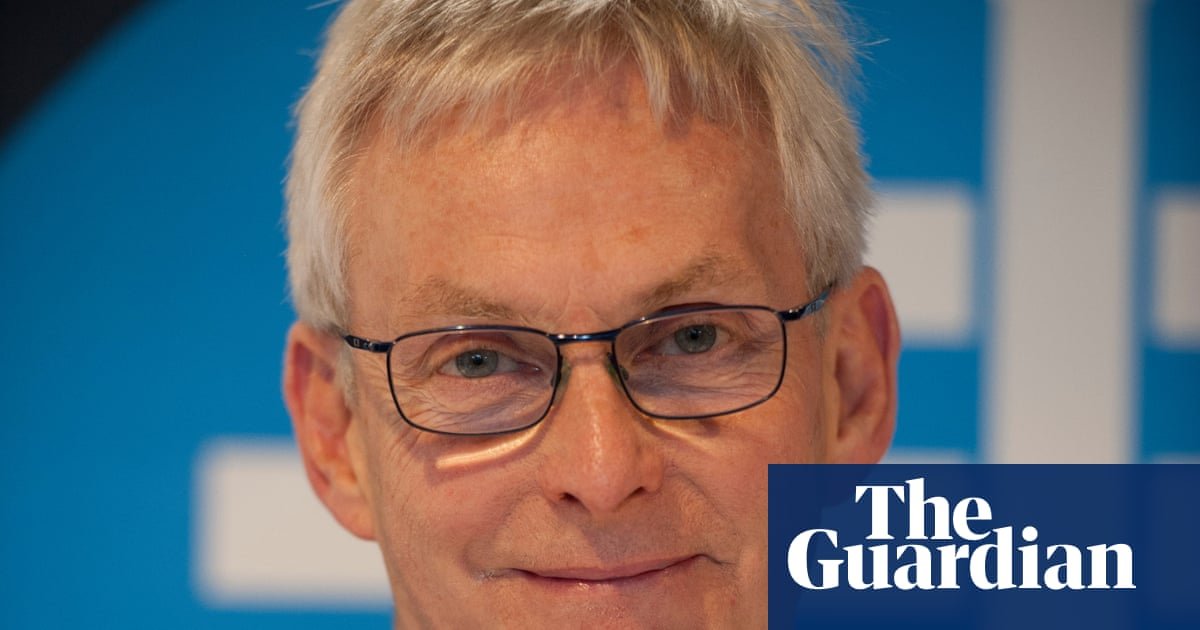
Mike Morgan, who has died aged 75, was a leading figure in respiratory services in Leicester for more than 30 years. He also championed respiratory medicine at the highest level. It had long been a poor relation compared to other areas of medicine but, as the national clinical director for respiratory disease at NHS England from 2013 to 2019, Morgan ensured it was prominent in the national long-term strategy set out in NHS England’s 10-year health plan in 2019. The aim was to transform outcomes by diagnosing diseases earlier with greater access to spirometry (a lung function test) and to increase provision for the key treatment, pulmonary rehabilitation.
When Morgan began working as a consultant respiratory physician at Glenfield hospital in Leicester in 1988, he joined a small team, with two other doctors (today there are more than 20 respiratory specialists). They faced a huge challenge: respiratory diseases such as chronic pulmonary obstructive disease (COPD) were widespread. Not only can they result in disabling breathlessness and blight sufferers’ lives, they are also a leading cause of death.
That respiratory diseases were receiving only a fraction of the research funding given to cancer or heart disease may be partly explained because, with causes such as pollution, damp housing and smoking, they disproportionately affect those in socially deprived areas who may not be so vocal or politically active.
When he began work at Glenfield hospital, Morgan quickly became interested in the potential for exercise in lung rehabilitation and preventing the “vicious spiral” in which a patient with COPD is less active because they are breathless, which makes them lose fitness and become frailer, and in turn become more breathless.
In 1992 he worked with the physiotherapist Sally Singh to develop an “incremental shuttle walking test of disability” to measure patients’ fitness. They also researched and developed a pulmonary rehabilitation programme, which included exercises, lifestyle management and disease education, and co-wrote Practical Pulmonary Rehabilitation, published in 1998.
Morgan was interested in how the lungs functioned; he liked the fact that patients with respiratory problems could be helped to improve their quality of life
Bronchodilator and other medicines were the mainstay of treatment for COPD in the 1990s and Morgan’s championing of exercise therapy initially met with scepticism from some doctors. However, he and his Leicester colleagues were vindicated. Morgan was influential in getting national COPD audit programmes (now part of the National Respiratory Audit Programme) commissioned, which researched the effectiveness of pulmonary rehabilitation, and now there is a wealth of evidence to support its use. Today it is standard therapy across the UK for people with COPD and other respiratory diseases and is used in many other parts of the world, including in low- and middle-income countries such as India and Uganda.
As well as his own research, which encompassed sleep disorders as well as COPD, Morgan was passionate about building bridges between academics and clinicians, and was a founder member of the Leicester Institute for Lung Health in 2000. This fosters connections between university researchers and clinicians to fast-track evidence-based medicine from “bench to bedside”. By 2020 it had attracted over £100m in funding, and published more than 700 papers, and it is now one of the largest respiratory research units in the world, particularly strong in COPD and asthma.
In 2016 Morgan became president of the British Thoracic Society, the professional body for respiratory specialists, and he was awarded its 2019 medal for his contribution to respiratory medicine.
Mike (Michael) was born in Ealing, west London. His father, Leslie, worked for the Great Western Railway and at that time was the stationmaster at Paddington station. Michael’s mother, Georgina (nee Lane), was a homemaker and he had an elder sister, Jane. The family later moved to Chester and then to Cardiff, where as a teenager Michael used to watch rugby at Cardiff Arms Park.
From the age of nine, he boarded at Taunton school in Somerset, where he enjoyed rugby and judo. He studied medicine at Christ’s College, Cambridge, and did his clinical training at University College hospital in London, qualifying as a doctor in 1975.
In 1981 Morgan married Clare Derrington, an anaesthetist, and the couple had two sons, Charlie and Theo.
Morgan worked as a junior doctor in several specialities during the 70s and initially thought he wanted to specialise in geriatrics. However, he was inspired to change course when he worked for the leading respiratory physician Martin McNicol at the Central Middlesex hospital in London. A practical person, Morgan was interested in how the lungs functioned, and he liked the fact that a lot of patients with respiratory problems could be helped to improve their quality of life.
In 1985 he became a senior registrar in chest and general medicine at East Birmingham District hospital (now Heartlands hospital) before moving to Leicester in 1988.
Morgan continued to see patients until he was 70, working through the Covid pandemic (although not on the frontline) before finally retiring in 2022. He continued to enjoy watching rugby throughout his life and, while working in Leicester, he took up sailing, and was a member of the Rutland sailing club. In 2025, he and Clare moved to Chichester in West Sussex.
He is survived by Clare, Charlie and Theo, four grandchildren and his sister, Jane.
Michael David Lane Morgan, respiratory physician, born 26 August 1950; died 28 November 2025
