

January 25, 2026
4 min read
Add Us On GoogleAdd SciAm
Babies who attend daycare share ‘good’ germs, too
Socializing at a young age helps to develop greater diversity in children’s microbiomes, according to an analysis of baby-to-baby transmission of gut bacteria
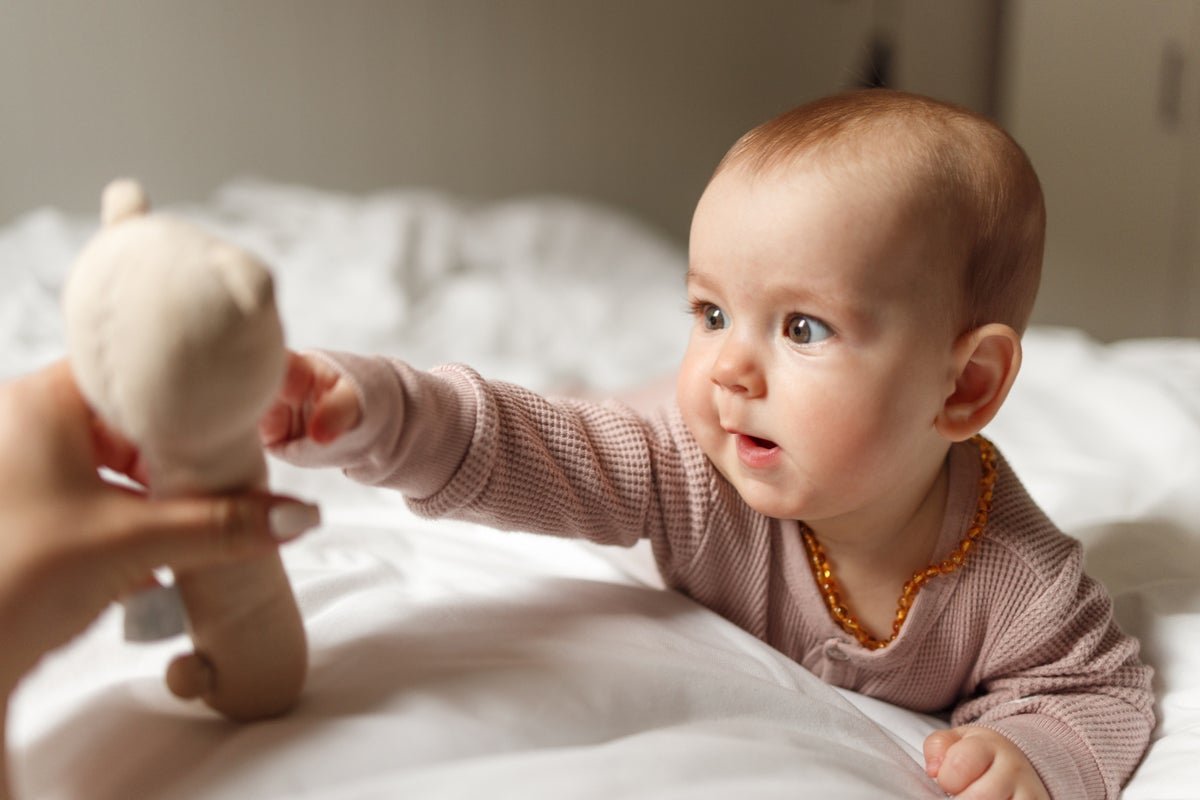
StockPlanets/Getty Images
A large proportion of a baby’s developing microbiota comes from their peers at nursery, even after just one month of attendance, an analysis has found.
The study, published today in Nature, analysed the gut microbiomes of infants during their first year of nursery. The amount of microorganisms that were transmitted between babies grew throughout the year. After four months, the babies at a nursery already shared 15–20% of their microbial species.
“That was higher than the proportion of all the microbes that they had acquired from birth until that point from the family,” says Nicola Segata, a microbiologist at the University of Trento in Italy.
On supporting science journalism
If you’re enjoying this article, consider supporting our award-winning journalism by subscribing. By purchasing a subscription you are helping to ensure the future of impactful stories about the discoveries and ideas shaping our world today.
Some of the changes in the children’s microbiomes will be due to the diet they had at the nurseries, but the study shows that the transmission of microbial strains between babies is extensive during the first year of nursery, and points to social interactions at this stage being key to building a diverse, healthy microbiome, adds Segata.
Bug transmission
While a fetus is still in the uterus, its microbiome is thought to be non-existent in healthy pregnancies, but it starts to develop quickly after birth, mainly through microbial transmission from the mother. Research has shown that people who live together start to share microbial strains. But, how the developing microbiota changes over the first few years of life hasn’t been well studied.
To fill the knowledge gap, Segata and his colleagues examined the microbiomes of 43 babies with a median age of 10 months at the start of the study. They followed them up before, during and after they attended their first year of nursery in Trento, Italy.
“We enrolled babies that were meeting for the first time, on the first day of the day care,” says Segata. “This is a time window in which their gut is much more prone to acquire strains from other babies and from adults, because the immune system isn’t yet well trained.”
The team analysed faecal samples from the babies, as well as from 10 nursery staff and individuals who lived in the same homes as the children: 39 mothers, 30 fathers, 7 siblings, 3 dogs and 2 cats.
Once the infants started nursery, the researchers continued to take samples every week until the Christmas break, and for some infants this continued until July. All participants had follow-up samples taken in July and a year after the start of the study.
Microbial richness
The analysis revealed extensive baby-to-baby microbiome transmission just one month after the infants started nursery, which continued to grow over the nursery year. If a baby had a sibling, they received more microbes from the sibling than they did from their parents, they tended to have a more diverse microbiota overall, and they acquired fewer bacterial strains from nursery peers.
The study also mapped transmission of individual microbial species between individuals. Segata gives an example of what happened with a strain of bacteria called Akkermansia muciniphila. “We have an example of a strain jumping from a mother to the infant. The baby at the day care then transmitted it to another baby, who transmitted it to both its parents.”
There were even signs that pets and infants swapped bacterial strains. “Interestingly it was only for the babies and not for the adults. So maybe there are more ‘intimate’ interactions with babies and the pets,” says Segata.
However, the most drastic effect on the microbiota in babies came from the use of antibiotics. Antibiotic treatment during the first year of life severely reduced the number of bacterial strains in infants’ gut microbiota, but this was followed by a rapid recovery aided by an extensive influx of fresh strains.
“To me it was a surprise to see how mums also acquired bacteria from other families through their kids,” says María Carmen Collado a food biotechnologist at the Institute of Agrochemistry and Food Technology in Valencia, Spain.
“I think it’s a really nice work that fills a gap in the knowledge about the transmission of the microbiome,” says Collado. “I think this is going to open new possibilities, not just concerning the microbiome but also with our understanding of how pathogens spread.”
The long-term health impacts of being exposed to other microbial strains at nursery on infants’ gut microbiomes isn’t known. It is probably a combination of diet and lifestyle that maintains the diversity of bacteria in the gut microbiota later in life, says Segata. Given that newly acquired strains were still there at the end of the year, it is possible that they might stick around into adulthood.
“Maybe in 20 years, we will find that people still need to thank their friends at day care for the microbes they got when they were there,” he says.
This article is reproduced with permission and was first published on January 21, 2026.
It’s Time to Stand Up for Science
If you enjoyed this article, I’d like to ask for your support. Scientific American has served as an advocate for science and industry for 180 years, and right now may be the most critical moment in that two-century history.
I’ve been a Scientific American subscriber since I was 12 years old, and it helped shape the way I look at the world. SciAm always educates and delights me, and inspires a sense of awe for our vast, beautiful universe. I hope it does that for you, too.
If you subscribe to Scientific American, you help ensure that our coverage is centered on meaningful research and discovery; that we have the resources to report on the decisions that threaten labs across the U.S.; and that we support both budding and working scientists at a time when the value of science itself too often goes unrecognized.
In return, you get essential news, captivating podcasts, brilliant infographics, can’t-miss newsletters, must-watch videos, challenging games, and the science world’s best writing and reporting. You can even gift someone a subscription.
There has never been a more important time for us to stand up and show why science matters. I hope you’ll support us in that mission.
