

January 8, 2026
3 min read
Add Us On GoogleAdd SciAm
In Unprecedented Move, NASA to Rush Astronauts Home after Medical Incident on ISS
NASA on Thursday announced it would take the extraordinary step of bringing four crewmembers back to Earth from the space station before their official mission end
NASA’s Crew-11 mission to the International Space Station (ISS) is coming to an unexpectedly abrupt end. The four astronauts who make up the mission crew will be returned to Earth “within the coming days” after the agency decided to end their stay early because of an undisclosed medical issue.
“It is in the best interest of our astronauts to return Crew-11 ahead of their planned departure,” said Jared Isaacman, NASA administrator, during a Thursday press briefing. Agency officials also emphasized that the situation was not an emergency deorbit. A further update is expected within the next 48 hours as to when the crew will depart the station for Earth.
The decision marks the first time NASA has opted to end a mission early because of an astronaut’s health—and the first time such an incident has affected the ISS, which has been permanently occupied since November 2000.
On supporting science journalism
If you’re enjoying this article, consider supporting our award-winning journalism by subscribing. By purchasing a subscription you are helping to ensure the future of impactful stories about the discoveries and ideas shaping our world today.
“It’s almost amazing that we’ve maintained the ISS for [almost] 26 years constantly crewed without something like this happening before,” says Jordan Bimm, a space historian at the University of Chicago.
The only other time on record that any space agency has ended a mission early because of health concerns was in 1985. At that time, Soviet cosmonaut Vladimir Vasyutin and his colleagues returned four months ahead of schedule from a mission to the Salyut 7 space station so that he could be hospitalized because of a urological issue.
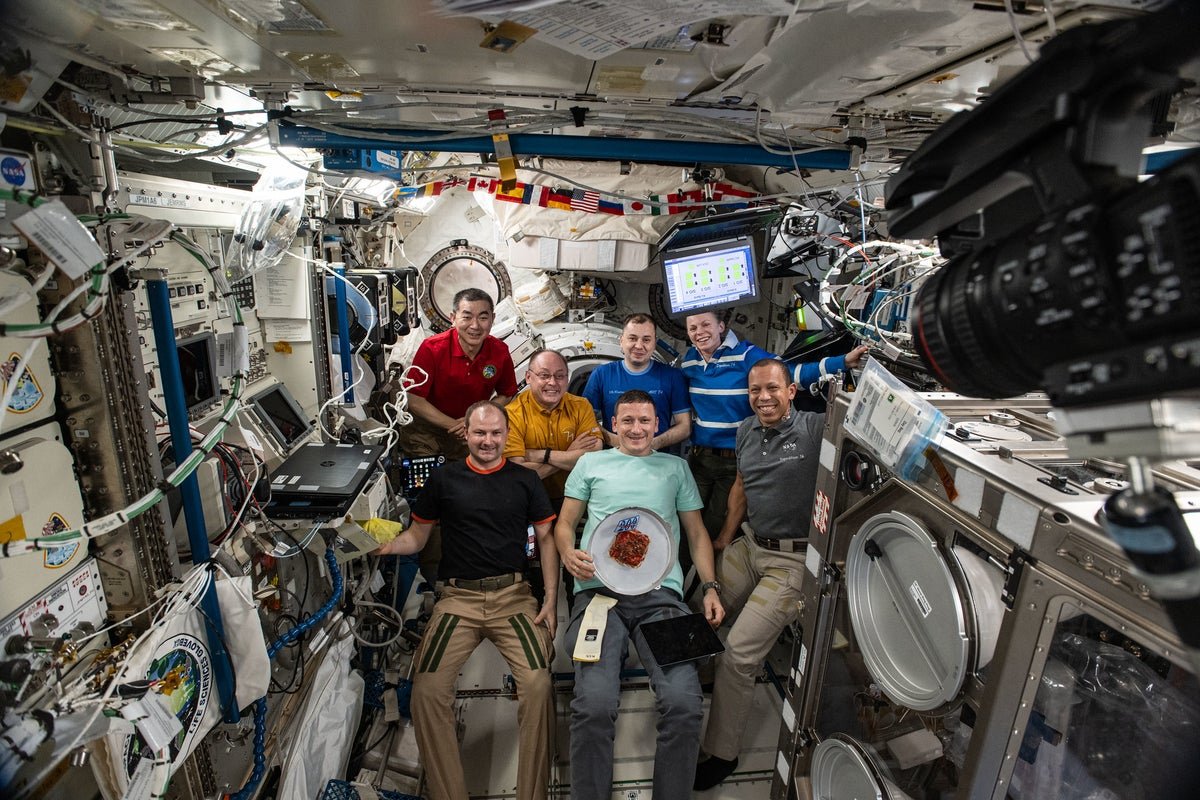
Crew-11 consists of NASA astronauts Mike Fincke and Zena Cardman, Russian cosmonaut Oleg Platonov and Japanese astronaut Kimiya Yui. NASA’s policy regarding astronaut privacy leaves it unclear which astronaut is affected. Their condition was repeatedly described as stable, but Isaacman did call the situation “a serious medical condition.”
NASA’s chief health and medical officer, James Polk, said the situation was not an emergency and was unrelated to the affected astronaut’s work on the station. But the astronaut’s issue could not be fully diagnosed and addressed with the limited medical equipment on the ISS—hence, the early return.
Whatever the issue is, it appeared to arise quickly. On January 7 NASA officials reported that the ISS crew had completed preparations for a spacewalk that Fincke and Cardman were due to execute the next day. Just four hours later, the agency delayed the spacewalk, citing a medical situation onboard the space station while noting that the astronaut’s condition was stable.
As a matter of routine, astronauts are trained to deal with medical issues that arise on the ISS, said Amit Kshatriya, NASA’s associate administrator. “Yesterday was a textbook example of that training in action,” he said. The agency’s response would not have been any different had one of the current astronauts in orbit been a medical doctor, Isaacman said.
The four astronauts of Crew-11 arrived at the ISS on August 1, 2025, after launching on a SpaceX Crew Dragon. The crew’s stint in space was expected to continue through mid-February 2026, a standard six-and-a-half month ISS tenure for a SpaceX crew.
To get the affected astronaut medical care on the ground, NASA must bring the entire crew and their vehicle home because there are no spare crew-ready capsules stationed at the ISS and NASA prefers to avoid ever having astronauts in orbit with no ride home.
Also currently onboard the orbital laboratory are NASA astronaut Chris Williams and Russian cosmonauts Sergey Kud-Sverchkov and Sergei Mikaev. The trio arrived in November 2025 onboard a Russian Soyuz vessel and will remain on the ISS.
NASA is still finalizing when Crew-11 will return to Earth—considering standard factors such as weather conditions around where the capsule is expected to splash down in the ocean. The agency is also determining whether to move up the launch of the next mission, Crew-12. That is another SpaceX-operated mission that is currently set to arrive in mid-February. Crew-12 consists of NASA astronauts Jessica Meir and Jack Hathaway, European astronaut Sophie Adenot and Russian cosmonaut Andrey Fedyaev.
Although the incident is a shocking first for NASA and the ISS, it perhaps shouldn’t be, given the degree to which humans have already made leaps in exploring space. And it will only become more frequent in the future.
“This seems abnormal now, but it is a preview of what will be the new normal if humans go into space in greater numbers,” Bimm says. “People will get sick, and sometimes contingencies will have to be exercised.”
Editor’s Note (1/8/26): This article was updated after posting to include additional information.
It’s Time to Stand Up for Science
If you enjoyed this article, I’d like to ask for your support. Scientific American has served as an advocate for science and industry for 180 years, and right now may be the most critical moment in that two-century history.
I’ve been a Scientific American subscriber since I was 12 years old, and it helped shape the way I look at the world. SciAm always educates and delights me, and inspires a sense of awe for our vast, beautiful universe. I hope it does that for you, too.
If you subscribe to Scientific American, you help ensure that our coverage is centered on meaningful research and discovery; that we have the resources to report on the decisions that threaten labs across the U.S.; and that we support both budding and working scientists at a time when the value of science itself too often goes unrecognized.
In return, you get essential news, captivating podcasts, brilliant infographics, can’t-miss newsletters, must-watch videos, challenging games, and the science world’s best writing and reporting. You can even gift someone a subscription.
There has never been a more important time for us to stand up and show why science matters. I hope you’ll support us in that mission.
