
Close Menu

    Subscribe to Updates

    Get the latest creative news from FooBar about art, design and business.

    What's Hot

    Talk of Hegseth Impeachment Grows After Democratic Midterm Sweep

    The Guardian view on a tale of two activists: Joshua Wong and Au Kam San should not be behind bars | Editorial

    The Election Brought Lots of Change. Test Your Knowledge.

    Facebook X (Twitter) Instagram
    Facebook X (Twitter) YouTube LinkedIn
    Naija Global News |
    Sunday, November 8
    • Business
    • Health
    • Politics
    • Science
    • Sports
    • Education
    • Social Issues
    • Technology
    • More
      • Crime & Justice
      • Environment
      • Entertainment
    Naija Global News |
    You are at:Home»Science»Huge Chinese cell atlas reveals surprising immune variation among peoples
    Science

    Huge Chinese cell atlas reveals surprising immune variation among peoples

    onlyplanz_80y6mtBy onlyplanz_80y6mtJanuary 8, 2026003 Mins Read
    Share Facebook Twitter Pinterest LinkedIn Tumblr Email
    Huge Chinese cell atlas reveals surprising immune variation among peoples

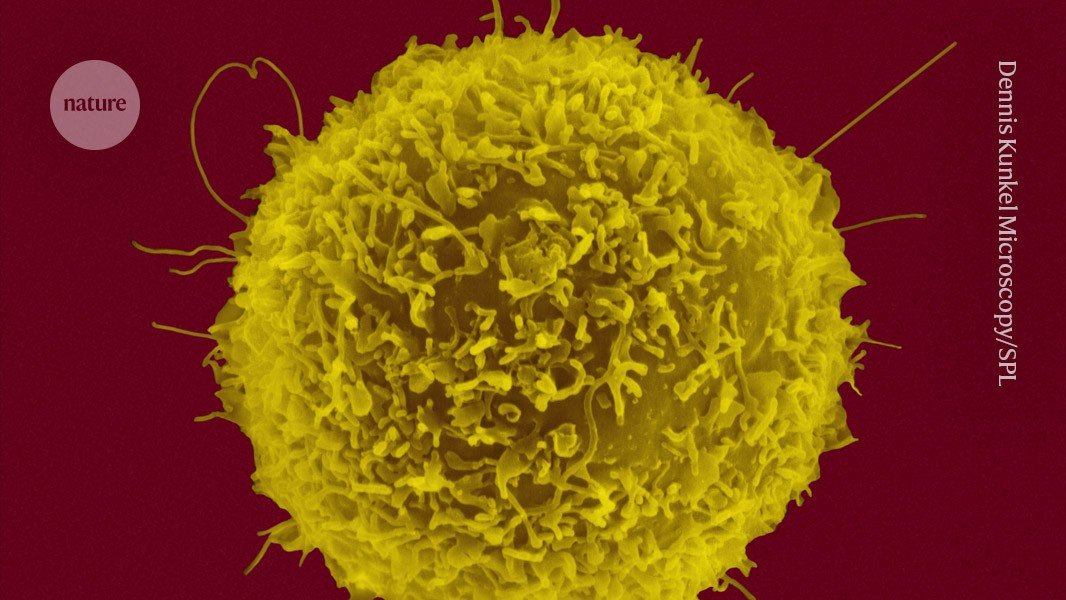
    Immune cells called T cells help the body to fight off infection.Credit: Dennis Kunkel Microscopy/SPL

    Share
    Facebook Twitter LinkedIn Pinterest Email

    Immune cells called T cells help the body to fight off infection.Credit: Dennis Kunkel Microscopy/SPL

    A cellular atlas that characterizes the functions of immune cells in more than 400 Chinese individuals has revealed key differences in the biology of people from different populations.

    The study, published today in Science1, compiles a ‘multi-omic’ atlas of immune cells in the blood. It draws together data on genes, proteins, RNA and the epigenome to study how this group of cells works. Dubbed the Chinese Immune Multi-Omics Atlas (CIMA), the atlas finds important variation in immune-cell functions compared with those charted in similar data sets from European and Japanese cohorts.

    “By providing a data set that complements other Asian cohorts like the Japanese ImmuNexUT project, we have created a resource that allows for the discovery of biological mechanisms and genetic associations that would likely be missed in European-centric studies,” write the authors in a joint statement to Nature.

    Diverse data sets

    Researchers have created multi-omic atlases for several cell types, using them to tackle specific questions relating to the brain, Alzheimer’s disease and the immune system. But these atlases often rely mainly on data from people of European origin. This means that medicines designed on the basis of cell characteristics in these atlases might not be effective in individuals who have other ancestries.

    Cellular atlases are unlocking the mysteries of the human body

    To address this gap, Jianhua Yin at the Shanxi Medical University–BGI Collaborative Center for Future Medicine in Taiyuan, China, and his colleagues analysed more than 10 million immune cells in blood samples from 428 healthy Chinese adults at multi-omics levels.

    The atlas provides biomolecular indicators for each individual, including metabolite profiles, blood biochemical markers, chromatin accessibility data and differences in gene expression across cell populations.

    The researchers compared their data set to results from the OneK1K project, which analysed people with northern European ancestry2 , and the Japanese ImmuNexUT project3. They found that core immune pathways and cell types are the same in the different populations.

    But there were differences in genetic regulation and in immune-cell states between the atlases. When it came to looking for variations near specific genes that influence how active a gene is, for example, the researchers found that more than 93% of these targets in the CIMA data overlapped with those in the Japanese cohort, but only about 44% of them overlapped with the European group.

    One example of divergence is the rs11886530 gene variant, which is common in East Asian populations but rare in Europeans. In the CIMA data, this allele was found to regulate the circadian-clock genes NPAS2 and NR1D1 in immune cells called T cells. According to the authors, this mechanism has never been observed before in immune cells.

    “I think the atlas is a really clinically important resource,” says Kay Chung, an immunologist at the University of North Carolina School of Medicine in Chapel Hill. “This could be useful for personalized medicine and also to check on drug interactions that might be specific to a certain population.”

    Age and sex differences

    The group of people the authors studied were aged between 20 and 77 years and contained 189 men and 239 women, so there were enough participants to tease out variations in immune-cell behaviour related to age and sex.

    They found that increased age was associated with having more white blood cells that drive inflammation, and with altered gene expression in dendritic cells, which act as messengers in the immune system.

    among Atlas cell Chinese huge immune peoples Reveals surprising variation
    Share. Facebook Twitter Pinterest LinkedIn Tumblr Email
    Previous ArticleTrump Says His Only Limit on His Global Powers Is His ‘Own Morality’
    Next Article Under-pressure charities face conflicting demands | Charities
    onlyplanz_80y6mt
    • Website

    Related Posts

    BBC News presenter Maryam Moshiri reveals she has incurable blood cancer | Cancer

    September 9, 2026

    Let your mind wander, don’t retire and stop worrying: surprising ways to help save your brain from the cognitive cliff | Health & wellbeing

    September 7, 2026

    Thinktank reports epidemic of loneliness among England’s ‘disconnected’ young | Young people

    September 1, 2026
    Add A Comment
    Leave A Reply Cancel Reply

    Top Posts

    The science influencers going viral on TikTok to fight misinformation

    February 17, 20263 Views

    MPs vote against legalising assisted dying in England and Wales | Assisted dying

    September 11, 20262 Views

    The backlash to revelations of sexual torture of Palestinian prisoners aims to raise the cost of speaking out | Yuli Novak

    May 14, 20262 Views
    Stay In Touch
    • Facebook
    • YouTube
    • TikTok
    • WhatsApp
    • Twitter
    • Instagram
    Latest Reviews

    At Chile’s Vera Rubin Observatory, Earth’s Largest Camera Surveys the Sky

    By onlyplanz_80y6mtJune 19, 2025

    SpaceX Starship Explodes Before Test Fire

    By onlyplanz_80y6mtJune 19, 2025

    How the L.A. Port got hit by Trump’s Tariffs

    By onlyplanz_80y6mtJune 19, 2025

    Subscribe to Updates

    Get the latest tech news from FooBar about tech, design and biz.

    Most Popular

    The science influencers going viral on TikTok to fight misinformation

    February 17, 20263 Views

    MPs vote against legalising assisted dying in England and Wales | Assisted dying

    September 11, 20262 Views

    The backlash to revelations of sexual torture of Palestinian prisoners aims to raise the cost of speaking out | Yuli Novak

    May 14, 20262 Views
    Our Picks

    Talk of Hegseth Impeachment Grows After Democratic Midterm Sweep

    The Guardian view on a tale of two activists: Joshua Wong and Au Kam San should not be behind bars | Editorial

    The Election Brought Lots of Change. Test Your Knowledge.

    Recent Posts
    • Talk of Hegseth Impeachment Grows After Democratic Midterm Sweep
    • The Guardian view on a tale of two activists: Joshua Wong and Au Kam San should not be behind bars | Editorial
    • The Election Brought Lots of Change. Test Your Knowledge.
    • ‘AI clog’: UK public bodies battle onslaught of chatbot-generated complaints | AI (artificial intelligence)
    • The downfall of Russell Brand: from Big Brother and Hollywood to convicted rapist | Russell Brand
    © 2026 naijaglobalnews. Designed by Pro.
    • About Us
    • Disclaimer
    • Get In Touch
    • Privacy Policy
    • Terms and Conditions

    Type above and press Enter to search. Press Esc to cancel.