

I once saw a young glassblower in Istanbul, still new to his craft, shatter a beautiful vase while taking it out of the furnace. The artisan master standing by his side calmly nodded and said something that I still think about. He told him: “You put too much pressure on it, you kept it unbalanced and you forgot that it, too, has a heart.”
The year we are leaving behind has been plagued from the start by a series of social, economic, environmental, technological and institutional challenges, all happening with such speed and intensity that we are yet to fully comprehend their impact on our lives, let alone on future generations. As the overwhelming strain of domestic and geopolitical changes continues to build up, I cannot help but remember the man’s words. Too much pressure. Unstable, uncertain and replete with deep inequalities. This could well be the year we forgot that the Earth, too, has a heart. It definitely feels like the year when the world was broken.
In 2024, to be fair, many of the current problems were already present and growing. But there was also a strong wave of positive expectations and public excitement as more than 1.6 billion people went to the polls. It was a time of unparalleled concentrated democratic activity full of promises, incautious confidence, passionate speeches and fiery oratory. Many voters were keen to express their anger and discontent, and express it they did. The mammoth year of elections revealed the importance of not only the ballot box, but also of the surrounding democratic institutions and norms. Language matters. How we talk to each other matters. Democratic decline always starts with words. When political opponents are treated as “enemies”, or even worse “enemies of the people”, the whole system suffers.
Compared with that, the past 12 months have been marked by an emotional and intellectual fatigue for many people across different borders. What we are used to calling “the liberal international order” no longer carries weight. Deeply fractured and unable to hide its cracks, it is coming apart. The housing crisis, the lack of affordable rents and equal opportunities, and social and economic injustices have all eroded trust. Meanwhile, climate breakdown, AI threats and risks to pluralism, the possibility of another pandemic, and increasing militarism and jingoism alongside shifting alliances have contributed to the sense that the system that emerged from the ruins of the second world war has come to an end. As we close the first quarter of the century under the shadow of a new nuclear age, uncertainty is everywhere.
In 2025, divisions have sadly deepened. At a time when humanity is faced with immense global challenges, we have been pushed further into boxes of “us v them”.
An Afghan girl carries drinking water in Kabul, Afghanistan, in August 2025. Experts have warned that the city could become the first in the world to completely run out of water. Photograph: Samiullah Popal/EPA
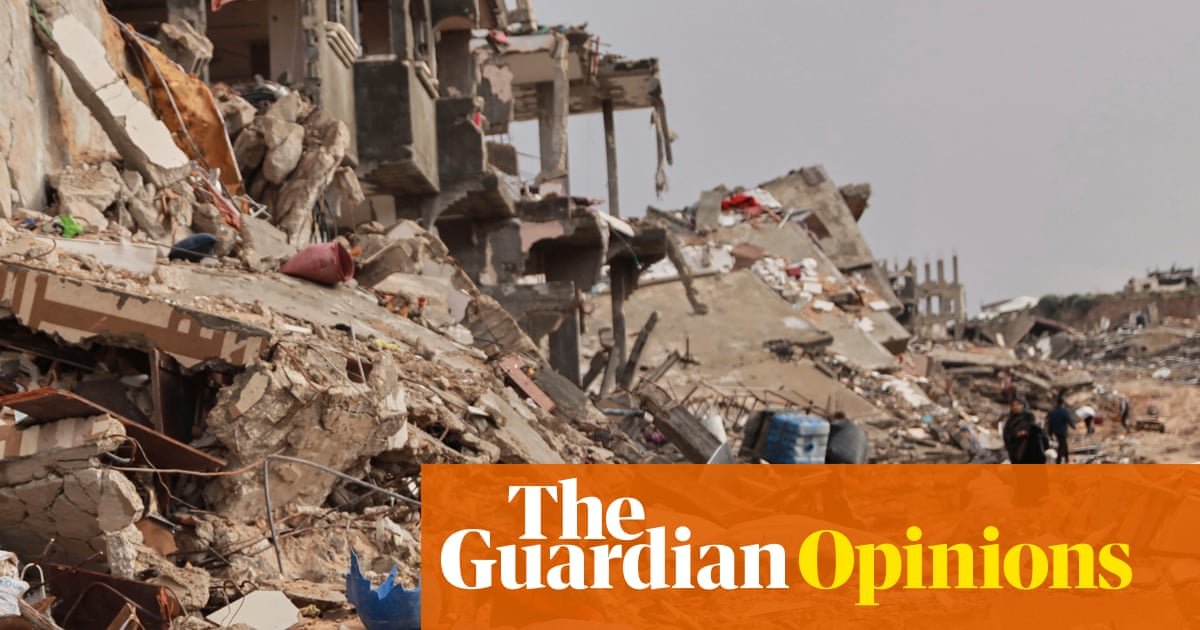
An existential anxiety affects and drains many of us – east, west, north and south. Young and old. Perhaps some people are better at hiding their emotions than others, but when we look underneath polished social media facades of happy and fulfilled lives, we can see that anxiety is actually widespread. Fear. Frustration. Enervation. A new word has been coined to define the zeitgeist: “polycrisis”. The worst thing we can do, individually and collectively, is to allow ourselves to descend into numbness. To become desensitised to the pain and suffering of others: in Gaza, in Sudan, in Ukraine. This is why good and honest journalism matters all the more today. Many pieces published in the Guardian this year not only showed a remarkable depth and breadth, but also helped us to remain engaged and connected. In that sense, they are an antidote to numbness.
There were sentimental moments this year, too. In the UK, we cried again over the Sycamore Gap tree and the senseless, meaningless hatred displayed by two men, convicted this year, who decided it would be fun to cut down something that had brought joy to so many for so long. It is interesting that the human sentimentality that we were allowed to display in response to the death of a beloved tree was denied to the chancellor, Rachel Reeves, when she was caught on camera crying in the Commons. The media and social media coverage was rather sexist. Amelia Gentleman wrote a coruscating piece asking why women’s workplace tears are regarded as a source of shame. Delving into another emotionally difficult subject, Polly Toynbee wrote courageously on the assisted dying debate, underlining how a decent life can end in a decent death.
One of the most poignant and important pieces published this year was co-written by Malak A Tantesh and Emma Graham-Harrison about the despair of parents and grandparents in Gaza watching their children and grandchildren with skeletal bodies, so malnourished that they have become vulnerable to all kinds of horrible diseases: “We have faced hunger before, but never like this.” Dan Sabbagh composed an article about Ukraine that highlighted the devastating consequences of the occupation and war for ordinary families, with one person stating: “We never thought the war would come to our village.” Amplifying human stories can help to dismantle the cold and elitist rhetoric that treats people as sheer numbers.
Oasis perform during their reunion tour in Melbourne in October 2025. Photograph: Joel Carrett/EPA
A recent report revealed that Kabul could soon become the first modern city to completely run out of water, with all the aquifers drying up as early as 2030. More than 6 million people live in Afghanistan’s capital. In the UK, there is a growing public resentment and anger against water companies that keep pumping sewage into our rivers. Meanwhile, rivers are dying elsewhere, with the Middle East and north Africa being home to seven out of the 10 most water-stressed nations. The climate crisis is the story of water and the ones who disproportionately bear the brunt are always women, children and tpoor people.
There were some moments of light. Even small miracles, such as the reunion of Oasis. We have seen a heartwarming rise in book clubs and reading parties. Unexpectedly, in this time of hyperinformation and fast consumption, many young people are taking up traditional hobbies. It feels as if the faster our world spins, the more urgent and universal our need to slow down, to connect, to think, to care.
In Argentina recently, an 18th-century painting called Portrait of a Lady that was stolen from a Jewish art collector by the Nazis was recovered after being spotted on an estate agent’s listing. She looks at us calmly, the woman in the portrait, in her flower-embroidered dress; she who has seen too many atrocities but is still resilient and full of life. As always, art, culture and literature offer us a sanctuary, a home, a sense of togetherness. Glassblowers remind us that even the worst shattered glass can be melted, resculpted and revived. It all begins with an honest recognition of what remains broken and a willingness to mend.
Elif Shafak is a novelist and political scientist
This is an edited version of Elif Shafak’s introduction to The Bedside Guardian 2025
Do you have an opinion on the issues raised in this article? If you would like to submit a response of up to 300 words by email to be considered for publication in our letters section, please click here.
