
Close Menu

    Subscribe to Updates

    Get the latest creative news from FooBar about art, design and business.

    What's Hot

    Bank of England warns ‘higher inflation is unavoidable’ after leaving interest rates on hold | Bank of England

    States rush to redraw congressional districts to gut Black voting power | US voting rights

    UK researchers develop tool to identify people most at risk of obesity-related diseases | Obesity

    Facebook X (Twitter) Instagram
    Facebook X (Twitter) YouTube LinkedIn
    Naija Global News |
    Thursday, April 30
    • Business
    • Health
    • Politics
    • Science
    • Sports
    • Education
    • Social Issues
    • Technology
    • More
      • Crime & Justice
      • Environment
      • Entertainment
    Naija Global News |
    You are at:Home»Health»Two new subtypes of MS found in ‘exciting’ breakthrough | Multiple sclerosis
    Health

    Two new subtypes of MS found in ‘exciting’ breakthrough | Multiple sclerosis

    onlyplanz_80y6mtBy onlyplanz_80y6mtDecember 30, 2025004 Mins Read
    Share Facebook Twitter Pinterest LinkedIn Tumblr Email
    Two new subtypes of MS found in ‘exciting’ breakthrough | Multiple sclerosis
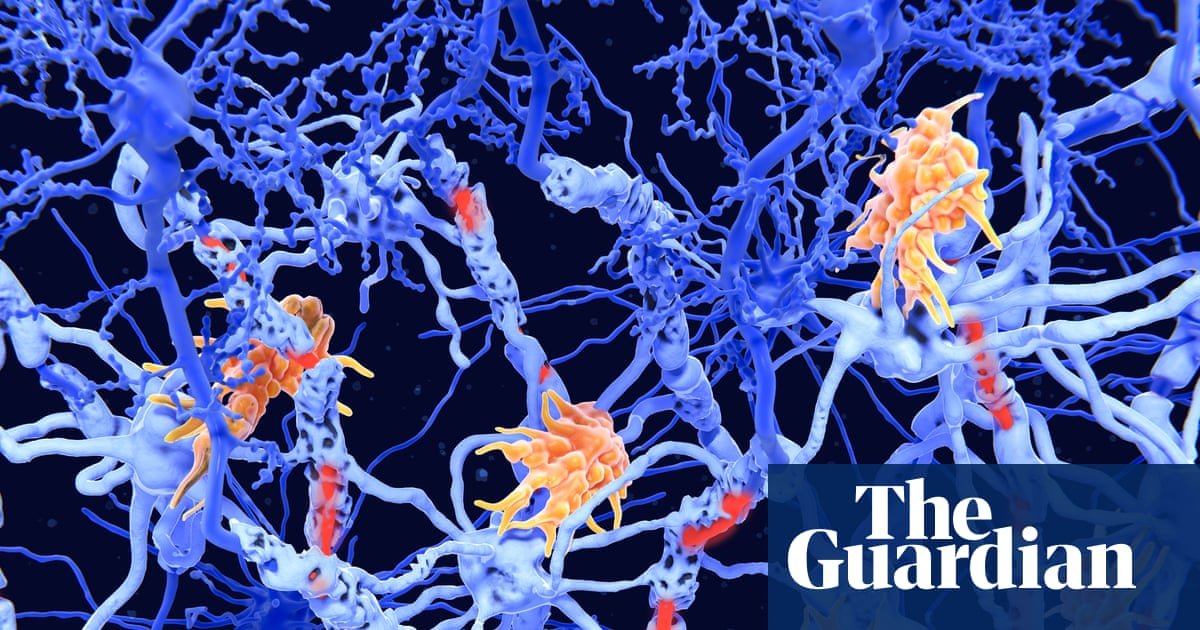
    Experts hope the breakthrough will help doctors understand which patients are at higher risk of complications. Photograph: Juan Gaertner/SCIENCE PHOTO LIBRARY/Getty Images/Science Photo Library RF
    Share
    Facebook Twitter LinkedIn Pinterest Email

    Scientists have discovered two new subtypes of multiple sclerosis with the aid of artificial intelligence, paving the way for personalised treatments and better outcomes for patients.

    Millions of people have the disease globally – but treatments are mostly selected on the basis of symptoms, and may not be effective because they don’t target the underlying biology of the patient.

    Now, scientists have detected two new biological strands of MS using AI, a simple blood test and MRI scans. Experts said the “exciting” breakthrough could revolutionise treatment of the disease worldwide.

    In research involving 600 patients, led by University College London (UCL) and Queen Square Analytics, researchers looked at blood levels of a special protein called serum neurofilament light chain (sNfL). The protein can help indicate levels of nerve cell damage and signal how active the disease is.

    The sNfL results and scans of the patients’ brains were interpreted by a machine learning model, called SuStaIn. The results, published in medical journal Brain, revealed two distinct types of MS: early sNfL and late sNfL.

    In the first subtype, patients had high levels of sNfL early on in the disease, with visible damage in a part of the brain called the corpus callosum. They also developed brain lesions quickly. This type appears to be more aggressive and active, scientists said.

    In the second subtype, patients showed brain shrinkage in areas like the limbic cortex and deep grey matter before sNfL levels went up. This type seems to be slower, with overt damage occurring later.

    Researchers say the breakthrough will enable doctors to more precisely understand which patients are at higher risk of different complications, paving the way for more personalised care.

    The lead author of the study, UCL’s Dr Arman Eshaghi, said: “MS is not one disease and current subtypes fail to describe the underlying tissue changes, which we need to know to treat it.

    “By using an AI model combined with a highly available blood marker with MRI, we have been able to show two clear biological patterns of MS for the first time. This will help clinicians understand where a person sits on the disease pathway and who may need closer monitoring or earlier, targeted treatment.”

    In the future, when the AI tool suggests a patient has early sNfL MS, they could become eligible for higher-efficacy treatments and be monitored more closely, Eshaghi said.

    In contrast, those with late sNfL may be offered different types of treatments, such as personalised therapies to protect brain cells or neurons. “The novelties will therefore be twofold: to transform clinical and neurological examinations, which have not changed for centuries, with the aid of AI algorithms, and provide personalised treatments based on disease profile.”

    Caitlin Astbury, senior research communications manager at the MS Society, a charity, said: “This is an exciting development in our understanding of MS.

    “This study used machine learning to look at MRI and biomarker data from people with relapsing remitting and secondary progressive MS. By combining this data, they were able to identify two new biological subtypes of MS.

    “Over recent years, we’ve developed a better understanding of the biology of the condition. But currently, definitions are based on the clinical symptoms a person experiences. MS is complex, and these categories often don’t accurately reflect what is going on in the body, which can make it difficult to treat effectively.”

    There are about 20 treatment options for people with relapsing MS and some beginning to emerge for progressive MS, but for many there are no options, Astbury said. “The more we learn about the condition, the more likely we will be able to find treatments that can stop disease progression.

    “This research adds to growing evidence supporting a move away from the existing descriptors of MS (like ‘relapsing’ and ‘progressive’) and towards terms that reflect the underlying biology of the condition. This could help identify people at an increased risk of progression – and allow people to be offered more personalised treatment.”

    breakthrough exciting multiple sclerosis subtypes
    Share. Facebook Twitter Pinterest LinkedIn Tumblr Email
    Previous ArticleEarly Week 18 bets: Ravens-Steelers to be a slugfest, Drake Maye for MVP
    Next Article 2025 Was Another Exceptionally Hot Year
    onlyplanz_80y6mt
    • Website

    Related Posts

    UK researchers develop tool to identify people most at risk of obesity-related diseases | Obesity

    April 30, 2026

    Sub-two-hour marathon, spooky houses explained and why is UK health in decline? – podcast | Science

    April 30, 2026

    Trial of non-invasive endometriosis scan boosts hopes for quicker diagnosis | Endometriosis

    April 30, 2026
    Add A Comment
    Leave A Reply Cancel Reply

    Top Posts

    Watch Lady Gaga’s Perform ‘Vanish Into You’ on ‘Colbert’

    September 9, 20251 Views

    Advertisers flock to Fox seeking an ‘audience of one’ — Donald Trump

    July 13, 20251 Views

    A Setback for Maine’s Free Community College Program

    June 19, 20251 Views
    Stay In Touch
    • Facebook
    • YouTube
    • TikTok
    • WhatsApp
    • Twitter
    • Instagram
    Latest Reviews

    At Chile’s Vera Rubin Observatory, Earth’s Largest Camera Surveys the Sky

    By onlyplanz_80y6mtJune 19, 2025

    SpaceX Starship Explodes Before Test Fire

    By onlyplanz_80y6mtJune 19, 2025

    How the L.A. Port got hit by Trump’s Tariffs

    By onlyplanz_80y6mtJune 19, 2025

    Subscribe to Updates

    Get the latest tech news from FooBar about tech, design and biz.

    Most Popular

    Watch Lady Gaga’s Perform ‘Vanish Into You’ on ‘Colbert’

    September 9, 20251 Views

    Advertisers flock to Fox seeking an ‘audience of one’ — Donald Trump

    July 13, 20251 Views

    A Setback for Maine’s Free Community College Program

    June 19, 20251 Views
    Our Picks

    Bank of England warns ‘higher inflation is unavoidable’ after leaving interest rates on hold | Bank of England

    States rush to redraw congressional districts to gut Black voting power | US voting rights

    UK researchers develop tool to identify people most at risk of obesity-related diseases | Obesity

    Recent Posts
    • Bank of England warns ‘higher inflation is unavoidable’ after leaving interest rates on hold | Bank of England
    • States rush to redraw congressional districts to gut Black voting power | US voting rights
    • UK researchers develop tool to identify people most at risk of obesity-related diseases | Obesity
    • King and Queen Spend a Day in New York
    • Violence against women is at ‘breaking point’, says writer of John Worboys drama | Rape and sexual assault
    © 2026 naijaglobalnews. Designed by Pro.
    • About Us
    • Disclaimer
    • Get In Touch
    • Privacy Policy
    • Terms and Conditions

    Type above and press Enter to search. Press Esc to cancel.