

Updated at 2:23 p.m. ET on December 27, 2025
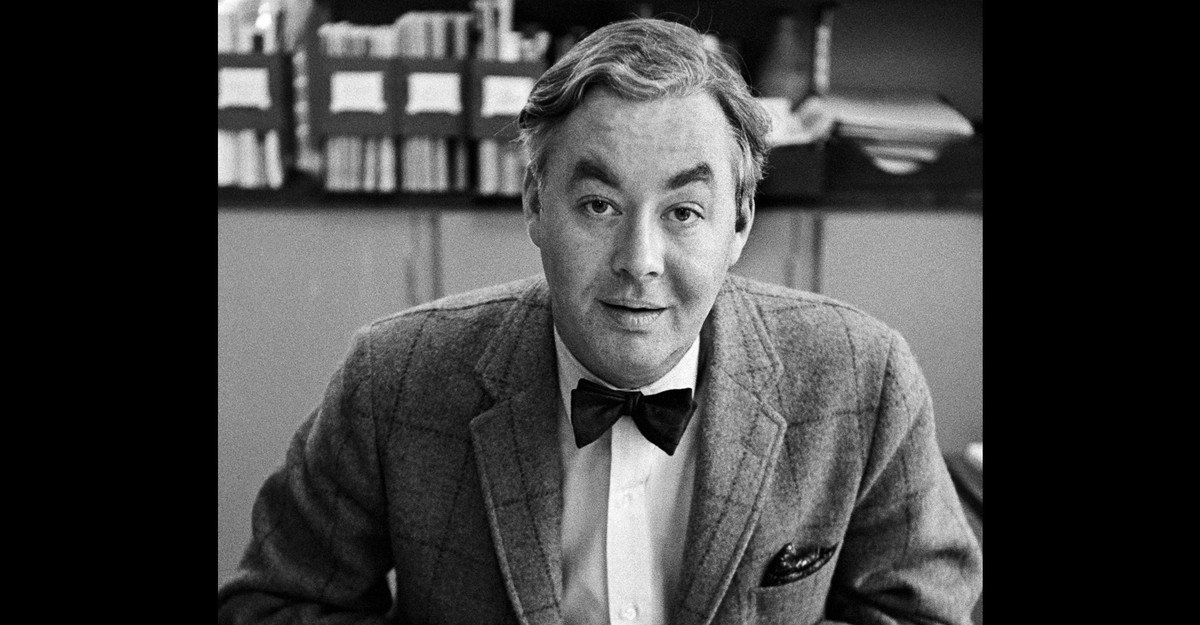
Daniel Patrick Moynihan, who died in 2003, might be remembered most for his erudition. During his 25 years in the Senate, Moynihan often turned the legislative chamber into a lecture hall. “That man just got up and spoke for 45 minutes with no notes and no reference materials, and proceeded to delineate the entire history of the Panama Canal,” a fellow legislator once reported. The New York Democrat and Harvard professor wrote or edited 18 books—and many more articles—on topics including automobile safety, organized crime, federal architecture, international law, and government secrecy. But these efforts had little to do with how he won four elections to the Senate. Despite his quasi-British accent and bow ties, Moynihan always identified with the working class, and he came to resent the elites of his own party.
This perspective, informed by his tumultuous youth, fueled his political success far more than his intellect. It allowed him to understand the anger of working-class voters, many of whom were alienated by the left’s endorsement of affirmative action in the 1960s and its rejection of national pride after Vietnam.
Moynihan’s bitter criticisms of the party don’t provide a model for Democrats today; he was too often blinded by personal grievance. But his critiques prefigured, and help explain, some of the greatest challenges his party now faces. Moynihan chronicled the exodus of working-class voters from the left as it began. Today, as Democrats debate how to win them back, they would do well to remember what he saw and, no less important, what he didn’t.
The press typically described Moynihan’s life as a Horatio Alger tale, the same way he liked to tell it himself: A boy who shined shoes on the sidewalks of Manhattan rose to the halls of academia, then high office. But the real story was more complicated, and more painful.
Volatility defined Moynihan’s early life. Born into the middle class, he spent summers riding horses and caddying at a country club. When his father abandoned the family, they fell into poverty. The shoe-shining began at age 10 but ended when his mother remarried and they moved into a mansion in the New York suburbs. Two years later, divorce sent his family back to the city. Moynihan went to high school in Harlem, leaping on the rear of buses each morning to avoid the fare.
Over the next decade, Moynihan continued to cycle through social classes. After high school, he worked as a longshoreman on the piers of Manhattan’s west side while getting a free public education at City College. Then he joined the Navy, which sent him to training programs at Middlebury College and Tufts University. On weekends, he visited his friends’ country homes and made frantic trips back to the city to help his mother run a bar she had bought in a rough neighborhood.
Moynihan had reservations about his new social set, who he thought lacked the toughness and insight he’d been granted by his stint in poverty. As he wrote to a friend back home, many of them needed “a good swift kick in their blue blood asses.”
A Fulbright scholarship to the London School of Economics offered Moynihan an escape from his chaotic family life. In England, his later persona began to take shape. He wrote in his journal that he wanted to become like “an English novel character—full of stories and odd bits of fascinating info.” By the time he came back to the United States, he had adopted the manners of the British elite.
Moynihan made his start in politics soon after his return. While working in President Lyndon B. Johnson’s Labor Department, he produced an internal memorandum about what he described as a growing crisis in the Black community, marked by a decline in two-parent households and a rise in welfare cases. He wrote that “the situation may indeed have begun to feed on itself,” suggesting that poor Black Americans were becoming victims of their own culture. Notably, Moynihan reached this conclusion without having included any Black Americans in the research and writing process.
The Moynihan Report, as it became known, was publicly released in August 1965, shortly after the Watts riot in Los Angeles. Even though Moynihan had finished writing the document five months earlier, the press initially portrayed it as the administration’s explanation of the racial unrest; according to early coverage, the report blamed the riots on a “pathological” Black culture. Black Americans and many on the left were outraged. In their eyes, Moynihan was “blaming the victim.”
Moynihan thought—with some justification—that his critics presented a selective reading of the document, which also called for greater investment in Black communities. “Liberty and Equality are the twin ideals of American democracy. But they are not the same thing,” he observed early in the report. “The principal challenge of the next phase of the Negro revolution is to make certain that equality of results will now follow.” Elsewhere in the document, Moynihan wrote that “equality of opportunity almost insures inequality of results.” When a journalist asked if he was “proposing preferential treatment in the hiring of Negroes,” Moynihan replied: “I believe this country owes the American Negro his back wages, yes.”
The report emerged during a hinge moment on the American left, which Moynihan had begun to discern at the start of the decade. In 1961, he depicted a growing rift among Democrats: On one side were the predominantly working-class “regulars,” and on the other were the upper-middle-class “reformers.” As Moynihan described them, regulars thought politics was about winning votes. Reformers thought it was about moral issues, such as democratizing the party and expanding civil rights.
Moynihan sided with the reformers yet came to believe that many of them were more concerned with signaling virtue than achieving results. Tammany Hall—the New York political machine that served as a stronghold of the regulars—may have been corrupt and self-interested, but Moynihan admired its tangible service to the poor, such as its Thanksgiving tradition of delivering turkeys to needy families. He thought the reformers, by contrast, were too far removed from the lives of working-class Americans, which he never stopped admiring. (He would later write that he felt like “I haven’t really done a day’s work since” he was a longshoreman.)
In the years after the Moynihan Report was published, reformers and other elite liberals accounted for some of its most intense criticism. They had been gaining power within the party throughout the ’60s, as the Democrats went from the home of southern segregationists to that of civil-rights leaders. In 1967, Moynihan acknowledged that the “liberal Left” had enabled the “extraordinary impact and success” of the civil-rights movement, serving as a “secular conscience” for America. But he also thought the faction could be “as rigid and destructive as any force in American life,” an assessment based largely on the reformers’ rejection of his report. Moynihan grew more partial to the regulars, struggling to see that the civil-rights victories he supported were made possible precisely because the group—and its self-serving patronage system—had lost sway.
By 1968, Moynihan was lamenting that the working and middle classes “have been abandoned, and our politics are very much the worse for it.” The next year, Moynihan shocked Democrats by going to work for President Richard Nixon. Although Moynihan had previously endorsed affirmative action, he had come to believe that no overtly race-based policy could win enough support from groups such as the white working class. So Moynihan persuaded Nixon to propose a guaranteed income for all families regardless of race (which Congress never passed). In 1973, during a stint as ambassador to India, he complained that he was effectively “silenced” on the topic of civil rights—“a considerable waste,” he wrote in his journal, “for I am really pretty good on the subject, and care as much or more than most people.”
Moynihan’s resentments fueled his belief that the privilege of many elite liberals skewed their vision of politics. Unlike ordinary people who tended to favor incremental reform over revolutionary change, the “liberal Left,” he wrote, was “largely made up of individuals who have passed through most of the stages of routine affluence” and “now want out” of the U.S. they knew. Moynihan thought that most Americans, Black Americans included, wanted “in.”
Much of the growing anti-American sentiment at the time was inspired by the Vietnam War, which horrified many on the left. Moynihan opposed the conflict, but he was quick to point out that elite liberals in the Kennedy and Johnson administrations were the ones who had started it—and members of the working class were mainly the ones fighting it.
Ever the contrarian, Moynihan embraced patriotism. In 1975, he published an article arguing that the U.S. should stop apologizing for itself in the aftermath of Vietnam, and start challenging its critics at the United Nations and elsewhere. He told a friend that the essay received a more positive response than anything he’d ever written. “The message is unmistakable,” he concluded. “People are tired of being ashamed of ourselves.”
One admirer of the essay was Secretary of State Henry Kissinger, who helped persuade President Ford to appoint Moynihan as ambassador to the UN. In that role, Moynihan delivered impassioned speeches in support of the U.S. and its values. Many working-class New Yorkers loved his theatrics; one of his friends recalled taxi drivers cheering Moynihan as he walked around Manhattan.
Buoyed by his new popularity, Moynihan ran for Senate as a Democrat in 1976. But he still didn’t let go of his resentment of elites. In the lead-up to the election, Moynihan sat for a tense interview with Timothy Crouse, a reporter from Rolling Stone. The two spoke at Harvard, where Crouse had graduated and Moynihan was teaching. At one point, Crouse asked Moynihan why he had chosen to work in academia instead of a more lucrative field, given his precarious youth.
“What sort of background do you come from?” Moynihan replied.
“Upper middle class.”
“Aaaaaahh … a rich Harvard kid. Or as we used to say where I came from, a rich college fuck.”
If anything, such a sentiment may have boosted Moynihan’s chances in the race. Despite his previous work for Republican presidents, he managed to secure the Democratic nomination, defeating his more liberal opponent by a mere 10,000 votes, thanks in part to reportedly strong support among working-class voters. He went on to win the general election handily, running a campaign that espoused an unapologetic patriotism.
In his report a decade earlier, Moynihan had attempted to reckon with the country’s history of racial inequality. By the time he ran for Senate, he had learned that pride won more votes than shame.
In the age of MAGA, Moynihan has been described as an avatar of a bygone era. The New York Times dubbed him “the anti-Trump of American politics” in 2018. Somewhat more recently, The New Yorker argued that Moynihan was “above all, a public-policy intellectual” whose “addiction to complexity” would make him out of place today. But these analyses present a blinkered view of both Moynihan and American history.
Moynihan does not belong to some distant past. America is still experiencing the effects of the liberation movements that began in the 1960s, and the battle that he chronicled between the regulars and reformers within his party has never entirely ended. Consider a telling moment from last year’s election: When Joe Biden was pressured to withdraw from the race, the working-class Democrat referred to his intraparty opponents as the “elites.” That was no accident; it reflected a long-running divide on the left.
As in Moynihan’s time, some Democrats now argue that their party should pivot back to the working class. Others want to pursue a more expansive progressivism, unconstrained by concerns about the political center. Both sides seem to think that their only hope of defeating Trumpism is to decide the debate once and for all. If Moynihan’s career is any indication, they shouldn’t expect that to happen anytime soon.
This article originally misidentified the administration in which Moynihan was an ambassador in 1973.
