

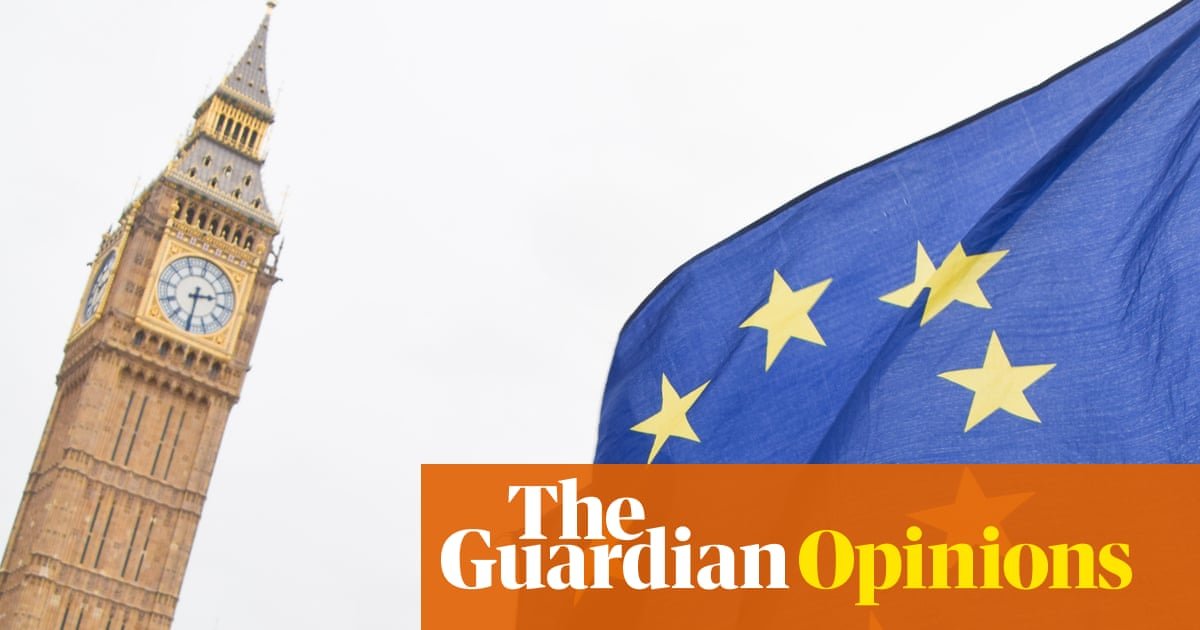
‘I am a citizen of the world,” so the great Renaissance thinker Desiderius Erasmus is reputed to have said. It is because of his cosmopolitanism that 521 years after his birth, the EU named its exchange programme for students after him. It was part of a project aiming to create citizens of Europe, not just of its member states.
Britain’s post-Brexit withdrawal from the scheme was a setback for a cosmopolitan project that has suffered bigger blows since. Nationalism has been ascendant across the continent, and Euroscepticism ceased to be a peculiarly British phenomenon years ago. Could the announcement that British students are to be readmitted to Erasmus+ provide some hope that the internationalist dream is not dead yet?
As an alumnus of the then fledgling programme in 1989, I hope so. I spent a term in Erasmus’s home town of Rotterdam, at the university that bears his name, and was there when the Berlin Wall fell. Half-Italian, I was enthusiastic about the vision of ever-increasing union in Europe. So why did it falter?
A clue is given in the words that complete Erasmus’s “citizen of the world” quote: “known to all and to all a stranger”. Cosmopolitanism strengthens our links with the world as a whole, but weakens them with specific places and peoples. The trade-off is unavoidable, and for many it has been unacceptable. Keir Starmer’s much-maligned “island of strangers” line echoed these anxieties. By amplifying, and so exaggerating, the kernel of truth it contained, he poured more oil on the populist fire.
At its best, Erasmus+ shows us how better to manage the tension between mobility and belonging. Importantly, the scheme is not a free-for-all, but a highly managed system. This is critical to its public acceptance. We must maintain the distinction between visitor and guest; established populations and new arrivals.
That was the dynamic when we were in Rotterdam. We were guests in the Netherlands and were treated as such. Attending their university was a privilege, not a right. This all seemed obvious. But the perception has been allowed to grow that the distinction between born-and-bred, and adoptive, citizens doesn’t matter any more. Globalisation has become a byword for homogenisation, with local traditions lost in the melting pot.
The whole premise of Erasmus+ is that each member state of the EU is different, and that is precisely why it benefits students to spend time in another one. That’s what made the exchange such a formative experience for me. The Dutch students seemed more mature, more serious about their studies, with none of the anti-intellectualism that made being an earnest student in the UK embarrassing. They were sociable and liked a beer, but even when they got drunk, it was not the bar-room carnage of halls of residence back home. Most strikingly, their conception of philosophy, and how to conduct it, differed. I would not have read Foucault or Merleau-Ponty if I had stayed in Reading.
These may not seem to be radical revelations, but seeing that cultural differences are a collection of individually small things builds respect and understanding. Erasmus+ brings the continent together, but it also teaches us that unity is built on diversity; it is not the enemy of it. This idea is best captured not in European enlightenment thought but in the Confucian concept of harmony.
Harmony remains the pre-eminent political, social and moral value in China today, albeit one that is often misused by the Chinese Communist party. The core of the idea is that harmony needs difference; it must not seek to eradicate it. A piece of music needs many notes and instruments. A delicious soup needs a balance of ingredients, so as to not be overwhelmed by one.
Missing from the European project has been a clear sense that this is what a harmonious Europe needs, too. Member states retaining their identities is actually essential for the project to work. Sometimes the EU signals this well, such as when it recognises local foods and cultures. But, too often, the EU is perceived as the enemy of national identity.
Students today travel much more than my generation did. But spending months in one place is a much bigger eye-opener. Of course, by itself it won’t halt the nativist tide. Erasmus+ did not stop other European countries going down the nationalist route. But at least it is a step in the right direction, a sign that history does not progress linearly, but zigs and zags, sometimes stepping forwards, sometimes stepping back. It provides a model for a revived Europeanism, in which we embrace our continental identities without losing our national and regional ones.
And if that all sounds too high-minded, at the very least Erasmus+ students should also live out another quote from the eponymous philosopher: “A constant element of enjoyment must be mingled with our studies, so that we think of learning as a game rather than a form of drudgery, for no activity can be continued for long if it does not to some extent afford pleasure to the participant.”
Do you have an opinion on the issues raised in this article? If you would like to submit a response of up to 300 words by email to be considered for publication in our letters section, please click here.
