

Good morning. Amid the constant drumbeat of bleak news about the planet’s environment and the accelerating climate emergency, the occasional bright spot still emerges. One example came last week, when researchers published the first statistical evidence that polar bears are changing their DNA in response to a warming Arctic.
But is it really good news that human activity – the burning of fossil fuels and the destruction of habitats – is forcing animals to alter their genetic makeup? The picture, as ever, is complicated.
For today’s newsletter, I spoke to the Guardian’s environment reporter Helena Horton about what the polar bear study tells us and whether almost a decade spent reporting on biodiversity loss and the climate crisis has left her feeling more or less optimistic about the planet’s future. Here are the headlines.
Five big stories
Donald Trump | Donald Trump has filed a lawsuit against the BBC over its editing of a speech he made to supporters in Washington before they stormed the US Capitol in 2021, requesting at least $5bn in damages.
Australia | Australia’s national security agency Asio investigated one of the alleged Bondi shooters in 2019 over potential extremist links but decided he was not “a person of interest”, prime minister Anthony Albanese has revealed, despite two of the man’s associates being jailed.
International trade | The US has paused its promised multi-billion-pound investment into British tech over trade disagreements, marking a serious setback in US-UK relations.
Health | Resident doctors in England will go on strike as planned this Wednesday for five days, after they voted to reject the government’s latest offer to end the long running pay and jobs dispute.
Ukraine | Europe is ready to lead a “multinational force” in Ukraine as part of a US proposal for a peace agreement between Russia and Ukraine, European leaders have said.
In depth: What counts as good news in a climate emergency?
A polar bear in an abandoned Soviet-era research station on Kolyuchin Island in the Chukchi Sea, in September 2025. Photograph: Vadim Makhorov/Reuters
For decades, polar bears have been among the most recognisable victims of climate change. Long before charts, models and emission targets entered the public conversation, images of stranded bears offered a stark visual shorthand for what a heating planet looks like.
That is what makes new research suggesting polar bears may be changing their DNA to adapt to warmer climates so striking – and potentially unsettling. “It is a small piece of hopeful news,” Helena Horton says, “that animals are adapting. But this shouldn’t be happening. DNA only changes so rapidly under extreme environmental stress.”
Has reporting on the climate crisis made you more or less optimistic about the future?
“It’s a mix,” Helena tells me. “There are moments of good news,” she says, citing countries working together to reduce emissions, major leaps in renewable technology, and electric cars becoming more popular than expected. But there is a caveat. “You have people elected who might roll back on a lot of those commitments,” she says. “And we see coal use spiking a lot more than we thought it would.”
Over the years, Helena has closely watched biodiversity indicators in the UK, and she says they provide a mixed picture. For every story like a mystery wild beaver turning up in Norfolk, the first sighting of one there for 500 years, or red squirrels thriving again in the Highlands after a decade of a reintroduction programme, there are many more that are less hopeful.
“The indicators came out again last week, – species continue to decline,” she says. “The stats on wild birds in particular are very distressing, and if they keep declining in this way, we’re going to see extinctions in the UK.”
What made this polar bear DNA story stand out?
Scientific studies are published all the time, but some are more meaningful than others. Part of the work of science reporters is deciding which make the publishing cut. “What made this one stand out was that it’s the first time a statistically significant link has been found between rising temperatures and DNA changes in a wild mammal,” Helena says. “That’s genuinely new.”
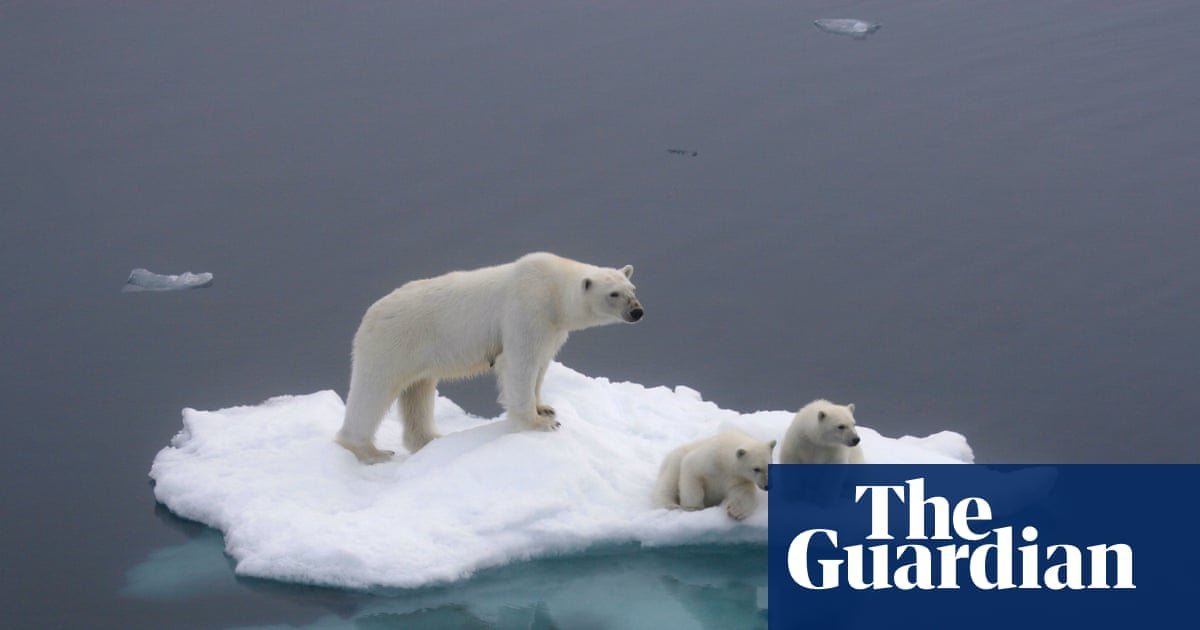
That polar bears are the focus of the research is notable. They have become one of the most powerful symbols of the climate crisis, because they were among the first animals whose habitats were visibly and dramatically destroyed. “The Arctic, where they live, is warming at a higher rate than the rest of the planet. It’s also a habitat that’s more susceptible to visible warming, because it melts. We’ve all seen those horrible images of polar bears stranded on shrinking ice.”
Photographs of polar bears in snow-free environments feel inherently powerful in conveying just how fast their habitat is changing, as the bears filmed living in an abandoned Soviet research station on Kolyuchin Island in the Chukchi Sea (pictured above) demonstrate.
How is the climate crisis changing animals?
Helena says we are already seeing animals move locations, change their behaviour, and even change their bodies. More octopuses in Britain’s seas, tiger moths in Jersey, birds developing larger beaks in Australia or bats developing bigger ears to allow more efficient heat exchange are all examples she lists.
“So we’re making animals move around the planet, we’re forcing them to change their physiology – and now, as this research shows, we’re even pushing them to change their DNA,” Helena says.
Habitat destruction is also a factor in changing animal behaviours, and bringing them into more conflict with humans.
“You see this with elephants in Africa and with the great apes,” Helena says, reminding me that last week the Guardian carried a depressing report on the plight of the rare Tapanuli orangutans. Their Indonesian habitat is under threat from an expansion of gold mining, and the population has suffered a dramatic loss due to recent flooding which was exacerbated by the climate crisis.
How do you balance hope and honesty in climate reporting?
“I try to let the scientists speak for themselves,” Helena says.
“With the polar bears, the lead researcher was very measured. She said it offers some hope, but it’s not a magic bullet – and we still need to stop burning fossil fuels. This isn’t something that should be happening. It’s happening because we’re putting enormous pressure on ecosystems.”
The real question, Helena explains, is whether animals can adapt fast enough to keep up with how quickly humans are changing the planet. At the moment, she says, that seems very unlikely.
What else we’ve been reading
Salvador Dalí at Coco Chanel’s La Pausa in the 1930s. Photograph: Wolfgang Vennemann/ Fundació Gala–Salvador Dalí/ADAGP, Paris
The Mediterranean villa once owned by Gabriele “Coco” Chanel was once frequented by artists from Salvador Dalí to Igor Stravinsky. Kate Hessel unlocks the secrets of Chanel’s newly refurbished house, back in the hands of the fashion label. Karen
After the killing of Rob Reiner alongside his wife, Michele, Ryan Gilbey remembers the director’s eight-year “golden run” – from This Is Spın̈al Tap to A Few Good Men via Stand By Me, The Princess Bride and When Harry Met Sally. He was in that stretch, Ryan writes, “a film-maker who beat the algorithm in the days before there was even one to beat”. Charlie Lindlar, newsletters team
Andrew Pulver has an enthusiastic assessment of Marty Supreme, the screwball tale of a ping pong champion played by Timothée Chalamet, which is No 5 on the Guardian film critics best movies of 2025. Follow the countdown to No 1 here. Karen
Sunday evening saw Philip Rivers, a 44-year-old with 10 kids and one grandchild, unretire and strap on his helmet to play quarterback for the injury-stricken Indianapolis Colts. What compelled Rivers to return to the game after 1,800 days away, in one of the NFL’s all-time comebacks? Doug Farrar explores that in this wonderful piece. Charlie
Is it superflu? Do vaccines offer protection against the new strain? Is it too late to get jabbed before the festivities? Prof Devi Sridhar, chair of public health at the University of Edinburgh, answers these questions and more. Karen
Sport
The England captain Ben Stokes bowls during a net session at Adelaide Oval, the venue for Wednesday’s third Ashes Test. Photograph: Gareth Copley/Getty Images
Cricket | Ben Stokes (pictured above) has called on England to “show some dog” as they had against India in the summer, to keep their slim Ashes hopes alive.
Football | England’s Lionesses are up against their rugby union counterparts, the Red Roses and Europe’s winning Ryder cup side in being shortlisted for team of the year in what will be a public vote, with the winners announced at a ceremony live on the 18 December as part of the BBC Sport Personality of the Year award.
Premier League | Manchester United manager Ruben Amorim conceded that repeated lapses in concentration are undermining his team’s progress, after a chaotic 4-4 draw with Bournemouth. Matheus Cunha scored in the 79th minute for a 4-3 lead. But 19-year-old Bournemouth substitute Eli Junior Kroupi equalised in the 84th minute.
The front pages
Photograph: Guardian front page
The Guardian leads with “Tears, flowers and silence: Sydney unites in grief after Bondi horror”. The Sun reports on one of the victims of the attack, with “Minutes later, Matilda was dead”. The i headlines “MI6 chief: globe’s tech giants are seizing power from politicians”. The Financial Times reports “Mortgage rules poised for easing in bid to widen access and boost growth”.
The Telegraph leads with “Trump kicks off BBC court battle”. The Times has “Doctors strike despite flu fears”. The Mail says “Drivers wrongly fined in speed camera scandal”.
Today in Focus
Photograph: Duncan Elliott/The Guardian
What happened when Reform took power
When Reform took over 10 local councils in England this summer, it offered the first glimpse of how the party might govern if it were to get into No 10. Helen Pidd reports.
Cartoon of the day | Ben Jennings
Illustration: Ben Jennings/The Guardian
The Upside
A bit of good news to remind you that the world’s not all bad
‘He was a handful and required constant care.’ Elio, right, and Yannis Baladi at the Chimpanzee Conservation Centre in Guinea. Photograph: Roberto Garcia Roa
When he was 26, Yannis Baladi quit his job selling expensive flats in Paris and took up looking after chimpanzees at a conservation centre in the jungle of Guinea, west Africa, a five-hour drive from the nearest town. He loved it so much that his three-month stay turned into 11. Baladi was fascinated by their behaviour, including the way the chimpanzees processed anger. After fighting really hard, hitting each other and stealing each other’s food, they always made peace with each other five minutes later, he said. “I learned from these primates there was no point being angry or living in the past,” he recounts in this story from the Guardian’s Age of extinction series.
A baby sooty mangabey called Elio – who was possibly abandoned by poachers and whose species is endangered – taught him the most. They would spend whole days together, Baladi reading books or playing sudoku, and Elio jumping from tree to tree. By the time he left the Chimpanzee Conservation Center, both had matured.
“I learned I could be patient. He taught me that I’m ready to be a dad – and this meant a lot to me because I always had a difficult relationship with my own father.” Most poignantly, Baladi learned to say goodbye to the tiny monkey he considered “my first son”.
Sign up here for a weekly roundup of The Upside, sent to you every Sunday
Bored at work?
And finally, the Guardian’s puzzles are here to keep you entertained throughout the day. Until tomorrow.
