
Close Menu

    Subscribe to Updates

    Get the latest creative news from FooBar about art, design and business.

    What's Hot

    Scientists revive activity in frozen mouse brains for the first time

    I love vultures, mosquitoes and, yes, even wasps. This is why you should too | Jo Wimpenny

    From childhood to midlife and beyond: how to handle anxiety at every age | Life and style

    Facebook X (Twitter) Instagram
    Facebook X (Twitter) YouTube LinkedIn
    Naija Global News |
    Sunday, March 15
    • Business
    • Health
    • Politics
    • Science
    • Sports
    • Education
    • Social Issues
    • Technology
    • More
      • Crime & Justice
      • Environment
      • Entertainment
    Naija Global News |
    You are at:Home»Science»Photos Reveal Moths Sipping Tears from a Moose
    Science

    Photos Reveal Moths Sipping Tears from a Moose

    onlyplanz_80y6mtBy onlyplanz_80y6mtDecember 12, 2025004 Mins Read
    Share Facebook Twitter Pinterest LinkedIn Tumblr Email
    Photos Reveal Moths Sipping Tears from a Moose

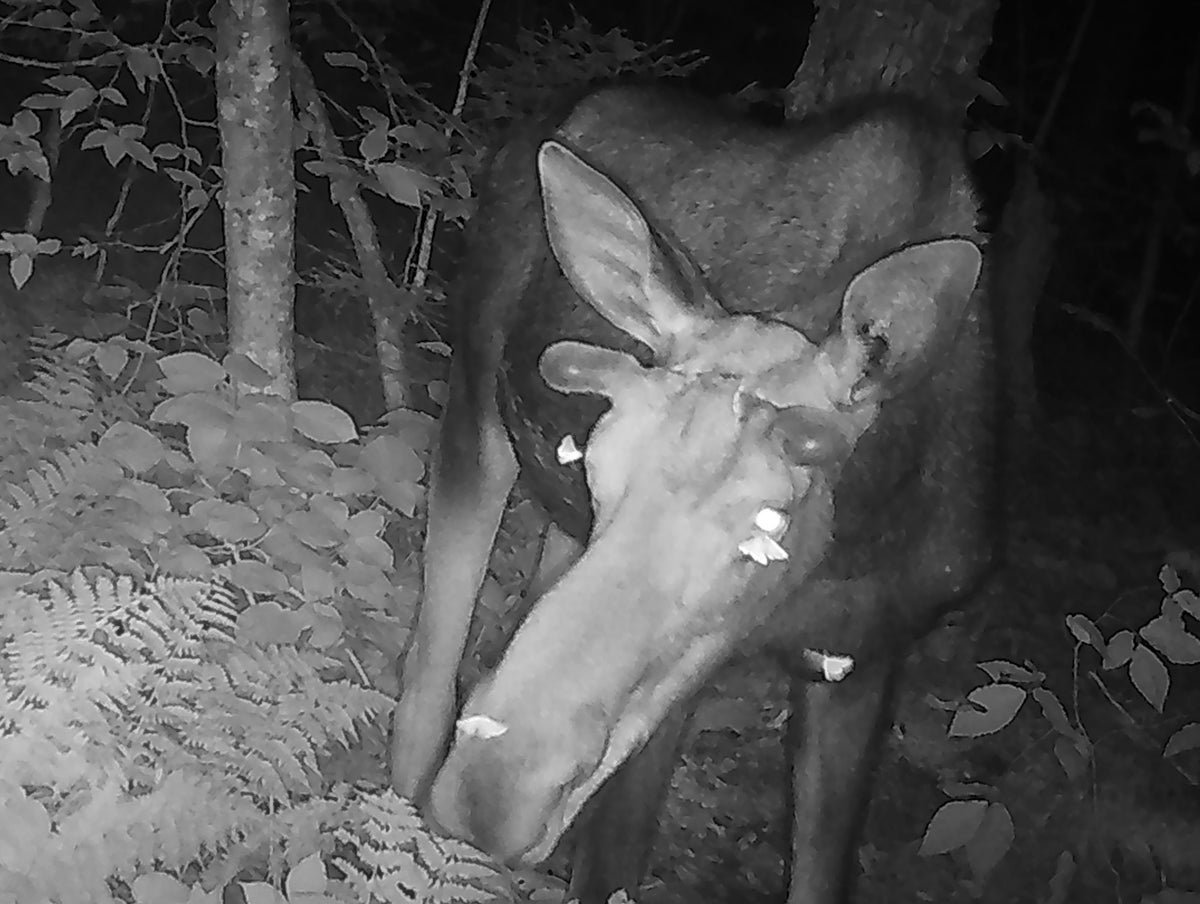
    Moths hover around the face of a moose, drinking its tears, as seen in trail camera images from the Green Mountain National Forest in Vermont.

    Vermont Fish & Wildlife Department

    Share
    Facebook Twitter LinkedIn Pinterest Email

    December 12, 2025

    2 min read

    Add Us On GoogleAdd SciAm

    In a First, Photos Show Moths Sipping a Moose’s Tears

    Moths sometimes drink the tears of other animals, but the behavior has mostly been observed in the tropics. New photographs show only the second observation outside of that area

    By Gennaro Tomma edited by Andrea Thompson

    Moths hover around the face of a moose, drinking its tears, as seen in trail camera images from the Green Mountain National Forest in Vermont.

    Vermont Fish & Wildlife Department

    When animals cry, moths start licking their chops.

    The less glamorous relatives of butterflies have been known to use their long proboscis to sip the tears of everything from birds to reptiles to even domestic animals. But the behavior, known as lachryphagy, has been mostly observed in the tropics.

    Now, for the first time, researchers have documented moths drinking the tears of a moose—just the second time the behavior has been documented outside of the tropics. (The other was observed with a horse in Arkansas.)

    On supporting science journalism

    If you’re enjoying this article, consider supporting our award-winning journalism by subscribing. By purchasing a subscription you are helping to ensure the future of impactful stories about the discoveries and ideas shaping our world today.

    Laurence Clarfeld, a researcher in the Vermont Cooperative Fish and Wildlife Research Unit at the University of Vermont, came across the sighting by chance while scrolling through trail camera images from the Green Mountain National Forest in Vermont for an unrelated project. “It almost looked like the moose had two [additional] eyes,” he says. “At first, I wasn’t sure what it was.”

    Only after skimming through the sequence of images did he realize he was looking at moths drinking the tears of a bull moose. “I’d looked at a lot of trail camera images. I’d never seen anything like that before,” he says. The findings were published recently in Ecosphere. A colleague recently filmed another instance of moths drinking a moose’s tears in Vermont.

    Moths—and some other insects, such as bees—are thought to feed on other animals’ tears to get minerals and other nutrients.

    The rarity of documentation outside of the tropics might simply be because “not a lot of scientists are looking in these places,” says entomologist Akito Kawahara, director of the McGuire Center for Lepidoptera and Biodiversity at the Florida Museum of Natural History.

    But the reason might be more concerning. “The number of moth species and individual abundance of species is declining pretty significantly in many places,” Kawahara, who was not involved in the new research, says. “So it’s also possible that we just don’t see many more because there aren’t that many anymore.”

    It’s Time to Stand Up for Science

    If you enjoyed this article, I’d like to ask for your support. Scientific American has served as an advocate for science and industry for 180 years, and right now may be the most critical moment in that two-century history.

    I’ve been a Scientific American subscriber since I was 12 years old, and it helped shape the way I look at the world. SciAm always educates and delights me, and inspires a sense of awe for our vast, beautiful universe. I hope it does that for you, too.

    If you subscribe to Scientific American, you help ensure that our coverage is centered on meaningful research and discovery; that we have the resources to report on the decisions that threaten labs across the U.S.; and that we support both budding and working scientists at a time when the value of science itself too often goes unrecognized.

    In return, you get essential news, captivating podcasts, brilliant infographics, can’t-miss newsletters, must-watch videos, challenging games, and the science world’s best writing and reporting. You can even gift someone a subscription.

    There has never been a more important time for us to stand up and show why science matters. I hope you’ll support us in that mission.

    moose Moths Photos Reveal Sipping Tears
    Share. Facebook Twitter Pinterest LinkedIn Tumblr Email
    Previous Article‘Cruel’ amendments being used to thwart assisted dying bill, says lead MP | Assisted dying
    Next Article Tell us: how are you being affected by the rise in UK flu cases? | Flu
    onlyplanz_80y6mt
    • Website

    Related Posts

    Spaceflight supercharges viruses’ ability to infect bacteria

    March 15, 2026

    Can scientists really resurrect the dodo? Inside the company that says they can | US news

    March 15, 2026

    Vaccine-carrying mosquitoes could inoculate bats against rabies

    March 14, 2026
    Add A Comment
    Leave A Reply Cancel Reply

    Top Posts

    Watch Lady Gaga’s Perform ‘Vanish Into You’ on ‘Colbert’

    September 9, 20251 Views

    Advertisers flock to Fox seeking an ‘audience of one’ — Donald Trump

    July 13, 20251 Views

    A Setback for Maine’s Free Community College Program

    June 19, 20251 Views
    Stay In Touch
    • Facebook
    • YouTube
    • TikTok
    • WhatsApp
    • Twitter
    • Instagram
    Latest Reviews

    At Chile’s Vera Rubin Observatory, Earth’s Largest Camera Surveys the Sky

    By onlyplanz_80y6mtJune 19, 2025

    SpaceX Starship Explodes Before Test Fire

    By onlyplanz_80y6mtJune 19, 2025

    How the L.A. Port got hit by Trump’s Tariffs

    By onlyplanz_80y6mtJune 19, 2025

    Subscribe to Updates

    Get the latest tech news from FooBar about tech, design and biz.

    Most Popular

    Watch Lady Gaga’s Perform ‘Vanish Into You’ on ‘Colbert’

    September 9, 20251 Views

    Advertisers flock to Fox seeking an ‘audience of one’ — Donald Trump

    July 13, 20251 Views

    A Setback for Maine’s Free Community College Program

    June 19, 20251 Views
    Our Picks

    Scientists revive activity in frozen mouse brains for the first time

    I love vultures, mosquitoes and, yes, even wasps. This is why you should too | Jo Wimpenny

    From childhood to midlife and beyond: how to handle anxiety at every age | Life and style

    Recent Posts
    • Scientists revive activity in frozen mouse brains for the first time
    • I love vultures, mosquitoes and, yes, even wasps. This is why you should too | Jo Wimpenny
    • From childhood to midlife and beyond: how to handle anxiety at every age | Life and style
    • Spaceflight supercharges viruses’ ability to infect bacteria
    • Can scientists really resurrect the dodo? Inside the company that says they can | US news
    © 2026 naijaglobalnews. Designed by Pro.
    • About Us
    • Disclaimer
    • Get In Touch
    • Privacy Policy
    • Terms and Conditions

    Type above and press Enter to search. Press Esc to cancel.