

December 10, 2025
3 min read
Add Us On GoogleAdd SciAm
Scientists Explain How mRNA COVID Vaccines May Rarely Cause Myocarditis
A new study identifies a mechanism for how COVID vaccines may, in infrequent cases, drive heart inflammation, a condition that can be caused by the disease itself
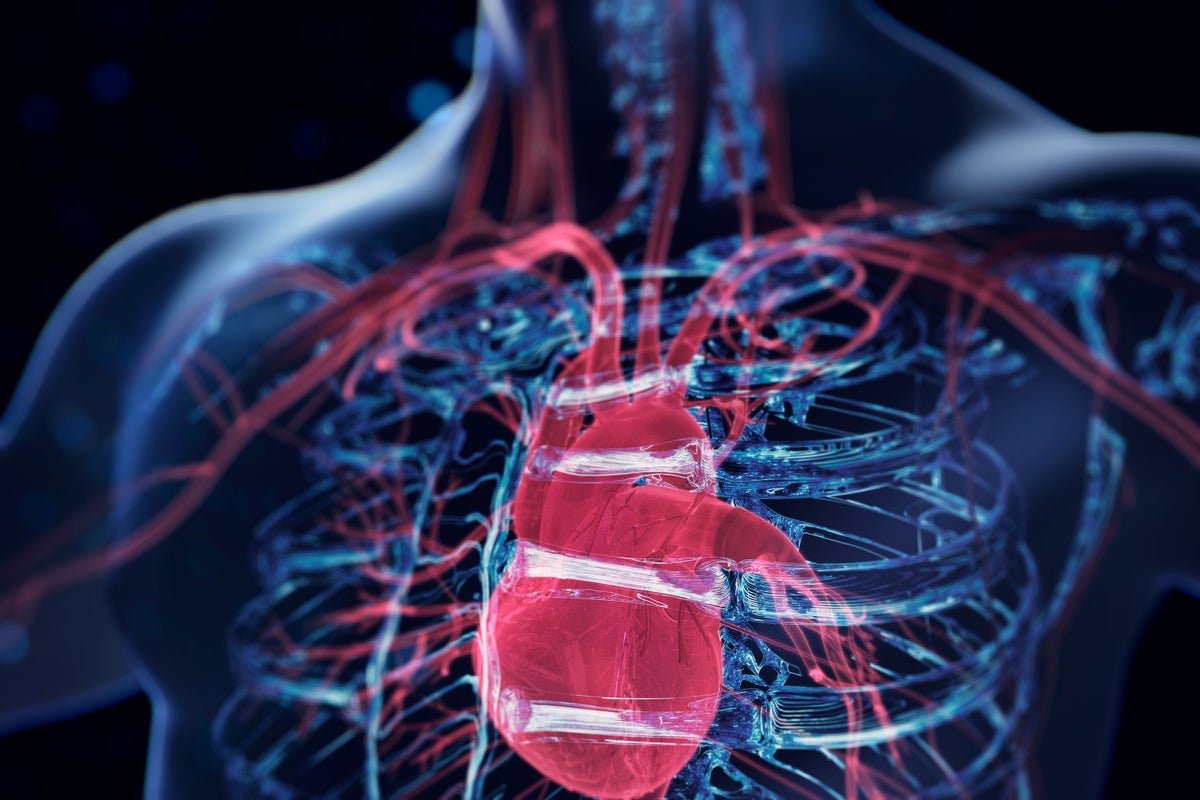
Heart inflammation caused by the mRNA COVID vaccines is rare.
Yuichiro Chino/Getty Images
The COVID vaccines have saved millions of lives from a virus that has killed more than seven million people globally. Many safety studies and real-world evidence from billions of doses show that the shots are extremely safe and effective. But in rare cases, messenger RNA (mRNA) vaccines have been linked to myocarditis, or inflammation of the heart muscle—mystifying scientists and clinicians.
Now a new study in mice and cultured human cells could explain why. Researchers pinpointed key immune response activity triggered by mRNA COVID vaccines that appears to temporarily damage heart tissue at high enough concentrations. The series of experiments, described today in Science Translational Medicine, measured damage from two particular cytokines, or signaling proteins, that are known to promote inflammation.
Doctors in the U.S. and Israel first reported COVID-vaccine-related myocarditis in 2021; the majority of cases have been seen in teenage boys and men under the age of 30. Within days of a shot, affected people experienced symptoms that included chest pain, shortness of breath, fever and heart palpitations.
On supporting science journalism
If you’re enjoying this article, consider supporting our award-winning journalism by subscribing. By purchasing a subscription you are helping to ensure the future of impactful stories about the discoveries and ideas shaping our world today.
The overall risk of vaccine-related myocarditis is very low: about one in every 140,000 people who receive the first vaccine dose develop it.
No specific treatment for myocarditis exists, though most people are able to recover in months with supportive care, says Mohammad Madjid, an interventional cardiologist at the University of California, Los Angeles.
“The exact mechanism is something we’ve wanted to understand because then we can find out how to prevent or reverse it,” says Madjid, who was not involved in the new study and has treated patients with COVID-vaccine-induced myocarditis. “That’s why I’m excited about this study.”
The immune system generates a flurry of cytokines in response to any infection or vaccine. To determine which cytokines were important in myocarditis, the study authors first analyzed blood sample data from two previous studies on people who received mRNA vaccines. The authors of the new paper focused on two key players that were found in higher amounts in people with myocarditis: CXCL10 and interferon gamma. Dousing lab-made human immune cells with COVID mRNA vaccines kick-started a notable uptick in both inflammatory cytokines. The researchers saw similar cytokine activation in vaccinated young male mice.
To confirm the results, the team isolated the vaccine-triggered cytokines in a water bath and injected the fluid directly into mice and lab-made human heart muscle cell clusters, or “cardiac spheroids.” Both the mice and human cell clusters showed damage to cardiac tissue and function—but applying drugs that block cytokines partially restored that function.
The study authors also investigated why vaccine-related myocarditis is more frequently seen in young male populations. The researchers hypothesized that the sex hormone estrogen may be protective in female animals. They gave genistein, a plant-based estrogenlike compound that was previously shown to block marijuana-induced inflammation, to vaccinated mice and the cardiac spheroids, and this noticeably prevented tissue damage. “This drug can block the inflammation, the cytokine release, due to the COVID vaccine, but the drug does not mitigate the efficacy of the vaccine,” says Joseph Wu, a co-author of the study and director of the Stanford Cardiovascular Institute.
COVID-vaccine-induced myocarditis remains rare. COVID itself can cause an array of heart issues, including irregular heartbeat, heart failure and myocarditis, Madjid says. In past research, people who had COVID had an approximately 63 percent higher risk of experiencing any heart complication in the year after getting the infection than people who didn’t. Myocarditis caused by COVID is also often much more severe than cases caused by the vaccine, Wu says.
“Getting the COVID virus itself has much more severe consequences than getting the COVID vaccine,” he says.
It’s Time to Stand Up for Science
If you enjoyed this article, I’d like to ask for your support. Scientific American has served as an advocate for science and industry for 180 years, and right now may be the most critical moment in that two-century history.
I’ve been a Scientific American subscriber since I was 12 years old, and it helped shape the way I look at the world. SciAm always educates and delights me, and inspires a sense of awe for our vast, beautiful universe. I hope it does that for you, too.
If you subscribe to Scientific American, you help ensure that our coverage is centered on meaningful research and discovery; that we have the resources to report on the decisions that threaten labs across the U.S.; and that we support both budding and working scientists at a time when the value of science itself too often goes unrecognized.
In return, you get essential news, captivating podcasts, brilliant infographics, can’t-miss newsletters, must-watch videos, challenging games, and the science world’s best writing and reporting. You can even gift someone a subscription.
There has never been a more important time for us to stand up and show why science matters. I hope you’ll support us in that mission.
