

It was a chilly afternoon in January, just a week after President Donald Trump returned to the White House, when I met Yineska, a Venezuelan mother who had been living in the United States for nearly two years. Trump’s election, she told me, had put her in a bind. On his first day back in office, Trump announced that he planned to end the humanitarian parole program that had allowed her, her children and more than 100,000 other Venezuelans to come to the United States in recent years. She feared that the new life she had worked so hard to build was about to unravel.
I went to her home and we talked for hours in the small kitchen. She told me about her two boys, Sebastián and Gabriel, and about Eduard, her partner, who worked as a cook in a restaurant nearby in Doral, Florida, a city beside Miami. She described how difficult it had been to leave her family and small business behind in a once-thriving part of Venezuela, now hollowed out by years of economic decline. The journey to the U.S. was grueling. It took almost seven months for Yineska, her boys and a nephew to cross the dangerous Darién Gap and then Mexico before reuniting with Eduard in Miami.
They managed to rent a safe space to live on the edge of Doral, found work and enrolled the boys in school. Yineska’s oldest was excited about getting an American high school diploma. And then, with the swipe of his pen, the president threatened to take away the stable lives they had finally begun to build. I could hear the fear in her voice as we spoke.
I introduced myself to Yineska because I knew she wasn’t alone. I’m a journalist and filmmaker at ProPublica, and I moved to the U.S. from Venezuela nearly a decade ago. I was fortunate to arrive with a visa that allowed me to work legally.
As I watched Trump’s second presidential campaign, I sensed what might be coming. His return to office would thrust so many Venezuelans who had recently settled in the U.S. between two storm clouds: an American government turning against them and a repressive regime back home that offered no future. Many of my Venezuelan friends saw something entirely different. They believed his return would be a blessing for our community, that he would cast out only those who had brought trouble and shield the rest.
When I left Yineska’s house that first night, I wrote in my notebook: “This is a good family. A working family. They represent so many Venezuelans who came here seeking safety and opportunity — and, in many ways, they represent me, too.” In her story, I saw the chance to highlight the quiet anxiety growing in some corners of Doral that the sense of safety we had found in America could disappear overnight.
Doral is the heart of the Venezuelan diaspora in the U.S. About 40% of those who live there emigrated from my country to escape the deep economic, political and social collapse that has unfolded in the nearly 12 years President Nicolás Maduro has been in power. His authoritarian grip and the country’s unraveling economy caused nearly 8 million people to flee, mostly to other Latin American countries and the Caribbean. It’s the largest mass displacement in the Western Hemisphere’s recent history.
When I came to the U.S., most Latinos were facing the first waves of Trump’s anti-immigrant rhetoric. At the time, Trump called Mexican people “bad hombres.” Venezuelans, by contrast, were not viewed negatively. Trump took a hard line against Maduro, imposing heavy economic sanctions meant to weaken his autocratic hold on power. The stance earned Trump broad support among Venezuelan exiles in the U.S., especially in South Florida and in Doral. In the final days of his first term, Trump recognized the danger Venezuelans faced if they were forced to return and issued a memorandum that temporarily shielded those already in the U.S. from deportation.
In the following years, President Joe Biden opened several temporary pathways that allowed more than 700,000 Venezuelans to live legally in the U.S. His administration granted humanitarian parole to Cubans, Haitians, Nicaraguans and Venezuelans, like Yineska and her sons, allowing them to reside and work in the U.S. for up to two years if they passed background checks and secured financial sponsors. He also expanded Temporary Protected Status to Venezuelans already living here, which prevented them from being sent back to an unstable Venezuela and granted them work permits.
After securing humanitarian parole and entering the U.S. in April 2023, Yineska and her two sons made their way to Florida to reunite with Eduard. He was in Miami and had applied for TPS. Traveling with Yineska was a nephew who applied for asylum. All of them entered the U.S. legally.
Even as some in the community benefitted from Biden’s policies, many Venezuelans counted themselves among the Latinos who argued that the Biden administration was giving asylum-seekers preferential treatment and not carefully vetting those entering the country. They said that lax oversight had allowed criminals, including members of the Venezuelan gang known as Tren de Aragua, to cross into the U.S. They also wanted Biden to take a stronger stance against Maduro. In 2024, the Venezuelan American vote helped Trump win handily in Miami-Dade County.
Since Trump returned to the White House, that loyalty has been shaken. His administration has targeted Venezuelans in some of its most dramatic and punitive operations. In February, the federal government flew more than 230 Venezuelans to a maximum-security prison in El Salvador where men described being beaten and berated. The administration branded them “the worst of the worst.”
My colleagues found that the U.S. government knew the vast majority had not been convicted of any crime here. Its own data indicated that of the 32 men with convictions, only six were for violent crimes. In response to that reporting, Department of Homeland Security spokesperson Tricia McLaughlin insisted, without providing evidence, that the deportees were “terrorists, human rights abusers, gang members and more — they just don’t have a rap sheet in the U.S.”
At the same time, the Trump administration has sought to end legal protections for families like Yineska’s. White House press secretary Karoline Leavitt said in April that Temporary Protected Status “was only supposed to be used in times of war or storm or destruction in the home countries of these migrants. It was completely abused.”
“It’s as if you’re standing on a rug that’s pulled from under you,” Yineska told me during one of our many conversations in her kitchen. For Venezuelan families like hers, the idea of “temporary relief” feels detached from reality. They have followed the rules and envisioned a future for their children. To tell them that their safety has an expiration date while their home country remains mired in the same crisis they fled — and is now in the crosshairs of the U.S. military — is a painful contradiction.
Venezuelans I spoke with, including Yineska and Eduard, said migrants who break the law should face consequences, but those who follow the rules should have an opportunity to stay. And even as they confront the administration’s crackdown, many still cheer Trump’s hard-line stance against Maduro because they see a glimmer of hope that Venezuela might finally move toward a brighter future, something Venezuelans everywhere — myself included — dream of. But the future is dimming for those in Doral with temporary status. I see the impact every day. Restaurants are quieter. More apartments are listed for rent. The energy that once defined this community isn’t the same.
I am now a U.S. citizen, but this milestone feels bittersweet as I watch friends pack their belongings to seek opportunities abroad. Few plan to return to Venezuela.
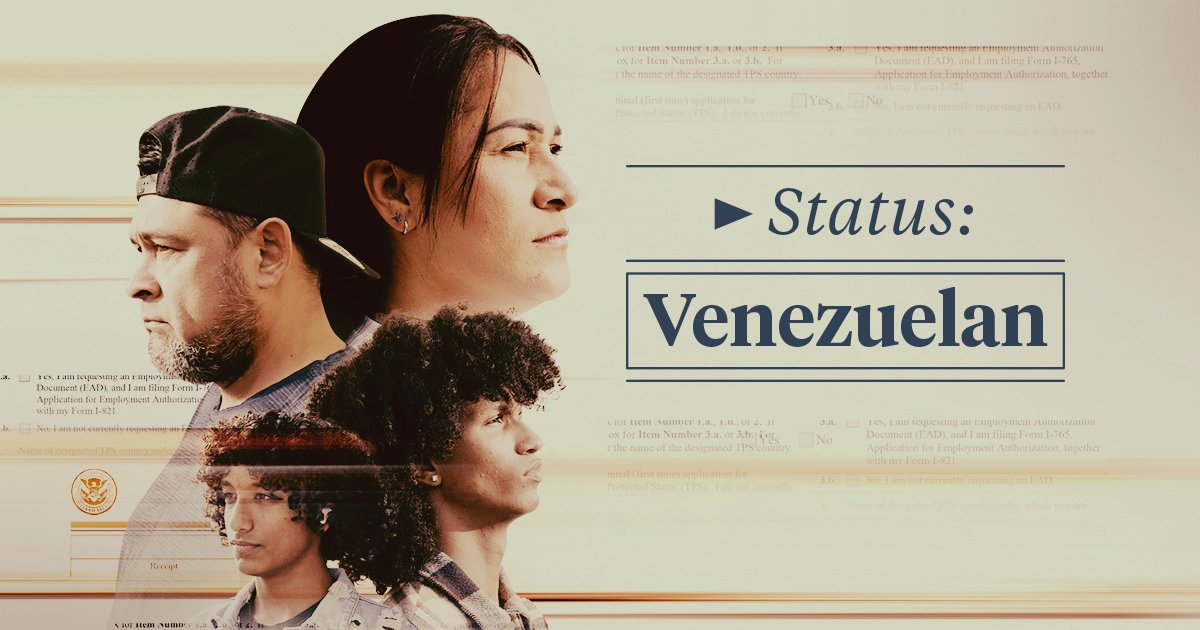
As the hostility of the administration pressed down on people like Yineska and her family, they worried they, too, would be forced to pack their bags. My new film, “Status: Venezuelan,” follows them as they weigh fear against hope, struggling to decide whether to fight for the life they have built or leave everything behind.
