

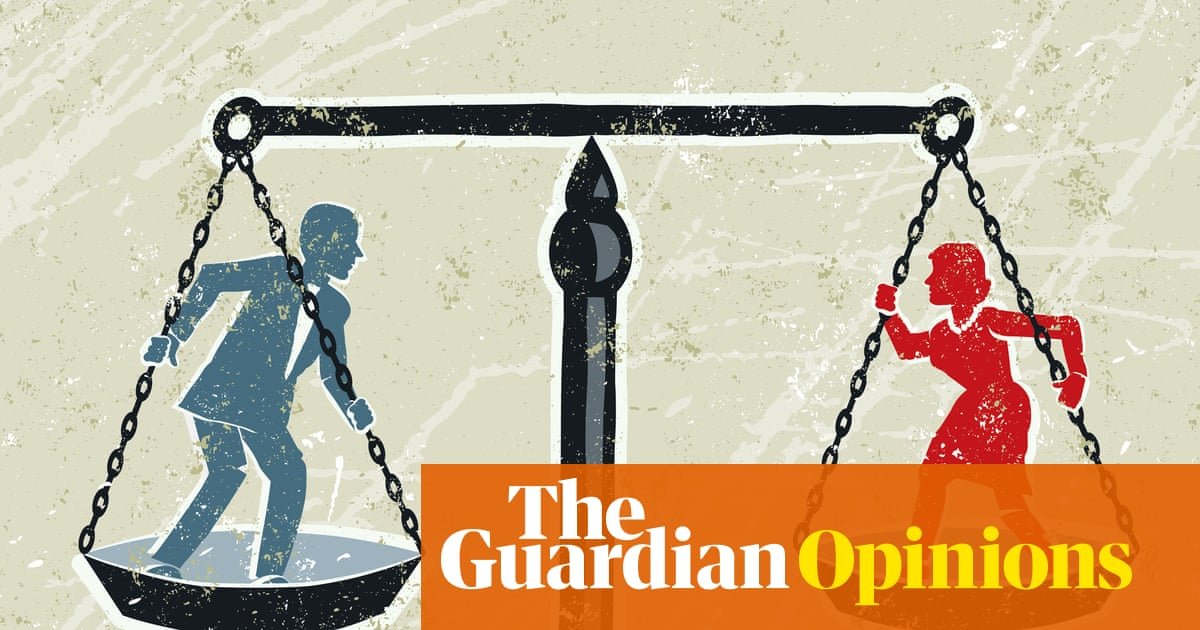
First it was mechanisation threatening our jobs, then AI and now this: the Great Feminisation is taking over the workplace. Well, that’s according to American journalist Helen Andrews, who popularised this thesis in a speech to the National Conservatism conference in Washington DC.
The idea is that too many women in the workplace, and in positions of power, has led to the dominance of stereotypical feminine values, to the detriment of everyone. Girly things like conflict resolution rather than manly plain speaking, fussy HR departments, or a lack of healthy aggressive competition, have all created an imbalance in the workplace and in the world, suppressing stereotypical masculine values. Andrews fears for her sons and their future in the feminised world that she believes threatens us all.
The thesis makes two fundamental errors. First, stereotypes attached to femininity don’t represent all women, any more than stereotypes about masculinity define all men. Second, nobody needs a feminised world, whatever that nonsense even means, but we all need a feminist world. There’s a big difference.
For centuries, it was policy to keep women out of education and most professions, although women have, of course, always worked – in agriculture, in factories, or in service to rich people. Much of this was not in the formal economy, it was cash in hand. Work like childcare, washing or sewing was done at home, rather than in the public sphere. Yet work has always been gendered as masculine, because formal, paid employment outside the home has been seen as the preserve of men. So work comes to define masculinity, and therefore men, being viewed as core to men’s identity.
It is not only conservatives making these kinds of arguments. Scott Galloway, an American academic and author of a much-discussed new book, Notes on Being a Man, has summarised masculinity thus: “getting up at fucking six in the morning and going to work and doing shitty work such that you can protect your family economically”. In his book, he links falling wages and unemployment rates with a crisis in masculinity, and in men’s sense of identity. While he doesn’t argue for women’s removal from the workplace, he does frame these issues – that affect everyone, across the labour market – as male concerns.
The real problem facing men is that, like femininity, masculinity is still defined by backward stereotypes about what men should be. These stereotypes – including visible signifiers of financial success, respect and seniority in the workplace and public sphere – have always been put out of reach for many men, and perhaps now for most. A new report, The State of UK Men, from Beyond Equality, revealed that 88% of the men surveyed believed that being a man means providing financially for your family – and just over half felt it was more important that men, rather than women, were the breadwinners. However, 40% reported that their income was not enough to meet their daily needs, and more than half constantly worried about their financial future.
Scott Galloway during Vox Media’s Pivot Tour event at Sydney Goldstein Theatre, San Francisco, 13 November 2025. Photograph: Kimberly White/Getty Images for Vox Media
Women face these same economic challenges. The same survey found that equal numbers of men and women lack any sense of purpose or meaning in their life. The gender pay gap in the UK is around 13% across all employees and women are still more likely than men to be in part-time work, traditionally lower paid. Women are also more likely to be heads of households and raising children; they are what charities such as the Women’s Budget Group call the main “shock absorbers” of poverty.
The violence of poverty affects everyone, yet society responds with peculiar sympathy and grief when men face barriers to success in the arenas we have picked out to define their worth. This is what I call the masculinity burden. Attacks on men’s income, employment or job security are viewed not only as challenging in a human way, as they would be for anyone, but doubly challenging because they are portrayed as attacks on, and affronts to, masculinity itself. From this perspective, it is not that 50% of the experiences of precarity – women’s – are not seen; it’s that they are just not seen as being as bad for women, because women don’t carry this extra burden of masculinity.
The gendered effects of life experiences, such as redundancy or low pay, are clearly real. The State of UK Men finds that work and stable finances are still very much classed as the measure of men’s worth, leading to failure feeling like an existential threat. This is the pain and shame of not meeting gendered expectations. Women are no strangers to this either, in the ceaseless pressure of beauty standards attached to femininity, the presumption of motherhood and judgments about mothering, or in status being attached to male partners. The expectations can be different, but it’s the gendered rules that are the problem, rigging the game for us all, setting us up for failure in one area or another.
skip past newsletter promotion
Sign up to Matters of Opinion
Guardian columnists and writers on what they’ve been debating, thinking about, reading, and more
Privacy Notice: Newsletters may contain information about charities, online ads, and content funded by outside parties. If you do not have an account, we will create a guest account for you on theguardian.com to send you this newsletter. You can complete full registration at any time. For more information about how we use your data see our Privacy Policy. We use Google reCaptcha to protect our website and the Google Privacy Policy and Terms of Service apply.
after newsletter promotion
What men need to succeed in the workplace has nothing to do with the numbers of women employed – it has to do with job security, livable wages, affordable rents, reliable sick pay and flexible work around parenting and caring. This is what men say they want, too: one of the many positives from the report is that 83% of men believe in sharing housework and care with their partner, and 80% want practical support to help fathers be more present in family life. These policies would help everyone – not just at work, but out in the world, because all of us have human needs to give and receive love and care in our families and communities. If you want to call that feminised, then so be it. I call it feminist.
Finn Mackay is the author of Female Masculinities and the Gender Wars, and a senior lecturer in sociology at the University of the West of England in Bristol
Do you have an opinion on the issues raised in this article? If you would like to submit a response of up to 300 words by email to be considered for publication in our letters section, please click here.
