
Close Menu

    Subscribe to Updates

    Get the latest creative news from FooBar about art, design and business.

    What's Hot

    Labour lawyers ‘blocked’ from briefing MPs on jury trials overhaul before vote | Trial by jury

    Taking a multivitamin could slow some signs of aging, new study suggests

    Stand Up for Science protests spread to more than 50 cities

    Facebook X (Twitter) Instagram
    Facebook X (Twitter) YouTube LinkedIn
    Naija Global News |
    Monday, March 9
    • Business
    • Health
    • Politics
    • Science
    • Sports
    • Education
    • Social Issues
    • Technology
    • More
      • Crime & Justice
      • Environment
      • Entertainment
    Naija Global News |
    You are at:Home»Science»Moss in space: spores survive nine-month ride on outside of ISS | Biology
    Science

    Moss in space: spores survive nine-month ride on outside of ISS | Biology

    onlyplanz_80y6mtBy onlyplanz_80y6mtNovember 20, 2025003 Mins Read
    Share Facebook Twitter Pinterest LinkedIn Tumblr Email
    Moss in space: spores survive nine-month ride on outside of ISS | Biology
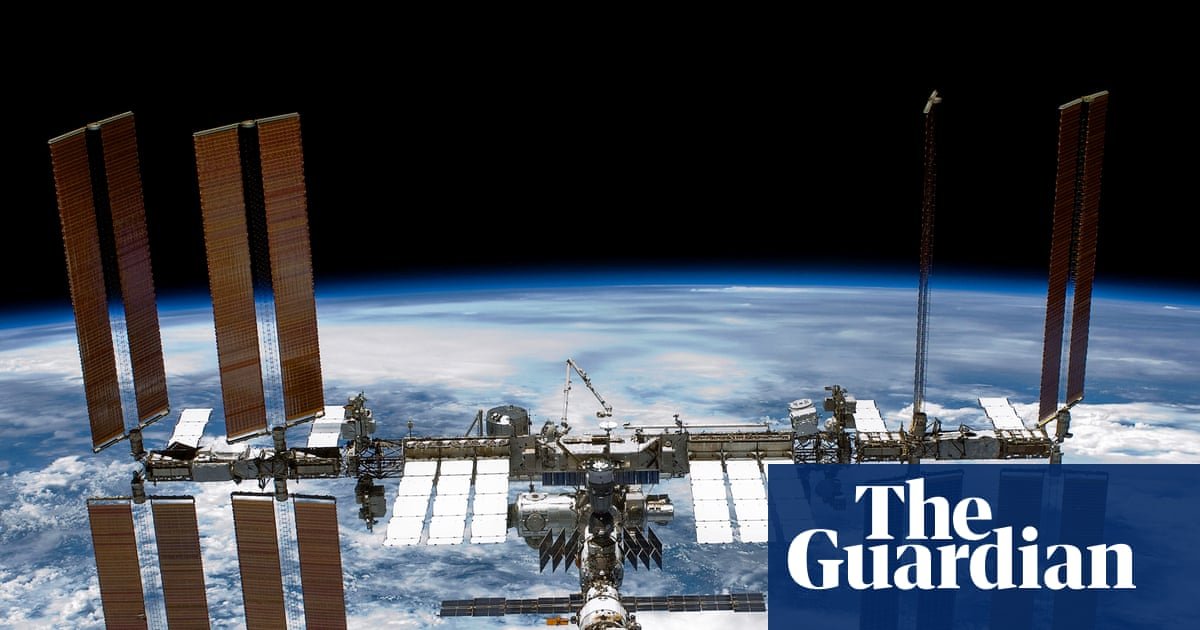
    Encased moss spores were attached to the outside of the ISS and left for nine months before being brought back to Earth. Photograph: /Nasa via Getty Images
    Share
    Facebook Twitter LinkedIn Pinterest Email

    Matt Damon grew potatoes for survival in The Martian, but researchers say mosses could one day help turn the dust and rocks of other planets into fertile soil.

    Physcomitrella patens, or spreading earthmoss, is already known as a pioneering species – albeit for being an early plant on the scene in areas of barren mud. Now researchers have found that spores of the moss can survive for at least nine months stuck to the outside of the International Space Station (ISS) and still reproduce once back on Earth.

    Although the plant is inedible, researchers say the findings could be important for space exploration.

    Dr Tomomichi Fujita, the lead author of the study, from Hokkaido University in Japan, said: “While moss may not be on the menu, its resilience offers insights into developing sustainable life-support systems in space. Mosses could help with oxygen generation, humidity control or even soil formation.”

    It is not the first time researchers have highlighted the remarkable survival abilities of moss, or sent such species to the ISS. Indeed, such plants are known to tolerate a host of extreme conditions on Earth, while scientists have found that the desert moss species Syntrichia caninervis can withstand Mars-like conditions in experiments on Earth.

    Writing in the journal iScience, Fujita and colleagues report how they exposed three different moss structures to a simulated space environment on Earth. They found that moss spores encased in a structure known as a sporangium were the most resilient and were able to germinate after exposure to UVC radiation levels that exceeded 100,000 joules per square metre.

    Further tests suggested these encased spores were also resilient towards vacuum conditions, deep-freezing, high temperatures and radiation within a vacuum.

    The researchers then sent encased spores to the ISS onboard the Cygnus NG-17 spacecraft. These were attached to the outside of the ISS in sample holders with different filter settings and left for nine months.

    After the samples were returned to Earth, the researchers found all showed high rates of germination, noting that even those that had been fully exposed to UV radiation in space had a 86% germination rate – compared with a 97% germination rate for spores that had remained on Earth. However, a type of chlorophyll in the space-exposed samples showed signs of degradation.

    “If such spores can endure long-term exposure during interplanetary travel and then successfully revive upon rehydration and warming, they could one day contribute to establishing basic ecosystems beyond Earth,” Fujita said.

    He noted that the study focused only on survival under space exposure. “Whether moss can germinate and grow under various extraterrestrial conditions – including different gravity levels, atmospheric compositions and radiation levels – remains an open question,’” Fujita said.

    Dr Agata Zupanska, of the Seti Institute, who was not involved in the work, welcomed the study but said it was already known that dormant, desiccated biological forms such as spores or seeds exhibited significantly greater resistance to environmental extremes than hydrated cells or tissues. She said similar seed exposure experiments, including on space crop seeds, had already been conducted outside the ISS.

    Zupanska also stressed that the external ISS environment, while harsh, did not fully represent the complexities of true deep space conditions, including those on the moon or Mars.

    “The value of space plants is realised only if they can actively grow and thrive away from Earth,” she said. “While spore resilience is important, it represents only an initial step toward the broader goals of growing plants in extraterrestrial environments.”

    Biology ISS Moss ninemonth ride space spores Survive
    Share. Facebook Twitter Pinterest LinkedIn Tumblr Email
    Previous Article‘Devastating to think of lives that could have been saved under different PM’, say Covid bereaved – UK politics live | Politics
    Next Article ‘AI is scary territory’: art teachers – one 64, one 29 – on cuts, creativity and life in a career that’s under threat | All ages
    onlyplanz_80y6mt
    • Website

    Related Posts

    Taking a multivitamin could slow some signs of aging, new study suggests

    March 9, 2026

    Taking multivitamin daily could help to slow biological ageing, study suggests | Medical research

    March 9, 2026

    My PhD student is stuck. How do I teach them perseverance and problem solving?

    March 9, 2026
    Add A Comment
    Leave A Reply Cancel Reply

    Top Posts

    Watch Lady Gaga’s Perform ‘Vanish Into You’ on ‘Colbert’

    September 9, 20251 Views

    Advertisers flock to Fox seeking an ‘audience of one’ — Donald Trump

    July 13, 20251 Views

    A Setback for Maine’s Free Community College Program

    June 19, 20251 Views
    Stay In Touch
    • Facebook
    • YouTube
    • TikTok
    • WhatsApp
    • Twitter
    • Instagram
    Latest Reviews

    At Chile’s Vera Rubin Observatory, Earth’s Largest Camera Surveys the Sky

    By onlyplanz_80y6mtJune 19, 2025

    SpaceX Starship Explodes Before Test Fire

    By onlyplanz_80y6mtJune 19, 2025

    How the L.A. Port got hit by Trump’s Tariffs

    By onlyplanz_80y6mtJune 19, 2025

    Subscribe to Updates

    Get the latest tech news from FooBar about tech, design and biz.

    Most Popular

    Watch Lady Gaga’s Perform ‘Vanish Into You’ on ‘Colbert’

    September 9, 20251 Views

    Advertisers flock to Fox seeking an ‘audience of one’ — Donald Trump

    July 13, 20251 Views

    A Setback for Maine’s Free Community College Program

    June 19, 20251 Views
    Our Picks

    Labour lawyers ‘blocked’ from briefing MPs on jury trials overhaul before vote | Trial by jury

    Taking a multivitamin could slow some signs of aging, new study suggests

    Stand Up for Science protests spread to more than 50 cities

    Recent Posts
    • Labour lawyers ‘blocked’ from briefing MPs on jury trials overhaul before vote | Trial by jury
    • Taking a multivitamin could slow some signs of aging, new study suggests
    • Stand Up for Science protests spread to more than 50 cities
    • States Step In to Support Minority-Serving Institutions
    • Taking multivitamin daily could help to slow biological ageing, study suggests | Medical research
    © 2026 naijaglobalnews. Designed by Pro.
    • About Us
    • Disclaimer
    • Get In Touch
    • Privacy Policy
    • Terms and Conditions

    Type above and press Enter to search. Press Esc to cancel.