

Fair Doses: An Insider’s Story of the Pandemic and the Global Fight for Vaccine Equity Seth Berkley Univ. California Press (2025)
Most people don’t like getting vaccines, much less seeing their children have needles poked into their thighs and arms. But context can change that. Besieged by terrifying outbreaks of paralytic polio and the spectre of iron-lung respirators, many parents were happy to see their children receiving the first polio vaccinations in the 1950s. Similarly, when I got my first COVID-19 vaccine, it instantly relieved the sense of existential dread that I had felt for almost a year as the death toll rose.
The radical plan for vaccine equity
Traumatic memories from the pandemic are waning for many. But infectious-disease epidemiologist Seth Berkley thinks the prospect of future pandemics means that it is imperative that we do not forget about the powerful impact of the COVID-19 vaccine. In Fair Doses — a fascinating account of the race to distribute the drug around the world — he attempts to provide readers with a ‘booster shot’ to restore public-health awareness.
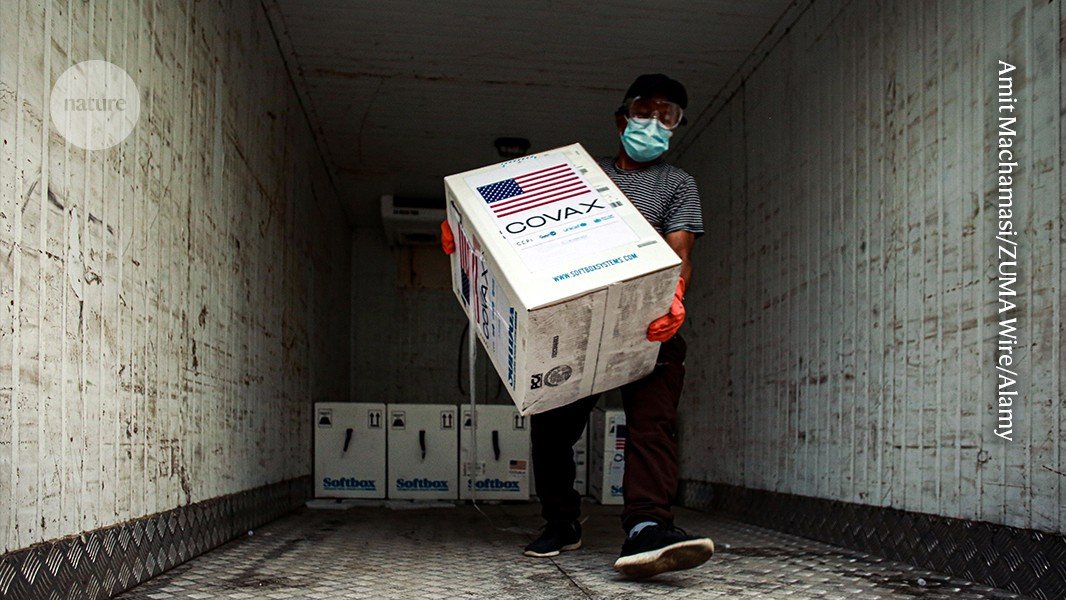
Berkley is ideally positioned to tell the story. In 2020, he was the chief executive of global-health organization Gavi, the Vaccine Alliance. In the early months of the COVID-19 pandemic, Gavi, along with the Coalition for Epidemic Preparedness and Innovations and others, co-founded COVAX — a worldwide initiative to access, purchase and deliver billions of doses of safe and effective COVID-19 vaccines to those living in low- and middle-income countries (LMICs). The author rightly spends little time on the science of the vaccine or the disease itself. Instead, his aim is to describe the complex and interwoven financial, legal, practical, ethical and political issues involved in securing and equitably distributing vaccines to more than 140 territories.
These complexities led to a series of challenges for COVAX leaders. As Berkley recalls, “I thought that this time, because of COVAX, we could tackle a pandemic with a meaningful, global commitment to equity. How wrong I was.”
A gargantuan effort
COVAX’s goal was wildly ambitious, especially given the world’s abject failure to distribute influenza vaccines equitably a decade earlier during the 2009–10 flu pandemic. With those flu vaccines, Berkley notes that LMICs were left “at the back of queue”. As he highlights, the drugs arrived too late to prevent a substantial burden of disease — and in some countries, essentially didn’t arrive at all.
Learn from COVID: Gates’s pandemic prescription
By contrast, COVAX was, in many ways, a success. By the end of 2021, more than one billion COVID-19 vaccine doses had been distributed, and two billion had been distributed by the end of 2023. More than half (57%) of the population in the world’s 92 lowest-income countries ended up receiving the one or two doses required (depending on the brand of vaccine) for initial protection, as compared with the global average of 67%. Doses supplied by COVAX are estimated to have averted 2.7 million deaths in low-income countries by the end of 2022.
Berkley describes in depth the challenge of raising the billions of dollars needed for the scheme from foundations and governments, which were scrambling to fund their own vaccine programmes. It was this need to attract funds that led COVAX leaders to decide at the outset to invite high-income countries to participate in the initiative.
The major attraction for wealthy nations was that COVAX negotiated supply contracts with a wide range of vaccine developers. By joining the initiative, these countries could ensure access to the most safe and effective vaccines, rather than being reliant on whichever vaccine developer they could strike a deal with. Although the decision to involve high-income countries was, according to Berkley, “one of the biggest controversies in setting up COVAX”, it proved successful in helping to attract enough funds up front to purchase vaccines for the world.
Initiatives that equitably distribute vaccines during a pandemic can save many lives.Credit: Issam Rimawi/Anadolu Agency/Getty
One of the fundamental challenges faced by COVAX leaders when doses started to become available in early 2021 was deciding what equitable distribution would look like. Some countries lacked the infrastructure needed to accept a large number of doses and COVAX didn’t want to send vaccines to countries that couldn’t store or transport them properly. As more doses became available throughout the year, some middle- and higher-income countries that had signed up for COVAX doses managed to procure their own vaccines. That led to a debate about whether they should still be provided with COVAX vaccines that they might not need. Moreover, evidence gradually emerged that many African countries seemed to be less susceptible than elsewhere, on a population-wide basis, to severe COVID-19 disease outcomes. This phenomenon is still not well understood, but it suggested that vaccine needs and demand might be less than previously predicted.
Berkley notes the impossibility of devising a transparent algorithm that can integrate all of these factors and output a fair mechanism for vaccine distribution. Ultimately, and controversially, COVAX leaders decided from the outset that the initiative would aim to meet a blanket 20% of the vaccine needs for each country, regardless of other factors. These targets were based on a prediction of how much vaccine could be produced by the end of 2021 — and were later revised upwards.
The racial injustice laid bare by COVID must not be forgotten
Despite involving wealthy nations in their initiative, COVAX inevitably ended up directly competing for vaccine supplies with these countries, especially when supplies were initially limited, because wealthy countries could pay higher prices and pay up front. Despite manufacturers’ contractual obligations, COVAX sometimes found their vaccine orders delayed or deprioritized compared with those of other purchasers.
Some countries went from refusing to share any doses with COVAX — despite having secured many more than their populations needed — to offering leftover doses of vaccines that were about to reach their expiration dates. Some earmarked their donations to particular ‘friendly’ countries, regardless of COVAX’s carefully planned distribution programme, and demanded immediate acceptance of their publicly visible, politically sensitive ‘gifts’, regardless of the readiness of countries to receive them.
