

November 10, 2025
3 min read
Why Do Only Some People with Schizophrenia Hear Voices?
New research aims to tease out what exactly is happening in the brains of people with schizophrenia who have auditory hallucinations
anand purohit/Getty Images
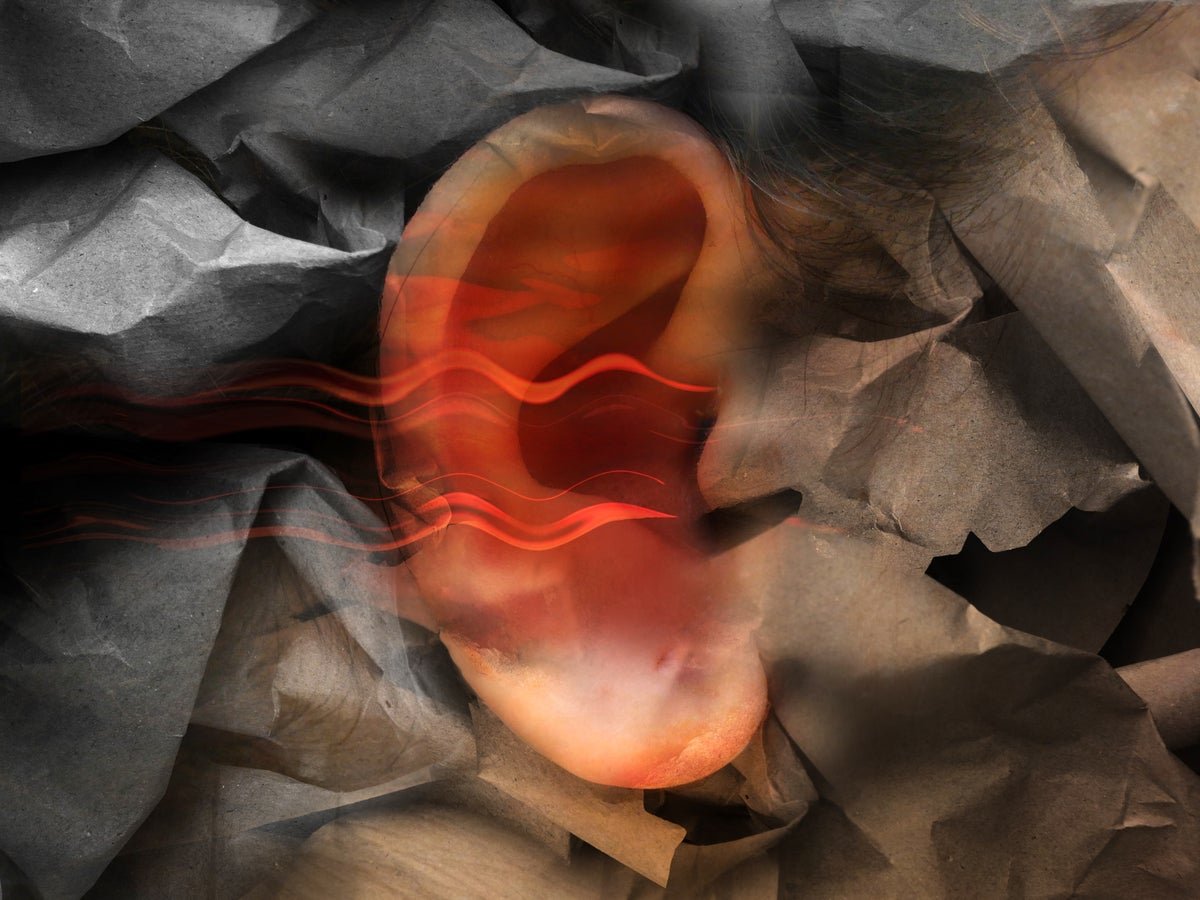
Hearing imaginary voices is a common but mysterious feature in schizophrenia. Up to 80 percent of people with the disease experience auditory hallucinations—hearing voices or other sounds when there are none. Now new research has gotten us closer to unraveling the brain mechanisms behind this phenomenon.
Experts have long thought auditory hallucinations arise from a person perceiving their inner thoughts or speech as real voices coming from the outside world. When people without schizophrenia speak or prepare to speak, the brain region that plans movements suppresses signals in the auditory cortex. This helps people distinguish their own speech from external sounds. Researchers have thought this mechanism could apply to healthy people’s inner speech as well—though that has been difficult to study and verify. Dysfunction in the activity between these brain regions might lead to hearing voices.
In a study published last month in Schizophrenia Bulletin, researchers demonstrated that inner speech indeed suppressed the brain’s auditory cortex in adults without schizophrenia. But for people with the condition and similar ones who had auditory hallucinations, inner speech boosted the auditory cortex’s response.
On supporting science journalism
If you’re enjoying this article, consider supporting our award-winning journalism by subscribing. By purchasing a subscription you are helping to ensure the future of impactful stories about the discoveries and ideas shaping our world today.
“The hard thing with studying inner speech is that it’s inherently private,” says Thomas Whitford, a cognitive neuroscientist at the University of New South Wales in Australia and co-lead author of the study.
To eavesdrop on that inner speech, Whitford and his team used electroencephalography (EEG) to measure brain activity in people with conditions on the schizophrenia spectrum, including participants who heard voices and those who did not (but may have in the past), and participants who didn’t have such conditions. The researchers prompted the participants to imagine saying a specific syllable, either “bah” or “bee,” without actually moving their mouth. At the same time, a sound played through headphones worn by the participants that either matched or mismatched the sound they were told to imagine they were speaking. As a control condition, participants were sometimes told not to imagine anything and to simply listen to the sounds with their headphones.
Simultaneously hearing and mentally producing a sound dampened the auditory cortex’s response in adults without schizophrenia compared with only listening to it without thinking of saying anything. The effect was strongest when the sound these participants heard on their headphones matched the one they imagined. By contrast, participants with schizophrenia who had auditory hallucinations experienced the opposite effect: when the two sounds matched, their brain response was even stronger. The results for people with schizophrenia who did not currently hear voices were in between the two other groups. Whitford suggests this may be a sign that these participants had the potential to hallucinate.
This paper builds on previous research by neuroscientist Xing Tian of New York University Shanghai and his colleagues. Tian’s team has conducted numerous studies on teasing apart mechanisms in the brain’s motor and auditory regions, including mapping abnormal signals that could lead to confusion between inner and external sounds.
Whitford and his colleagues’ new research helps clarify one possible mechanism for schizophrenia’s auditory hallucinations, says Albert Powers, a psychiatrist at the Yale School of Medicine, who wasn’t involved in the study. But further investigation is needed to see whether this pattern of brain activity contributes to all the different sound-based hallucinations people with schizophrenia might experience, he says.
Nevertheless, this research is “really quite clever,” especially because these internal mechanisms are difficult to test experimentally, says Mahesh Menon, a psychologist and co-head of the Schizophrenia Program at the University of British Columbia, who also wasn’t involved in the paper. Menon adds that the new findings could be valuable for understanding how similar psychotic symptoms occur.
Powers emphasizes that having auditory hallucinations doesn’t always indicate severe schizophrenia and that having a severe case of the condition doesn’t necessarily mean that a person will experience hallucinations. Disentangling the various pathways in the brain that could drive these hallucinations may lead to new and novel treatment options, and “this paper helps to get us there,” he says. Whitford hopes his team’s EEG test could eventually be used to assess someone’s risk of developing psychotic symptoms and hallucinations. That predictive ability, he says, would be the “holy grail” that could help direct people toward early preventive treatment.
It’s Time to Stand Up for Science
If you enjoyed this article, I’d like to ask for your support. Scientific American has served as an advocate for science and industry for 180 years, and right now may be the most critical moment in that two-century history.
I’ve been a Scientific American subscriber since I was 12 years old, and it helped shape the way I look at the world. SciAm always educates and delights me, and inspires a sense of awe for our vast, beautiful universe. I hope it does that for you, too.
If you subscribe to Scientific American, you help ensure that our coverage is centered on meaningful research and discovery; that we have the resources to report on the decisions that threaten labs across the U.S.; and that we support both budding and working scientists at a time when the value of science itself too often goes unrecognized.
In return, you get essential news, captivating podcasts, brilliant infographics, can’t-miss newsletters, must-watch videos, challenging games, and the science world’s best writing and reporting. You can even gift someone a subscription.
There has never been a more important time for us to stand up and show why science matters. I hope you’ll support us in that mission.
